All professionals involved in rodent control have a role in tackling the spread of rats that survive high potency rodenticides, according to Campaign for Responsible Rodenticide Use chairman Dr Alan Buckle.
In November last year, resistant rats were identified in new locations by a University of Reading study. To help pest control contractors, farmers, rural estate managers and gamekeepers address this, a new continuing professional development (CPD) guide has been published by CRRU, available to download.
Download now
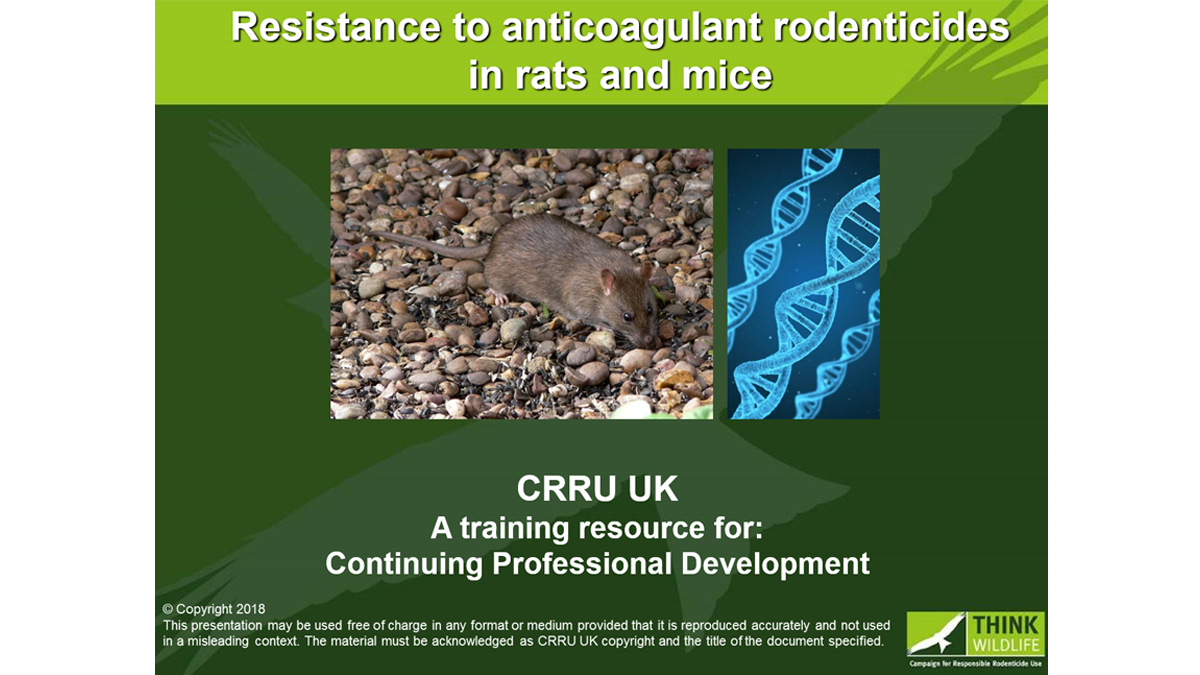
One of its recommendations, where people are unsure about resistance, is to submit a 2-3cm rat tail tip for resistance testing to the Vertebrate Pests Unit at Reading University.
This service is free of charge, with detailed instructions on the University of Reading website.
High priority areas where little is known about resistance include central England, Scotland and Northern Ireland, though tail samples are encouraged from all UK locations.
In parallel with testing, Dr Buckle says rodenticide users should be led by the CRRU Code of Best Practice, which includes monitoring the results of control treatments. "If this suggests rats are surviving well-implemented control programmes, it may indicate the presence of resistance," he suggests.
The 2018 study found for the first time the L120Q gene, responsible for the most severe form of resistance, in East Anglia and West Yorkshire. This gene renders first generation anticoagulant rodenticides and two of the second generation group virtually ineffective.
Rodenticide resistance is already widespread in central southern England and is also being found increasingly outside that area. The study identified three different types of resistant rats in West Yorkshire and along the Anglo-Welsh border.
Resistance-breaking second-generation anticoagulant rodenticides are available, but they must be applied carefully, Dr Buckle urges. "This is because their effectiveness will be jeopardised by indiscriminate use, and they pose greater risk to the environment."
Source: Online