PRESS RELEASE
A seasonal spike in sightings of False Black Widow spiders is likely to be caused by males in search of a mate, a national trade body has said.
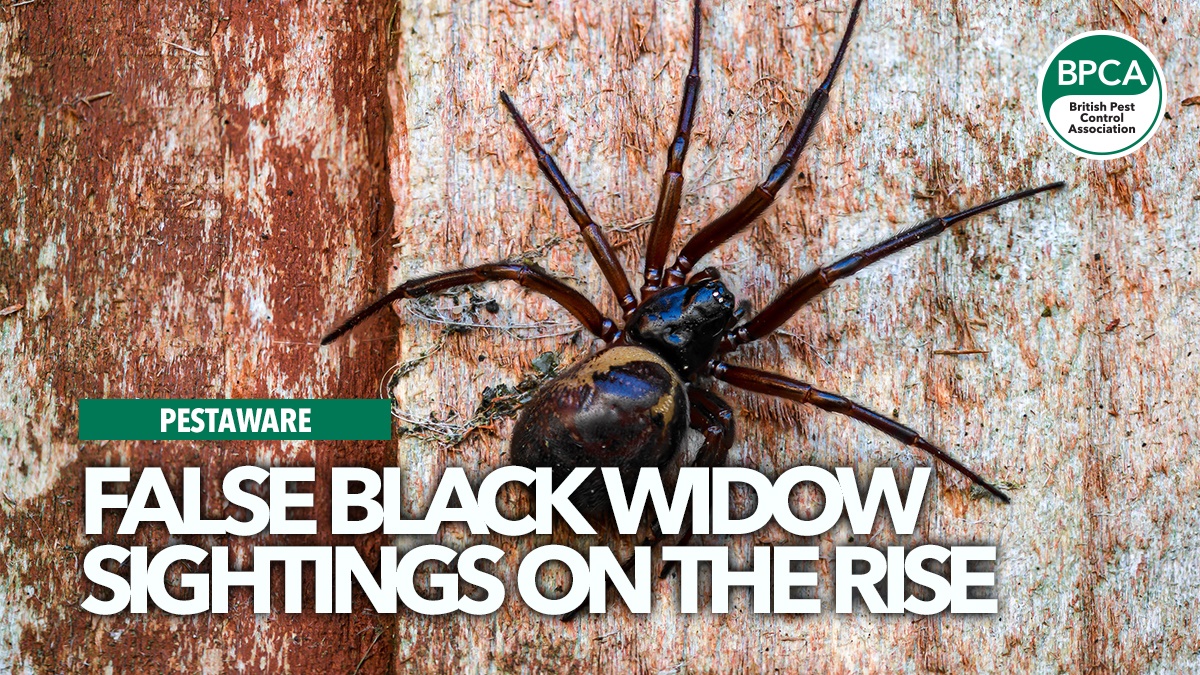
The British Pest Control Association (BPCA), is urging people to avoid contact with False Black Widow spiders, but not to panic if they spot one in their home.
The spiders are not aggressive, but may bite if there is accidental contact.
Natalie Bungay is Technical and Compliance Manager at BPCA. She said: “Requests for False Widow pest control call-outs tend to peak in October.
“The spiders increase in numbers during warmer months, but in late summer and autumn they may become particularly conspicuous as the males wander more extensively in search of a mate.
“False Widow spiders are not aggressive and will not launch an unprovoked attack on people.”
False Widow spiders are not aggressive and will not launch an unprovoked attack on people.
Usually sited at least 1.5m off the ground, False Widow webs are a loose tangle of threads with a tube of silk in one corner leading into a crevice where the spider will hide during the day.
The webs are typically found around window and door frames as well as in eaves, porches and conservatories.
False Widows are venomous and their bites have been compared to wasp stings, but issues arising from spider bites are more likely to be the result of a secondary infection, than the bite itself.
The BPCA’s online guide to False Widows includes advice on how to identify them and what to do if you spot one in your home.
Natalie added: “If you’re concerned about spiders in your home, seek advice from a pest management professional.
“You can remove a spider from your home by putting a small carton or glass over it and sliding a piece of card between the opening and the surface. You can also use a vacuum cleaner to remove spiders and their webs if you don’t want to get too close!
“However, if you’re unsure of the species, or don’t feel confident to tackle the issue yourself, get in touch with a BPCA member.”
BPCA members are trained, experienced professionals with access to a range of specialist products not available to the public.
They are trained, qualified and regularly assessed to the British Standard in Pest Management BS EN 16636.
To find a professional pest controller visit bpca.org.uk/find
Source: Online