PPC116 | Opinion
Sustainability is more than chemical reduction, vehicle mileage, recycling and winning shiny awards. Paul Bates from BPCA member Cleankill shares his view on making the entire sector more sustainable, one company at a time.
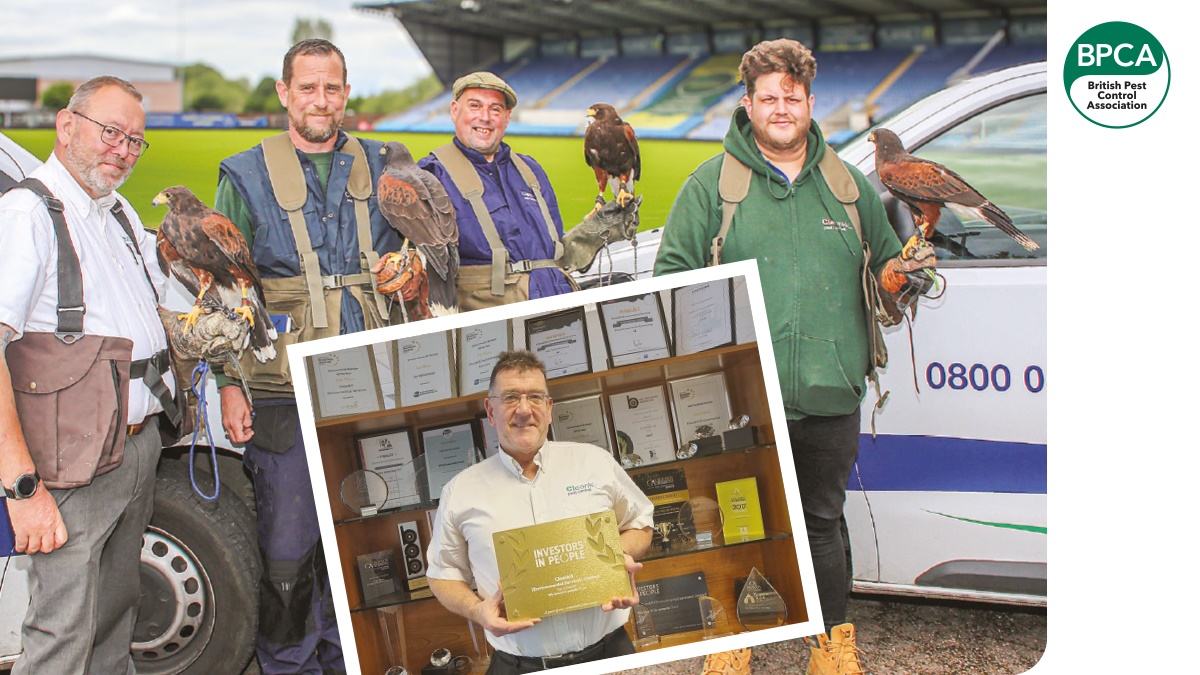
Last year, Cleankill won the BPCA Sustainability Award, and last month, we won the London Chamber of Commerce Silver Sustainability Award. Before that, we had won several green awards... so we must be doing something right!
But sustainability has got to be more than just about winning awards. Sustainability is about reducing environmental impact, improving the reputation of the company and our profession, and, ideally, producing more profit for our industry.
A common statement about sustainability is that it is about meeting the needs of the present without compromising the ability of future generations – our children and their children – to meet their own needs. How do we navigate a more sustainable future?
Three pillars of sustainability
I believe sustainability has three main pillars. Environmental sustainability covers most of what we hear about today and what most people think of when sustainability is mentioned. However, businesses also need to be sustainable.
The phrase ‘corporate social responsibility’ is something that all businesses should be aware of. Working with charities and the local communities helps establish our businesses and our industry as sustainable. The more socially sustainable we become – the more we become economically viable as a business.
Social sustainability also means looking after your staff – you cannot run a successful business with unhappy staff, and you should not generate profit at any cost.
We all know and understand many of the things we need to do as second nature – energy efficient lighting and LED fly units, reducing waste, recycling and composting.
We should support local communities, use local suppliers and employ staff who live close to the patches they work on. Diversity and inclusion are important for us to become economically sustainable businesses.
Sustainable working
Hawking is a highly sustainable side of the industry that has really taken off (pun intended) over the past ten years.
First used in Persia and Mesopotamia around 2,000 years ago to protect crops and livestock, it has now made a massive comeback as a means of pest bird control across the UK and beyond. At Cleankill, we employ several hawks, and I have never once had to refer them to our HR department. They take time off for their annual moult but, apart from that, they are very good, cheap labour.
Our foot technicians are very economically sustainable, especially when there are no train strikes. There are no vehicle maintenance, fuel, or insurance issues, no London parking issues, and they don’t get fined for stopping in yellow box junctions. We just have the cost of a small store in their zone area and the occasional re-tread of their safety shoes.
Although we are not going back to flat cap and whippet pest control as many of our favoured rodenticides and insecticides are being withdrawn, we are moving back to traditional traps while modernising with the use of remote electronic detection. Now, we do much more monitoring and detection – we ‘proof’ – ie the old exclude/restrict/destroy method of pest control.
Of course, reducing pesticide use and meeting organic food and Soil Association requirements do have their downside.
Twenty years ago, oats, cocoa, and other commodities were fumigated either on the boats or at the ports, and nobody saw any insect life. Now, the product is packaged up, never having been near a pesticide or fumigant, and goes into kitchen cupboards, where customers are horrified to see grain weevils, flour beetles and meal moths running amok.
They then ask a pest control company to come in and spray their kitchen cupboards with insecticides.
Reducing paper
Cleankill has been reducing paper use for over 14 years now.
Originally, we used what was called a magic pen – essentially a ballpoint pen with a camera at the end that read the writing and transferred it onto pre-printed forms.
Now, all of our technicians report via iPad using Bantham Technologies reporting systems. Using this system we save, according to Bantham, over 165,000 pages of A4 paper a year, 1.8 million litres of water and 62 tonnes of CO2.
Is sustainability just today’s ‘in phrase’ and the government’s flavour of the day? For me, sustainability is about what you believe is right and doing your research as best as you can.
To run a sustainable business, you need to employ quality staff and make a profit. The Investor in People framework has helped Cleankill by looking at every aspect of our staff – from day one in the company through the training, benefits and prospects. We have now achieved our Gold accreditation for the third time.
Every business will grow or shrink, and we cannot stand still, as shrinking is unsustainable. Treating staff well means they will stay, which, in turn, will produce profit, which equals sustainability.
Awards
I encourage everybody to enter as many awards as they can. They make you look at different aspects of your business. If you win, you can use it in your marketing, and your potential clients will see you as a professional company.
If you lose, look at the people who have won – what are they doing that you are not? Can you use their skills to improve your business?
The future
What will pest control look like in 10 or 20 years’ time?
Drones are being used for building surveys. Will they be able to install netting? Will remote detection completely replace the need for human technician intervention?
I remember when barcodes were put inside boxes and sold as a way of showing that boxes were being checked. I always said that the more important side of pest control is what is going on outside the boxes, as a monkey can check a barcode, and it takes training and experience to do pest control properly.
Will pests adapt to climate change faster than us? Of course they will. And they will adapt far faster to any new methods that we develop.
There are many unanswered questions about sustainability, and the environment is the major current talking point. But as an industry, we need to make our own businesses sustainable, environmentally, socially and economically, and I believe we need to make the general public far more aware of what we do.
We are not just a ‘distress’ business. As 2020 proved, when BPCA got us marked as key workers, no hospital or food production company could operate without a pest control regime in place.
“I encourage everybody to enter as many awards as they can. They make you look at different aspects of your business.”
Get involved
The British Pest Control Association is OUR Association. I get very frustrated when I see articles on various social media sites asking what BPCA does for us. It is run by volunteers from the industry with a small central staff team that carries out the wishes of the members.
For us as individual companies to remain sustainable, give talks to anybody you can. If people know about you, they are always interested. I give talks to business network groups, women’s institutes, churches and schools. The life of grime and insects is fascinating to people outside, and we do not publicise ourselves enough.
We all have a role to play in keeping this sector sustainable – and it’s not just about reducing chemicals and mileage. It’s about the hearts and minds of our customers, giving back to our communities, education, staff retention and volunteering with your trade association.
Your opinion
PPC is your magazine, and if you have a strong opinion or want to write for us – get in touch!
[email protected]
Source: