PPC116 | Technical
Ellen Fitzgibbons at Wade Environmental has put together some handy information to explain the purpose of LD50s and how we use them.
What is LD50?
LD stands for lethal dose. LD’50’ is the quantity of a substance which causes the death of 50% of the given population of animals. It is one way to measure the acute toxicity of rodenticides.
It is important to note that the LD50 is a true average; some animals will be more susceptible and will require less to ingest a lethal dose. On the other hand, some animals will be more robust against rodenticides, needing to ingest more to inflict a lethal dose.
This is a useful metric for toxicologists and chemical manufacturers to compare toxic effects against chemicals that do not have the same mode of action. For example, one chemical may damage the kidneys, whereas another may affect the heart. Determining which is more ‘toxic’ solely from this information isn’t feasible.

How can professionals use LD50?
LD50 values can and should be used by professionals. At the core, this can be used from a risk mitigation perspective. The information can be used on safety data sheets, risk assessments and COSHH assessments.
For example, it can be used to recommend the most appropriate PPE, as well as decisions regarding handling and storage.
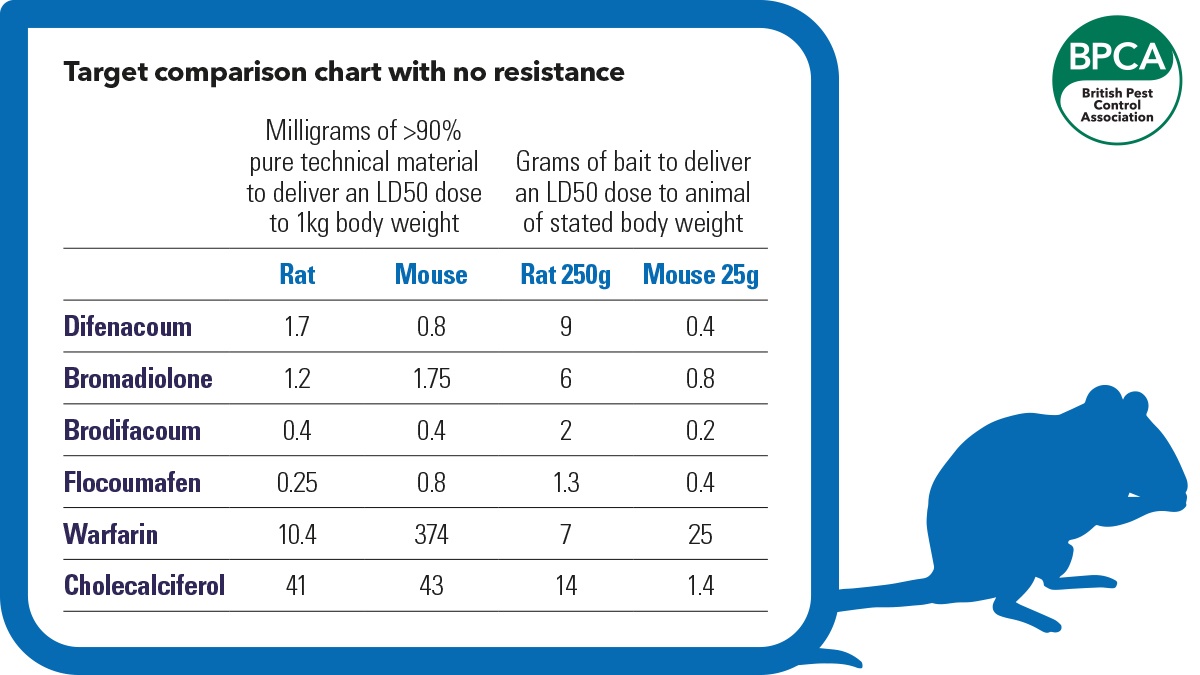
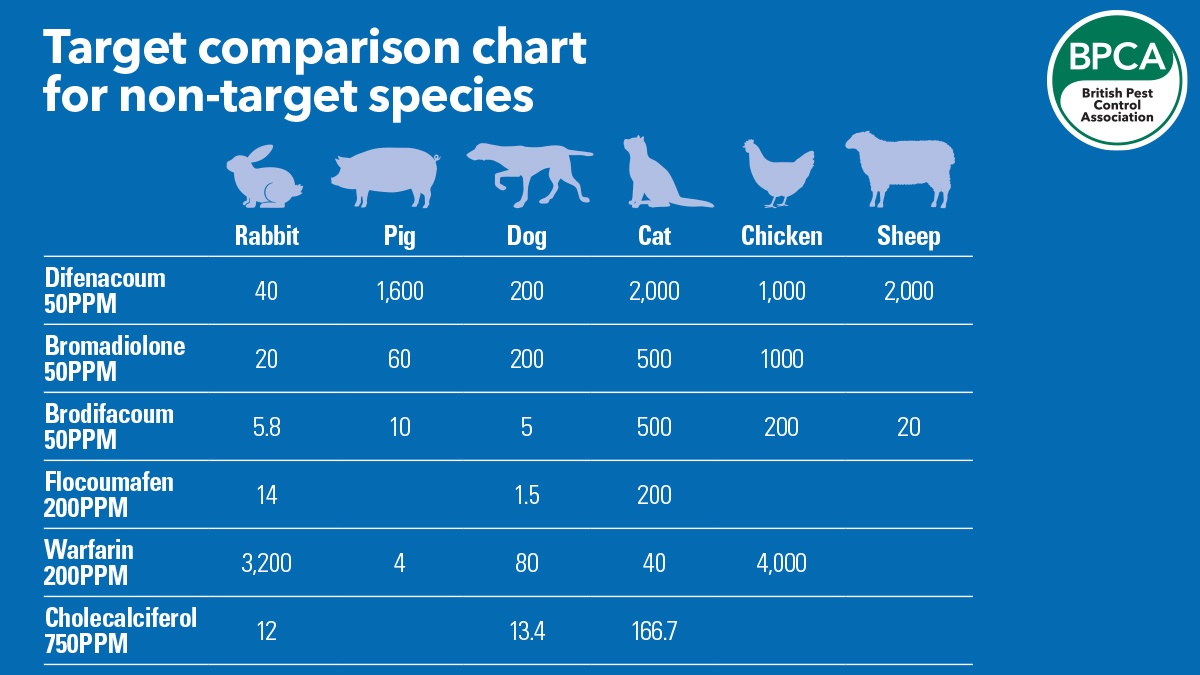
The comparison tables show how many grams of bait per kilo of body weight it takes to be ingested by an animal to inflict a 50% chance of death. This information assists in the selection of the most effective bait for the target animal, but also the most appropriate one minimising risks to non-target species.
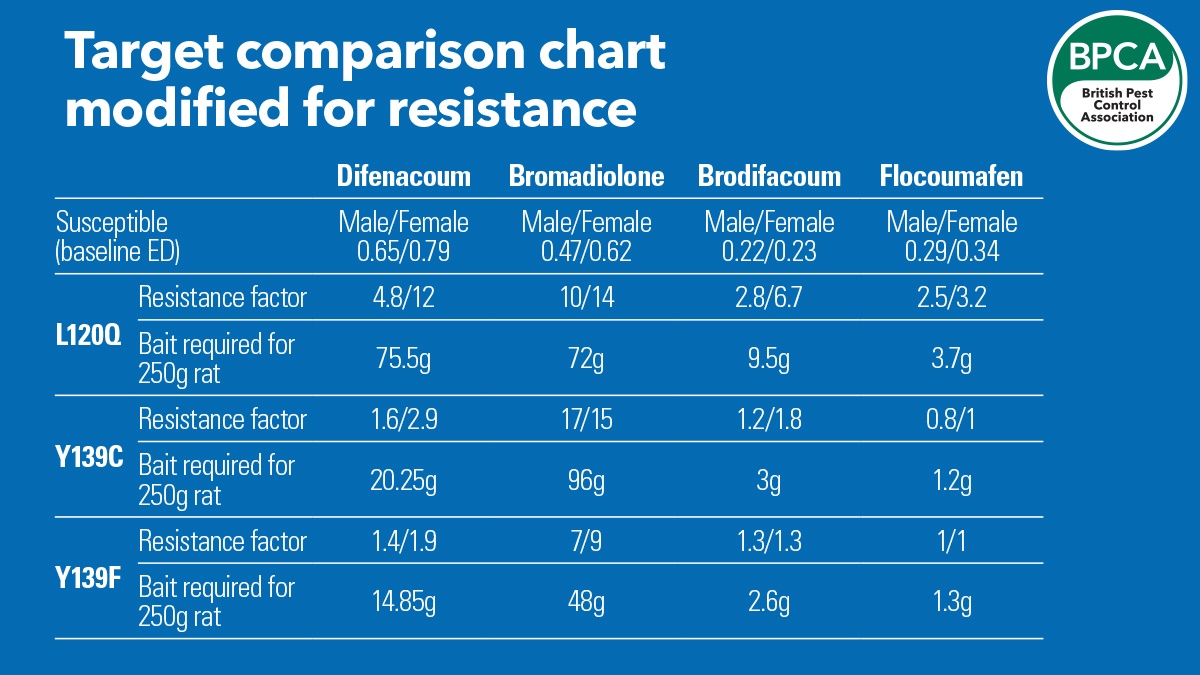
Now, more than ever, we must not ignore the rise of resistance to rodenticides. Due to the volume required for a lethal dose, once effective baits may no longer be the best choices.
It also poses a larger risk of secondary and non-targeted poisoning. Take, for example, ‘Bromadiolone 50ppm’. The LD for a 250g rat with no resistance is, on average, 6g. This jumps significantly to an average of 72g for an LD50 when the L120Q resistance is present.
By understanding the LD50 values, professionals can make informed choices of the safe and effective use of rodenticides in pest control strategies.
“Now, more than ever, we must not ignore the rise of resistance to rodenticides. Due to the volume required for a lethal dose, once effective baits may no longer be the best choices.”
| |
Rat |
Mouse |
Rat 250g |
Mouse 25g |
| Difenacoum |
1.7 |
0.8 |
9 |
0.4 |
| Bromadiolone |
1.2 |
1.75 |
6 |
0.8 |
| Brodifacoum |
0.4 |
0.4 |
2 |
0.2 |
| Flocoumafen |
0.25 |
0.8 |
1.3 |
0.4 |
| Warfarin |
10.4 |
374 |
7 |
25 |
| Cholecalciferol |
41 |
43 |
14 |
1.4 |
Target comparison chart modified for resistance
Resistance factors in male/female homozygous rats, as multiples of the dose of the respective compound required to elicit an effect. They are displayed by sex, then as a combined average.
| |
|
Difenacoum |
Bromadiolone |
Brodifacoum |
Flocoumafen |
Susceptible
(baseline ED) |
|
Male/Female 0.65/0.79 |
Male/Female 0.47/0.62 |
Male/Female 0.22/0.23 |
Male/Female 0.29/0.34 |
| L120Q |
Resistance factor
Bait required for 250g rat
|
4.8/12
75.5g
|
10/14
72g
|
2.8/6.7
9.5g
|
2.5/3.2
3.7g
|
| Y139C |
Resistance factor
Bait required for 250g rat
|
1.6/2.9
20.25g
|
17/15
96g
|
1.2/1.8
3g
|
0.8/1
1.2g
|
| Y139F |
Resistance factor
Bait required for 250g rat
|
1.4/1.9
14.85g
|
7/9
48g
|
1.3/1.3
2.6g
|
1/1
1.3g
|
Target comparison chart for non-target species
Grams of bait to deliver an LD50 dose to 1kg body weight.
| |
Rabbit |
Pig |
Dog |
Cat |
Chicken |
Sheep |
| Difenacoum 50PPM |
40 |
1,600 |
200 |
2,000 |
1,000 |
2,000 |
| Bromadiolone 50PPM |
20 |
60 |
200 |
500 |
1000 |
|
| Brodifacoum 50PPM |
5.8 |
10 |
5 |
500 |
200 |
20 |
| Flocoumafen 200PPM |
14 |
|
1.5 |
200 |
|
|
| Warfarin 200PPM |
3,200 |
4 |
80 |
40 |
4,000 |
|
| Cholecalciferol 750PPM |
12 |
|
13.4 |
166.7 |
|
|
All data has been taken from industry manufacturers, veterinary studies and the Hayes Handbook of Pesticide Toxicology (third edition) and should be taken as cautionary estimates. In case of accidental poisoning, ALWAYS contact a veterinary professional.
Trivia time
In 1927, J W Trevan attempted to devise a method to estimate the relative poisoning potency of drugs and medicine at that time.
The LD50 test – also known as the lethality test – measures how much of a chemical is required to cause death. This can then be used to measure relative toxicity across chemicals as they quantify the same effect.
Source: