PPC111 | Technical
BPCA’s Technical and Compliance Manager, Natalie Bungay, gives an overview of drain flies, their biology and control.
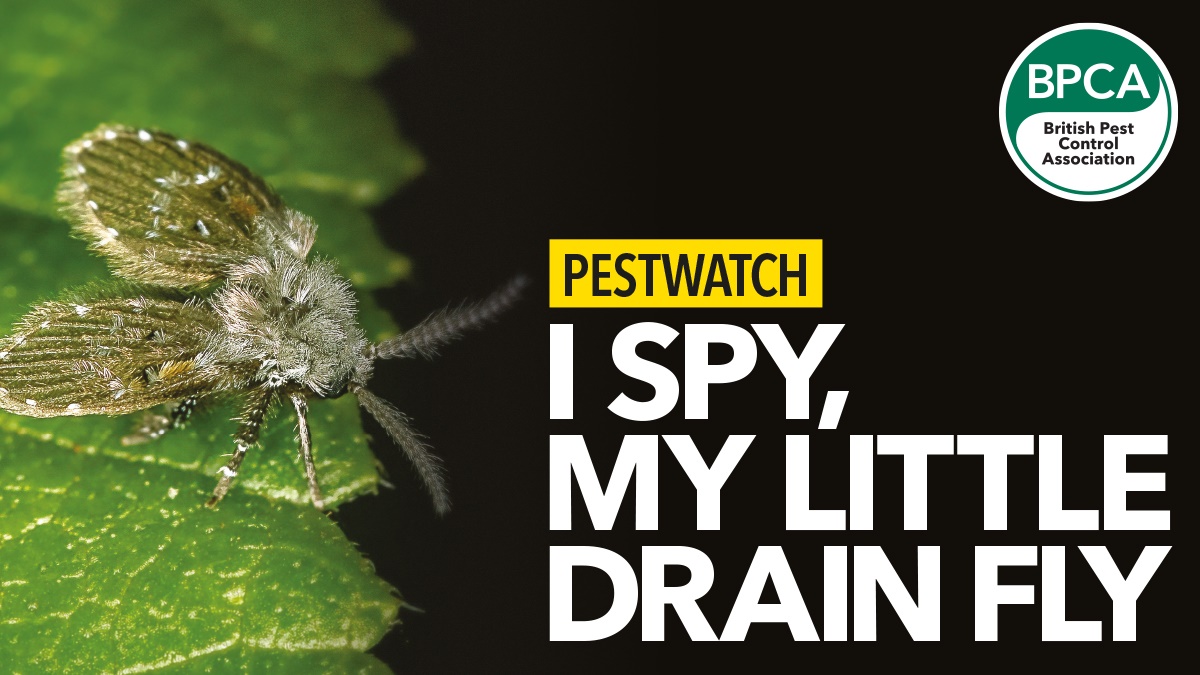
Drain flies (Psychodidae) are small, dark-winged, non-biting gnats. Their wings are covered with scales, so they disappear in a cloud of fine dust when swatted. They can be found resting on walls or ceilings, and make short hopping flights if disturbed.
Drain flies often are a temporary problem. They develop in standing water so, most commonly for residential properties, they are seen after returning home from a holiday or period of extended travel.
Usually, they disappear soon after normal household activity resumes and water starts to move again, through toilets and drain traps. The few adults from these small infestations can be killed easily with a swatter or flying insect spray.
However, finding many flies over several weeks, in a commercial premises or a home, usually indicates a relatively permanent breeding site that must be found and eliminated.
In this scenario, finding the root cause is of utmost importance; without eliminating the breeding ground, insecticide treatments will be fruitless.
Sources of drain flies
As with most gnats, drain flies need moisture to survive and breed. They can live almost anywhere that water accumulates for a week or more.
Common indoor sites include the fine slime layer that develops along the water surface in infrequently-used toilet bowls and tanks, in sink or floor drains in basements or garages, or drain pans under refrigerators.
Sometimes the grey, wriggling larvae can be seen swimming in the water. These areas need to be cleaned thoroughly with attention to removing surface films. Totally drain the water if possible.
From experience, it can take a fair amount of investigation to find where drain flies are breeding, as the source of water may be hidden.
Two examples are:
1)
A pub experienced large numbers of flies persisting even after flushing sinks regularly, checking behind fridges, emptying the water from a cleaner’s bucket and taking a look in any drains.
None of these actions seemed to work. After a few weeks, I noticed the floorboards in the main pub area were bowing.
I addressed this with the manager and, after some shifting of dishwashers, we found that there was a slight leak from the washer pipe and this was slowly, but surely, flooding the void under the floorboards. This was the breeding ground of the drain fly.
2)
A nursing home, a very high-risk environment for drain flies to be present. The residents are vulnerable to sickness and drain flies do not reside in the cleanest of places! After some time, we pinpointed an area with a slight ‘drain smell’ within one of the offices.
We noticed a small drain cover outside the window, close to the bad smell. Drain experts were hired to identify a small crack in a pipe that ran through the cavity floor and wall. This allowed sewage water to spill into the cavity and the drain flies loved it!
Both of these examples show how important it is to find the root cause. Drain flies can also breed outdoors during the summer, with adults entering homes through open doors or windows. Low, wet areas where air conditioning units drain are excellent places for these insects to develop.
Clogged guttering could be another breeding ground. These should be addressed if adults do not appear to be emerging from within the house.
“Common indoor sites include the fine slime layer that develops along the water surface in infrequently-used toilet bowls and tanks, in sink or floor drains in basements or garages, or drain pans under refrigerators.”
Control
Control of drain flies should be aimed at the elimination of breeding sites. The most effective method is to clean pipes and traps thoroughly to remove accumulated slime.
Pouring hot water down the drain may provide short-term control, but drain fly larvae are difficult to drown because they are able to trap air bubbles and remain submerged for a day or more.
Do not pour insecticides down drains to kill drain flies: this is illegal!
Insecticides, for drain flies, are generally only used as a knockdown of adults and offer temporary relief. If the root cause is not found and removed, the flies will likely continue.
Good housekeeping is key, so make sure you keep on top of the recommendations you give to your customer. Always put these into your treatment report so that you can refer back to them if the customer complains that the infestation doesn’t go.
A bit of biology
Drain fly larvae live in aquatic to semi-terrestrial or sludge-based habitats, including bathroom sinks, where they feed on bacteria. The larvae of the most commonly encountered species are nearly transparent, with a non-retractable black head.
They can sometimes be seen moving along the moist edges of crevices in showers or baths, or submerged in toilet water when there is a significant infestation.
The drain fly has a complete metamorphosis: egg to larva to pupa to adult. Eggs are laid singly or even in groups at various depths in the filter bed or standing water. The eggs are very small, usually around 0.2mm.
Larvae are shaped like long, thin, somewhat flattened cylinders. They go through three moults, growing gradually from 1-9mm over varying periods of time before pupating, depending on the environmental conditions.
The pupae have two respiratory horns at the anterior end, and development time is again temperature dependent. Once developed, the pupae skin splits and adults will generally cluster together on drier areas around the breeding site.
The total lifecycle, or metamorphosis, takes anywhere from 16 to 140 days! If the temperature falls below six degrees celcius then completion of the lifecycle does not occur. Because drain flies usually occur and breed in environments such as sewers, they bring with them a potentially large range of disease organisms and bacteria.
As these flies often land on surfaces that humans come into contact with, we need to be vigilant with hygiene advice to clients while the infestation persists.
Source: PPC111