PRESS RELEASE
Cockroaches are famously resilient - for years people believed they could even survive a nuclear bomb.
What they can’t survive is the new laser and artificial intelligence system designed by a scientist at Heriot-Watt University in Edinburgh.
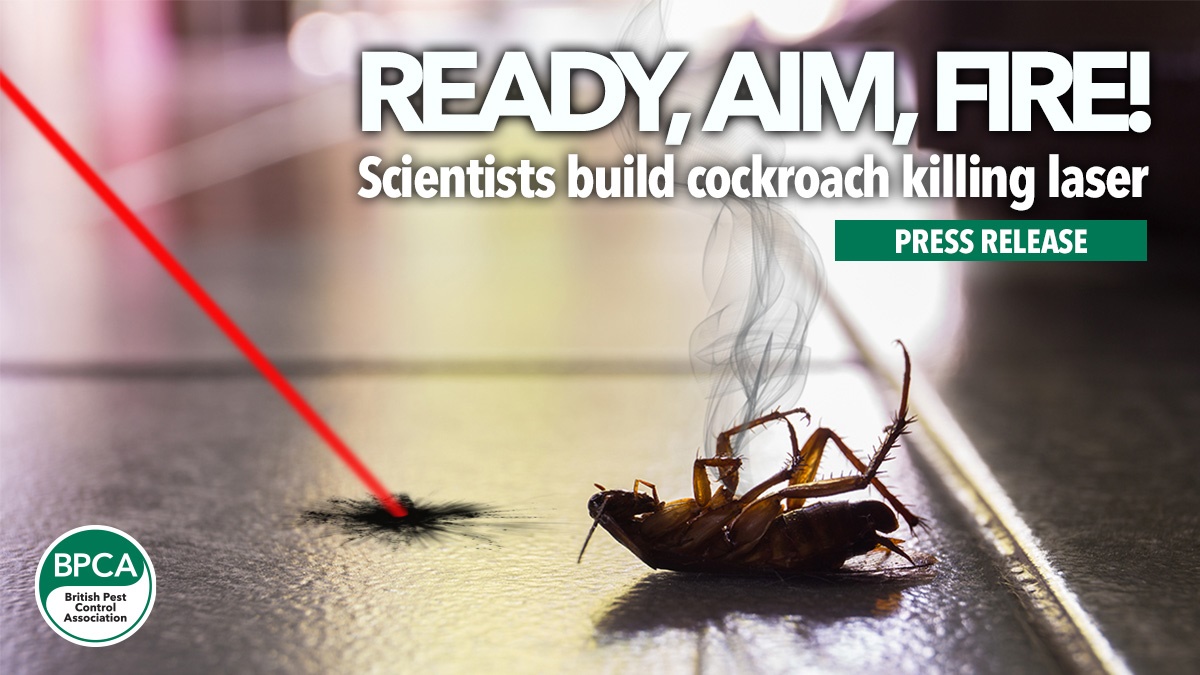
Ildar Rakhmatulin tested his system on cockroaches last year. The findings are now published in Oriental Insects.
Household cockroaches can live in populations of millions. They can spoil food and appliances but are also a serious health hazard, triggering allergic reactions and the development of asthma.
There are a multitude of methods for monitoring and controlling cockroaches like sticky traps, gels and pastes.
Rahkmatulin’s system, which was all built using affordable, off-the-shelf equipment, detects cockroaches with high accuracy from 1.2m.
The system relies on machine vision, which basically gives a computer the ability to see. Two cameras send signals back to the computer which give the cockroach’s position.
That information is used to point the laser toward the cockroach. Machine vision then confirms whether the cockroach is still moving or not.
Rakhmatulin and his coauthors carried out a series of experiments.
When they used the laser on low power they could change cockroach behaviour: emitting persistent heat from the laser causes the cockroaches to change position or direction. This means they can be deterred from dark hiding places.
Turning the heat up on the laser meant they could neutralise, or kill, the cockroaches from up to 1.2 m.
“This laser system is selective and eco-friendly pest control method. It’s extremely promising”, says Rakhmatulin.
“It’s a tunable system, so it could be used to protect against mosquitoes, to keep predatory hornets away from bees or parasites from valuable crops or stores.”
Rakhmatulin has published his methods, data and equipment used online. However, the open source information comes with a warning.
“This system is not suitable for household use. The laser used will cause blindness or serious damage to the eyes.
“I’m sorry for people with cockroaches in their house, but this isn’t the solution for them.”
Read the paper in full here.
Visit Rakhmutlin’s GitHub for more info here.
Source: Online