PESTAWARE
Ventilating wardrobes and vacuum packing clothes are among the tips from a national trade body on protecting clothes and textiles from moths.
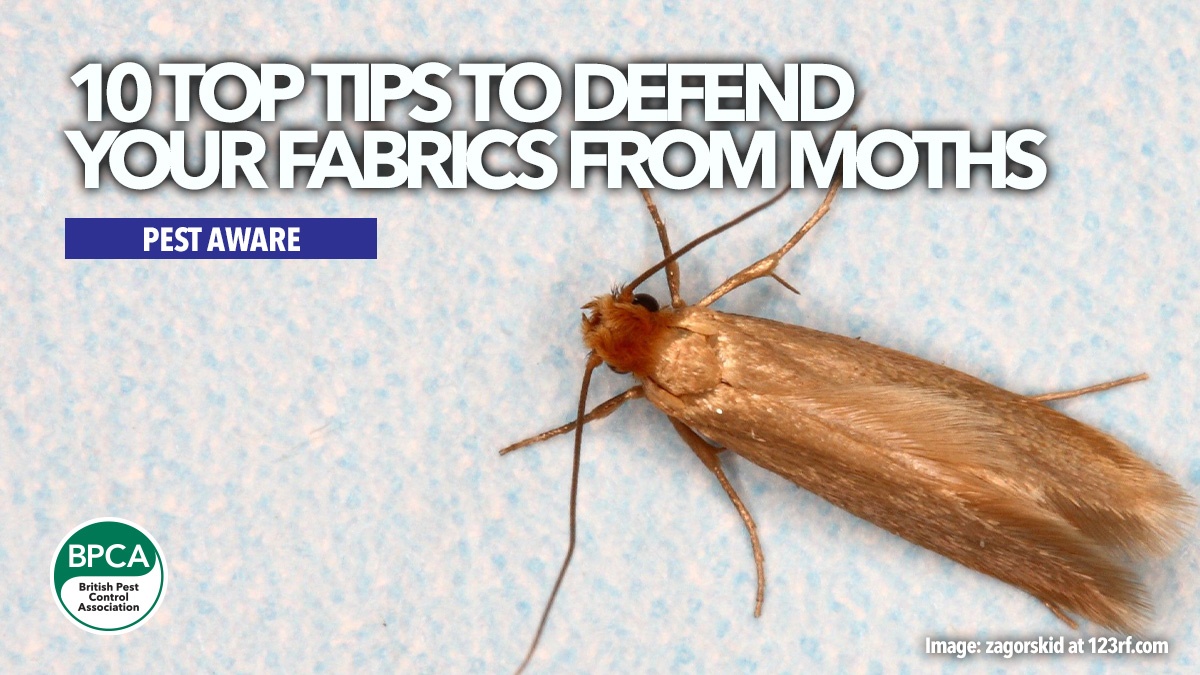
British Pest Control Association (BPCA) has issued a new online guide to moths, outlining how they can damage clothes, carpets and other textiles.
BPCA also has 10 top tips on how to prevent a moth infestation and what to do if you find them in numbers inside your business.
John Horsley is Technical Support Officer at BPCA. He said: “Moths don’t spread disease and don’t bite humans – many don’t even have mouths.
“But some moth larvae can cause incredible damage to property such as clothes and carpets.
“Of the 2,500 species of moth found in the UK, only a small number are considered to be a pest.
“Common clothes moth larvae can cause great damage to precious items such as wedding dresses and prayer mats and is often a major pest in museums and stately homes.
“The larvae of the Indian meal moth can penetrate food packaging and will contaminate the food with vast amounts of spun silk which accumulates fecal pellets, cast skin and egg shells.
“And the White-shouldered house moth poses a risk to stored food and textiles.”
How to deal with moths:
- Wash clothes thoroughly before they are put away, moths are attracted to perspiration and food stains
- Place clothes in airtight containers or plastic garment bags if you are storing them for long periods of time
- Brush clothes made of wool or fur after they have been worn outside
- Keep wardrobes and other storage areas for clothing dry and well ventilated. Regularly use a vacuum cleaner for carpets and rugs, inside clothing storage cupboards and draws, and in cracks and crevices such as behind radiators
- Regularly check stored clothing, blankets and other textiles
- Clothes that have been infested but not destroyed may be saved by placing them into a plastic bag and freezing at -18°C for at least two weeks
- Dry cleaning and hot washing are not recommended. The chemicals used in dry cleaning are not insecticides and you could spread the infestation to the business. Hot washing can damage clothes that are made of natural fibres – which moths are more likely to infest – so in an attempt to save them from moths, you could ruin them in the wash
- Check attic spaces and chimneys for old birds’ nests – these can sometimes be a source for White-shouldered house moth
- If you decide to use amateur-use insecticides, always read the label thoroughly and follow the instructions carefully. You must be certain you will not be harming other species, such as bats roosting in your attic space. If ordering online, make sure the product you purchase is legal for use in the UK. Be aware that you will still need to find the source of the problem to avoid re-infestation
- If you have a major infestation, or are one of the many people with a phobia of moths, seek help from pest management professional such as a member of BPCA.
For detailed information, go to BPCA’s online guide at: bpca.org.uk/moths
John added: “It’s easy to assume that getting rid of the moth is enough, but if the eggs or larvae are still present, the problem will remain.
“One or two moths may be a simple nuisance, but in large numbers they can be distressing.
“If you believe you have an infestation, we would recommend contacting a pest management professional, such as a BPCA member.”
BPCA members are experienced professionals with access to a range of specialist products not available to the public.
They are trained, qualified and regularly assessed to the British Standard in Pest Management BS EN 16636.
To find a professional pest controller visit bpca.org.uk/find
Source: Online