PRESS RELEASE
Managers of large centrally heated buildings are being urged to understand the risks posed by a small tropical species.
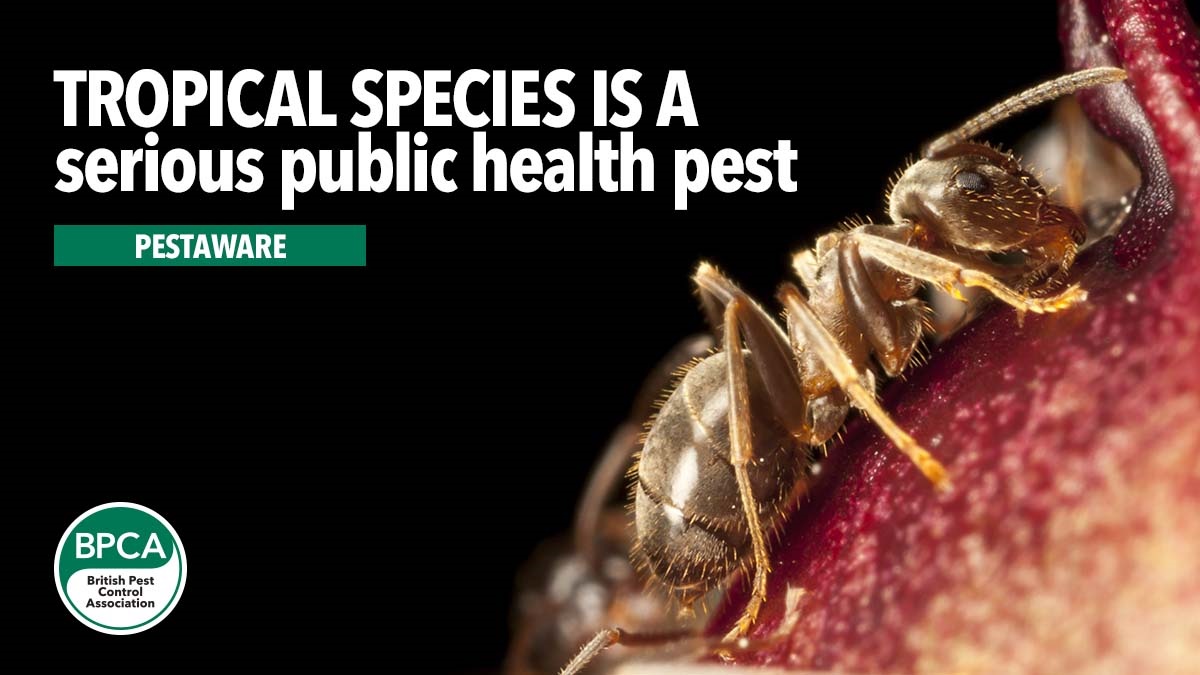
Pharaoh ants are tiny, but can create huge colonies that that will split if threatened and can potentially spiral out of control, says the British Pest Control Association (BPCA).
In the UK, the pests will only be found in the structures of large centrally-heated buildings such as high-rise flats, hospitals and bakeries.
Specialist products can effectively control the heat-loving insects – which are frequently found in the boiler rooms of interconnected buildings and, quite commonly, trailing down surfaces close to high heat sources such as ovens – but training and knowledge are key to tackling a nest of Pharaoh ants.
Natalie Bungay is Technical Manager at BPCA. She said: “Pharaoh ant nests can vary in size, but they can grow to massive proportions, with research finding nests containing 50,000 workers and 100,000 ants in the young stages.
“Only 5-10% of workers forage for food, so a trail of Pharaoh ants down the face of a wall or machine is just a small part of the picture.
“The workers may respond to danger by ‘budding’ - sometimes referred to as ‘satelliting’ – and will move pupae and young larvae away from the original colony, which can lead to the ants spreading throughout a building or complex, and the infestation spiralling out of control.”
Professional pest controllers should always be called in to tackle an infestation of Pharaoh ants as specialist products and careful surveying are required for successful treatment.
Natalie added: “A hormone bait can be used to sterilise queens and prevent larvae from developing, but this system can mean controlling the infestation could take around four months.
“Newer, in-depth surveying and gel bait products mean control can be achieved within two or three weeks, but a carefully planned and implemented strategy, delivered by a professional pest controller, is the key to success.”
More information can be found at bpca.org.uk/Pharaohant
They are trained, qualified and regularly assessed to the British Standard in Pest Management BS EN 16636.
For more information about pest problems, or to find a BPCA member, visit: bpca.org.uk/find.
Source: Online