Technical| PPC96 August 2019
In this in-depth PestWatch analysis, BPCA Technical Officer, Natalie Bungay, investigates silverfish and grey silverfish, paying particular attention to the difference in approaches when confronting each species.
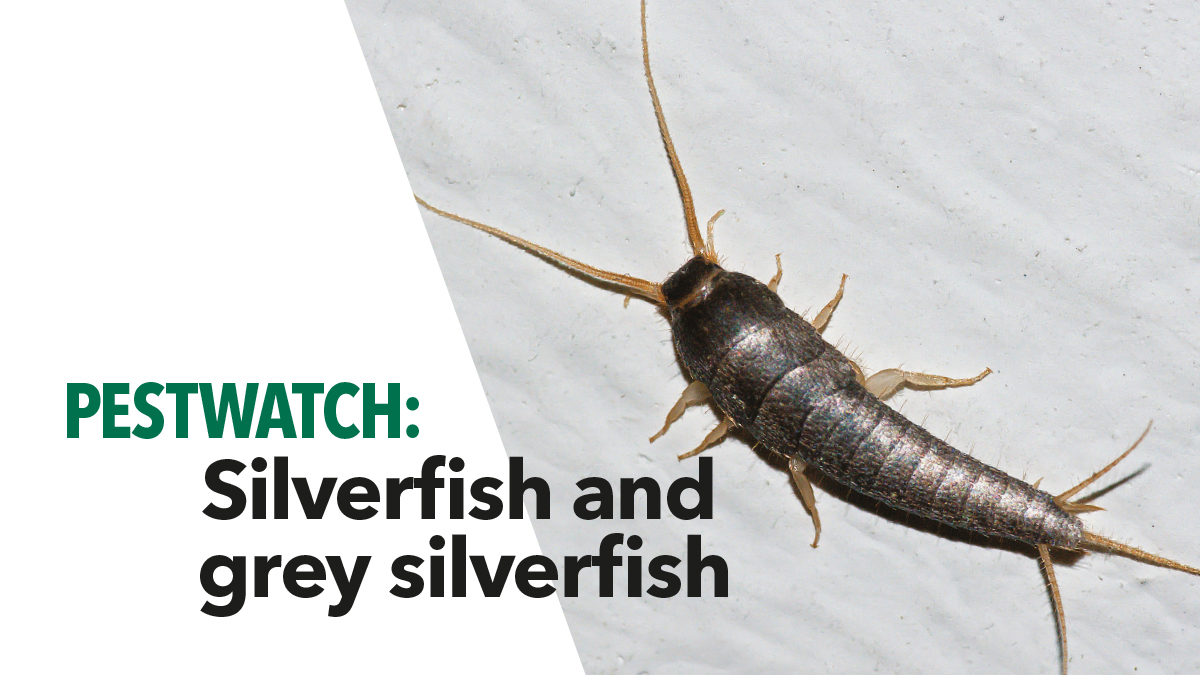
Silverfish (Lepisma saccharina)
Silverfish are invertebrates most pest professionals will have come across in the course of their work, as they are quite common.
This species is found worldwide and thrives in human habitats due to our lifestyle.
They are common in the UK, foraging at night in bathrooms, kitchens and pantries where they may become trapped in sinks, baths, glass and chinaware as they cannot climb smooth surfaces very well.
By day they will hide beneath loose floor coverings, behind wallpaper, skirting boards, bath panels and other similar places.
Public health risk
Although this pest is mostly only considered a nuisance, if they reach substantial numbers they can become unacceptable, especially in sterile environments such as hospitals.
They can also damage papers, textiles and packets of dried food in damp kitchens.
Biology and lifecycle
Over a couple of months about 100 eggs are laid by the female in cracks and crevices near to foodstuffs but can sometimes be dropped randomly.
Nymphs will emerge which do resemble the adult, albeit slightly fatter and lacking the ‘silvery’ scales.
Adulthood is reached at about the tenth moult and this can take up to a year, depending on the environmental conditions.
An interesting fact about silverfish is their mating ritual.
The male silverfish spins a vague silk-thread structure, depositing a small blob of semen beneath one of the strands. He then coerces the female, by pushing, until she walks beneath one of the strands held taut by the male, contacts the semen and absorbs it into her own body.
Not the most usual of rituals!
Adulthood is reached at about the tenth moult and this can take up to a year, depending on the environmental conditions.
Control
If control of this scavenger is necessary then the use of any approved insecticide is likely to prove effective.
Although it is advisable that humidity control is attempted, this is seldom a realistic approach on its own but it is certainly worth addressing.
Particular efforts should be made to administer insecticide into the cracks and crevices close to where the insect is being seen, as this is where they are likely to rest up and hide.
Grey silverfish (Ctenolepisma longicaudata) AKA ‘the less talked about silverfish’
There is another species of silverfish you might not be familiar with: the grey silverfish (I hear you cry, “They’re all grey aren’t they?”).
Ctenolepisma longicaudata is not talked about very often.
In 2014 an unsuspecting resident spotted a rather large silverfish in her kitchen.
Although it is advisable that humidity control is attempted, this is seldom a realistic approach on its own but it is certainly worth addressing.
It soon became apparent that this was not the common silverfish Lepisma saccharina, as the sample was quite hairy, with a longer body length (11mm) and long antennae and bristles at the rear.
Altogether, the specimen was just under 40mm in length; from the tip of the antennae, all the way to the tip of the central 'hair' projecting from the end of the abdomen.
This is much longer than the common silverfish and its grey appearance also ruled out the firebrat.
Behavioural observations were made that backed up the literature references to C. longicaudata feeding on starchy materials.
Killgerm talks grey silverfish
At a recent Regional Forum held in Yorkshire, Dr Matthew Davies, Head of Technical at Killgerm Chemicals Ltd, gave an interesting talk about grey silverfish, which are possibly more prevalent in the UK than we realise.
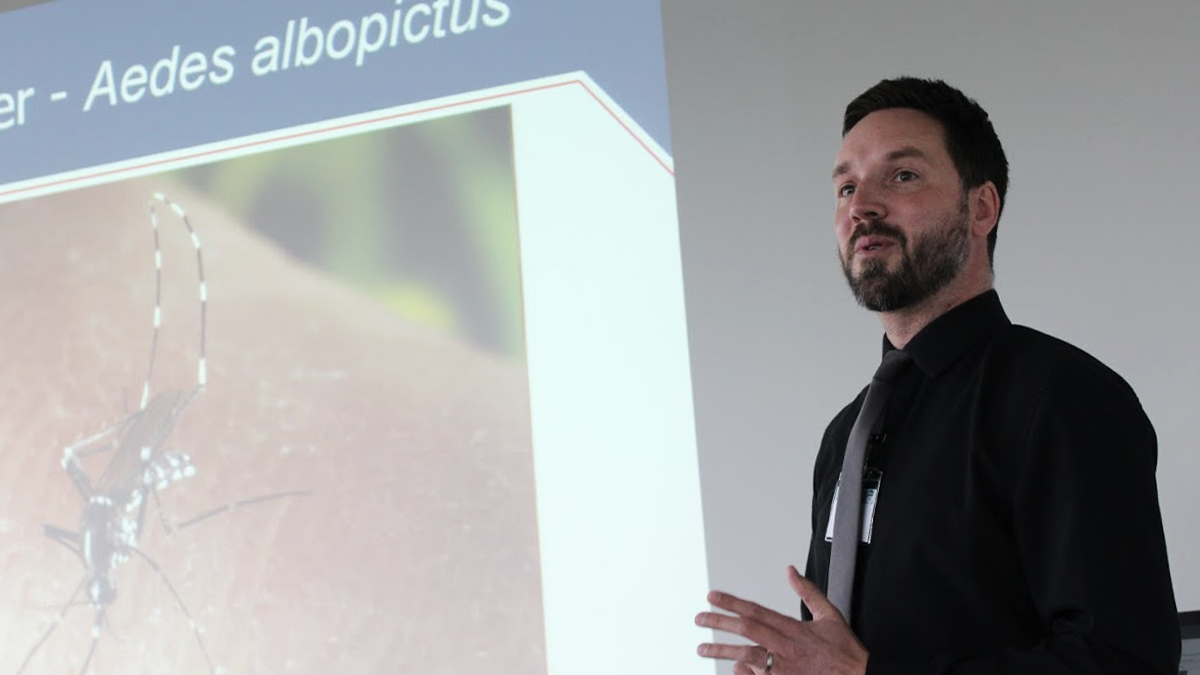
What is the problem? Well, this species is a little different to that which we are used to dealing with.
Some of these differences are important to consider when formulating a treatment plan.
Dr Davies highlighted the fact that grey silverfish can thrive in lower humidity levels than common silverfish.
The recommendations commonly given to customers of reducing levels of humidity can help the issue but, as the grey silverfish thrives at 55-60% humidity compared to 70% for the common silverfish, this may not be as useful.
This means that grey silverfish can be found anywhere indoors rather than only in moist, humid areas such as bathrooms and kitchens.
Dr Davies commented that, on a recent trip to the Netherlands, he was bombarded with statements and denials about the existence of grey silverfish in the country.
He then found a specimen in the hotel in which he was residing! Of course, he then enjoyed collecting said specimen and presenting it with an 'I told you so!'
The message here is that the more commonly known Lepisma saccharina may not actually be the species that you are dealing with, it could be Ctenolepisma longicaudata which, as explained above, needs a slightly different approach.
Ask the team
Is there a specific pest species you’d like us to do an in-depth write up on?
Let us know and we might just do it in a future PPC magazine.
[email protected]
Source: PPC96