Tougher restrictions on permanent rodenticide baiting by farmers, gamekeepers and pest controllers, with legal backing, have been introduced by the Health and Safety Executive (HSE), the UK rodenticide regulatory body.
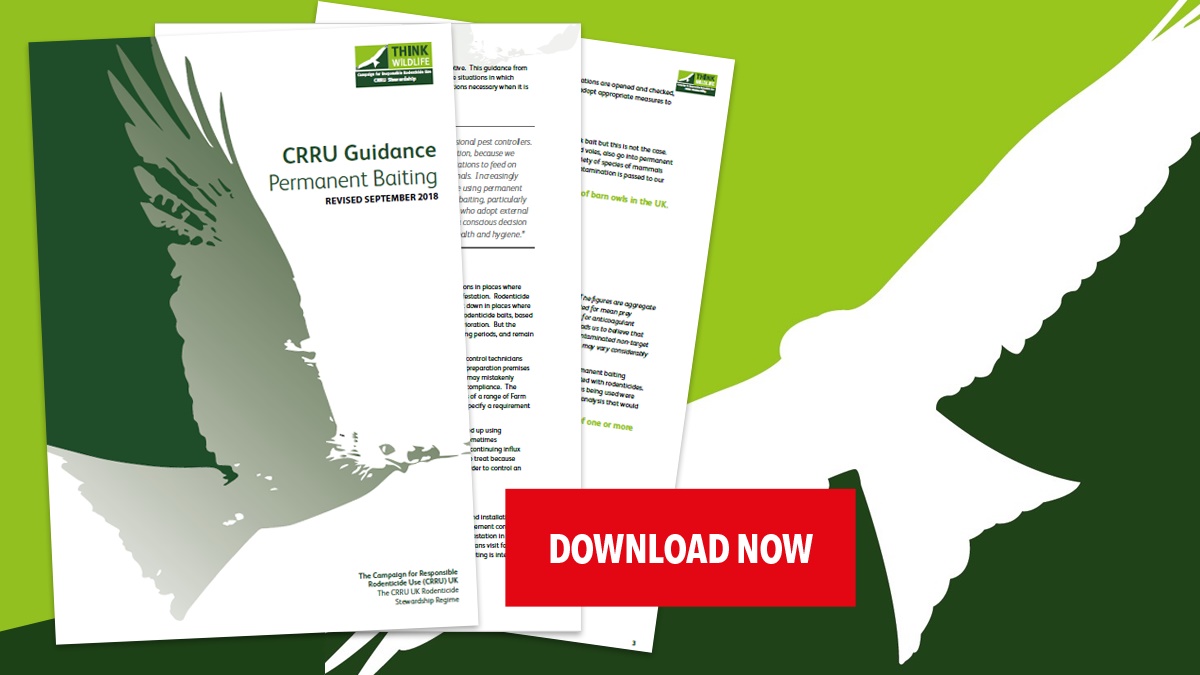
A detailed booklet, CRRU Guidance: Permanent Baiting , is available.
The practice is only approved where high potential for reinvasion is identified and when all alternatives have been considered. It is prohibited as a 'just-in-case' preventive measure when no signs of rats, nor high reinvasion threat, is present.
Dee Ward-Thompson, BPCA Technical Manager, said:
BPCA members have been working this way for years, but it's great to see HSE getting tough with the cowboys out there.
Dee Ward-Thompson, BPCA Technical Manager
The new restrictions address a high risk of wildlife contamination through small mammals such as field mice and voles entering bait stations, eating rodenticide then falling prey to a wide range of predatory birds and mammals. The same applies to some small birds, which possibly explains why anticoagulant residues are found in sparrowhawks and peregrines, which feed almost entirely on birds taken in flight.
One of the main objectives of the UK Rodenticide Stewardship Regime is to reduce residues in all UK wildlife. Restricting the use of permanent baiting will significantly contribute towards achieving this, according to Dr Alan Buckle, chairman of the Campaign for Responsible Rodenticide Use, the body responsible to UK government for the stewardship regime.
Where permanent baiting is justified, some baits containing bromadiolone or difenacoum are allowed, but not all. Those containing the other three second generation anticoagulants are prohibited.
Rodenticide users need to check product labels carefully before use. There are new statements for prohibited as well as allowed permanent baiting rodenticides. For the latter, the key label phrase is
Permanent baiting is strictly limited to sites with high potential for reinvasion when other methods of control have proven insufficient.
Dr Buckle adds:
"In all situations, permanent baiting must never be a routine practice. But as a monitoring device, non-toxic placebo baits should be used more often.
"To counteract rats' acute fear of new things, there is good reason for having tamper-proof bait stations in permanent outdoor locations, but with placebo rather than rodenticide present.
"Inspecting placebo-baited stations regularly can give early warning of a new infestation. Clearly, when this happens, a temporary switch to rodenticide baits can be made until the infestation is cleared. Normally this should take no more than 35 days, followed by resumption with placebo."
Source: Onbline