Meet the member feature| PPC89 November 2017
What happens when you take a Norwegian pest technician out with you on your rounds? James Wood, a technician from Beaver Pest Control, took Rune Bratland, owner of Skadedyrservice AS, Bergen to a couple of his regular contract jobs. James tell us about their day and asks, what can we learn from our Scandinavian colleagues?
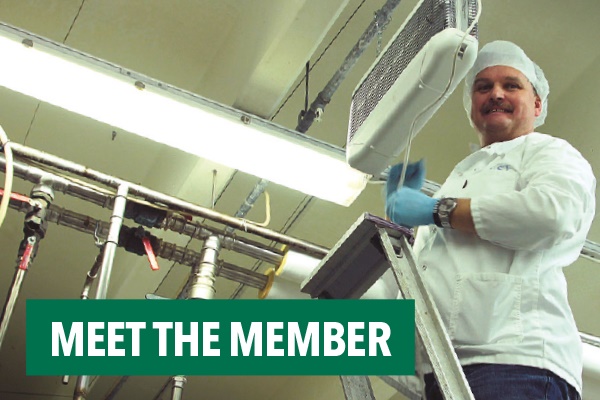
We started the day together with a visit to a Japanese restaurant in Mayfair – a simple routine inspection.
Over the past few years, the contract in question has had no problems other than the occasional build-up of fruit flies. However, recently we had started to get catches in a few specific areas.
95% of the time the problem lies in the structure. We will only use rodenticides after all proofing has been completed and as a last resort.
Sure enough, we discovered several entry points. We could confidently predict closing them would solve the rodent problem.
What surprises me is that the Norwegians seem further ahead when it comes to thinking about preventative measures than the Brits. This became increasingly clear as
I spoke with Rune.
Rune’s business operates out of Bergen where many of the buildings are made from wood. This adds its own set of challenges when combined with the prevalence of rats.
Physical restriction in the forms of proofing or trapping, if unsuccessful, is then followed up with baiting, depending
on the circumstance.
Bait boxes in Norway must display the active ingredient on the box so anyone can read them. Grain bait and contact gels are not in circulation.
When it comes to environmentalism the pest control industry in Norway isn’t out of touch
In the UK the hierarchy of risk and IPM are considered by responsible pest controllers, but we have not reached the point yet where this is the default way of approaching problems.
The initial instinct of many UK pest controllers is to clear a problem then tackle the point of origin at a later date, and there can be justification for this, especially in densely-packed cities where locating a source can feel impossible at times. In Norway, it seems, this leap has been made.
Take the use of insecticides, for example. A cockroach infestation may very well include the use of baiting, but would only require the use of residual insecticides in rare cases. Again the emphasis is placed on physical control measures, even in developed infestations.
Vacuum cleaners may be used to remove the majority of visible insects
in place of a residual spray as a knockdown. This process is followed by baiting to treat and eliminate the infestation.
Similarly, freezer units and heat tent treatments are employed where possible to treat other insects without or with minimal application of insecticides, with the majority of the cost going towards transportation of items like mattresses.
Pest control in London is a very different game
The sheer volume and proximity of businesses and buildings make transport less of an issue. We don’t need to take out loads of kit.
A full day’s work, if organised well, can be carried out by a footman with a single bag of kit. This is something which is much harder to do across the North Sea or even in many parts of the UK.
Also, phenomena such as bait shyness and the physicality of the cityscape completely transforms what we do.
There’s Nor-way I’d do it like that
Rune Bratland is the owner and general manager of Skadedyrservice AS, Chairman of SkaBra, the pest management association for Norway, and has also been appointed as one of the Vice-Presidents of CEPA.
Rune tells us about the fundamental ways Norwegian pest management companies work.
Choosing a treatment
We are obliged to write in our clients’ reports why we decide to do what we do. Everything is measured appropriately for sustainable usage. Non-toxic treatment like cleaning, monitoring or proofing are used first if this can solve the problem. If not, we still consider the least toxic alternative.
Bait before spraying insecticides. Non-toxic before trapping. Trapping before first-generation anticoagulants. Second generation anticoagulants as a last resort.
Communicating with the locals
If chemicals are used, we have to issue a warning to neighbours that can contact the treatment. This includes the time and date for work, the precautions needed, chemicals used, and who is responsible for treatment.
Safe use of bait boxes
All bait boxes should be tamper-resistant, regardless of whether they’re being used indoors or outside.
The boxes are marked with our name, address and phone number, what active substances are used, the total amount of active substance and the phone number for our national poison centre.
Usually, these labels are yellow. We also mark the property we’re treating with the same type of label.
Pest aware food professionals
Every store, restaurant, warehouse and shop that handles food professionally is obliged by law to have a system for pest control. They can monitor this themselves, but most businesses hire pest control officers to do the job for them.
Monitoring and visits per Year
The Norwegian pest control association has recommended at least six visits per year on locations that don’t have any special problems.
If a location has any problem, the number of visits must be increased until the situation is under control. This will vary depending on what the specific issues are.
Would you like your guest article to appear in PPC magazine or on our website? Tell us your idea for a story.
[email protected]
Source: PPC89