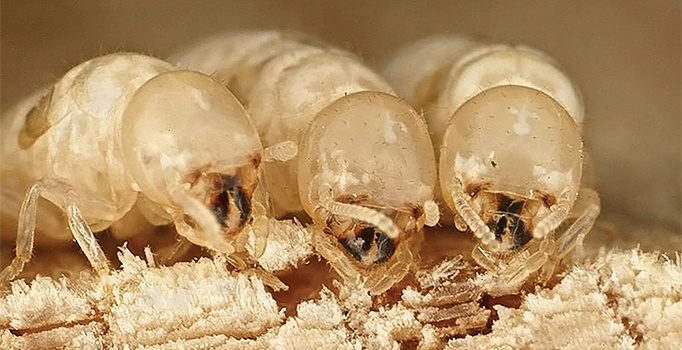
BPCA member, CSS Pest Services, identified a small colony, initially thought to contain up to 30 termites, during a routine inspection.
After seeking confirmation from an entomologist, the termites were identified as Kalotermitidae, more commonly known as ‘Drywood Termite’.
After notifying the non-native species secretariat, Jason Cholerton, Technical Manager of CSS Services said:
“Our Technician noticed timber supports in reptile housing had been gnawed. He brought a sample of insects back to our office and they were later confirmed as dry wood termites.”
“We think they might have been brought in via timber that was imported about a year ago as that’s how long we think they’ve been active for.”
The client later confirmed that the timber had been in tanks for 18 months and had been purchased from a UK timber merchant, who had also been notified.
With a plentiful supply of suitable wood, alongside consistent warm temperatures of between 24 and 26°C, the colony was able to develop.
However, despite concerns over damage to timber outside of the reptile housing, it was also confirmed termite activity was confined to the reptile housing.
Jason explained the treatment:
“After rehoming the reptiles, bedding was destroyed and the timber from within the reptile housing was incinerated.
Given that reptiles are present, we decided to recommend a non-chemical treatment, with monitoring visits each month.”

Termite Control
Clive Boase of The Pest Management Consultancy (BPCA Consultant Member) reported:
"Termites are common and very important pests in warmer parts of the world, where they can cause extensive damage to structural timber.
"For example, in south-west France termites are widespread and there are regulations in place to protect buildings from infestation.
"These termites have extended their range northwards, and are now established in Paris.
"In the UK they are rare introductions, typically in imported goods.
"The only colony known to have become established in the UK was found in and around a house in south Devon in the 1990s, and took years of work by government agencies before it was believed to have been eliminated.
"Most termite species live in underground nests. They feed on dead wood, so worker termites forage out from the nest into dead trees, stacks of firewood, but also into buildings.
"They excavate structural timber from the inside, leaving a thin skin of undamaged wood hiding the damage.
“Termites are good at remaining hidden.
"Signs of infestation in buildings would be the discovery of damaged timber (this could be confused with beetle damage), small mud tubes the diameter of a pencil constructed on the surface of walls etc through which the termites travel undercover from the ground to reach wood, or finding the insects themselves.
The worker termites are usually pale-coloured, soft-bodied, ant-like insects, while the sexual stages are winged and swarm out of the nest when conditions are right.”
Termite Trivia
Termite workers generate vibrations when biting their wood food.
The dominant resonant frequency of these vibrations is related to the size of the wood.
The termites can perceive these vibration signals and use them to assess the size of the wood.
Termites also appear to be able to determine the source of the vibrationsignals, and use them to make foraging decisions and development and reproduction decisions based on this information.
 Ben Massey
Marketing and Communications Manager
7 November 2017 | BPCA Online
Source: BPCA Online