HEALTH AND SAFETY
Following confirmed cases of Highly Pathogenic Avian Influenza (HPAI), BPCA has written some precautionary guidance for pest professionals working alongside birds and cattle during an outbreak.
This guidance is for those who may be in close direct contact with or working around potentially affected animals.
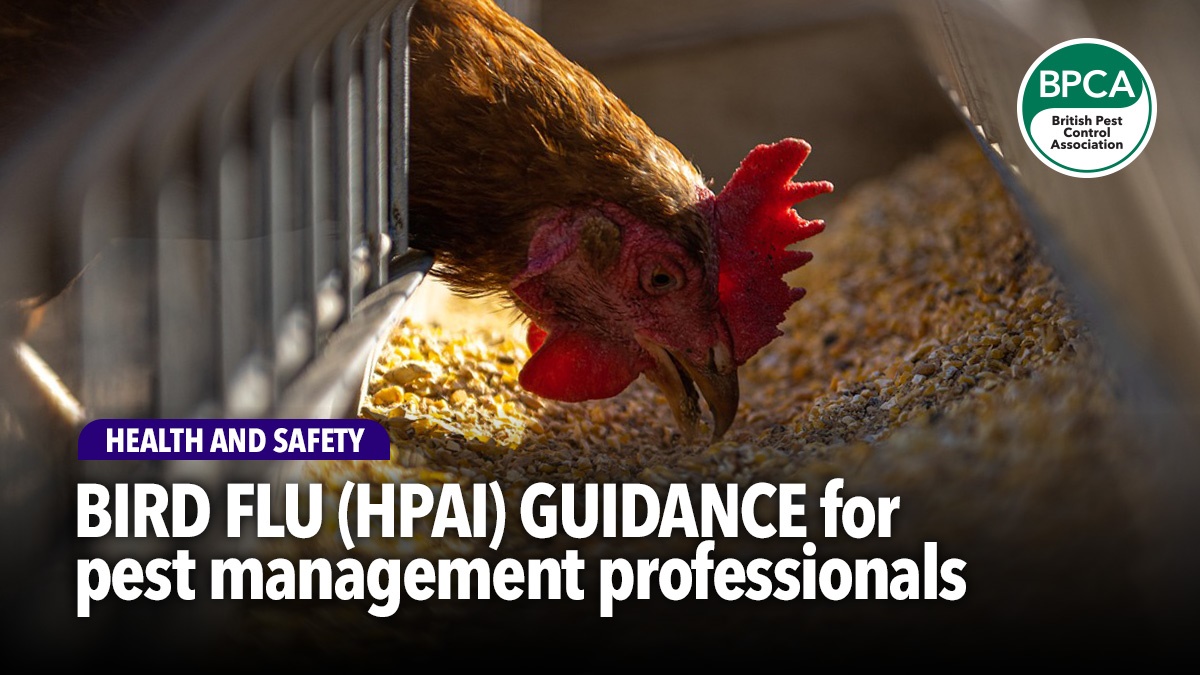
What is High Pathogenic Avian Influenza (HPAI)?
Avian influenza, commonly called “bird flu,” is a viral infection that is predominantly in birds but can spread to other species including cows, domestic and wild cats, seals and other animals. It can sometimes spread to people.
In humans, H5 subtypes of influenza A are the most common.
The first case of HPAI H5N1 of the current outbreak was confirmed in:
- England on 17 November 2024
- Scotland on 10 January 2025.
The UK Health Security Agency (UKHSA) advise that bird flu is primarily a disease of birds and the risk to the general public’s health is very low, however surveillance is in place to manage outbreaks and identity potential human cases.
How is HPAI spread?
Bird flu can be spread through a variety of means such as:
- Touching infected birds
- Touching droppings or bedding (such as bird housing units)
- Killing or preparing infected poultry for use in cooking
- Airborne transmission from close proximity to birds.
You will need to fill out a risk assessment if there is the potential for contact with suspected or known cases/contaminated environments.
A COSHH assessment should be carried out and followed. If you have employees, then this is your responsibility under the Health & Safety at Work Act 1981.
Template risk assessments can be found in the BPCA member library (login required): bpca.org.uk/library
Reportable instances
If you suspect bird flu in poultry or other captive birds, you must report it immediately by calling:
- England: 03000 200 301
- Wales: 03003 038 268
- Local Apha Field Office in Scotland
- Northern Ireland: 0300 200 7840
Personal Protective Equipment (PPE)
PPE is required and is the last barrier of defence in reducing the risk of exposure to the avian influenza virus through airborne transmission, direct contact or conjunctivitis.
- Suitable disposal FFP3 or Reusable FFP3 (With regular filter changes) – these should be fact fitted regularly
- Long trousers and long sleeves to prevent scratches or bites
- Coverall or full body suit that can be disposed or washed and disinfected
- Eye protection (eg googles)
- Boots or Wellingtons that can be cleaned and disinfected after use
- Thicker gauntlet style gloves which can be disinfected after use.
Procedure
- Check if you are working in a bird flu disease zone by visiting the Gov.uk site
- Follow correct handwashing procedures, this should include wrists and forearms – warm soap and water, the use of alcohol gels/rubs if hand washing facilities are not available at the time
- Correct donning and doffing of PPE prior to enter and exiting the area
- Dispose of single-use items such as gloves or coveralls by putting them in a plastic bag, tying a knot in the bag and then disposed of following your waste guidance
- For items that can be washed, these should be double bagged for transport
- Use disinfectant wipes or approved products to clean any impermeable surfaces that cannot be disposed of that have (or may have) been contaminated by the bird such as humane dispatchers or live catch cages
- Place the dead bird in a suitable plastic bag, preferably leak proof - care should be taken not to contaminate the outside of the bag
- Tie the bag and place it in a second plastic bag
- Dispose of birds following your waste procedures.
Symptoms in humans
The main symptoms of bird flu can appear very quickly and include:
- a very high temperature or feeling hot or shivery
- aching muscles
- headache
- a cough or shortness of breath.
Other early symptoms may include:
- diarrhea
- sickness
- stomach pain
- chest pain
- bleeding from the nose and gums
- conjunctivitis.
What to do if you suspect you have bird flu or influenza after contact with birds?
Use NHS 111 online (111.nhs.uk) or call NHS 111 if you experience any symptoms of bird flu and have visited an area affected by bird flu in the past 10 days.
Further guidance links:
NHS: Bird flu
Bird flu (avian influenza): how to spot and report it in poultry or other captive birds
Report dead wild birds
Bird flu: rules in disease control zones in England
References
Bird flu (avian influenza): how to prevent it and stop it spreading
Survival of influenza viruses on environmental surfaces
B Bean, B M Moore, B Sterner, L R Peterson, D N Gerding, H H Balfour Jr
Source: Online