PESTAWARE
Businesses operating across the food supply chain are being urged to take preventative measures now in order to avoid problems with rats this winter.
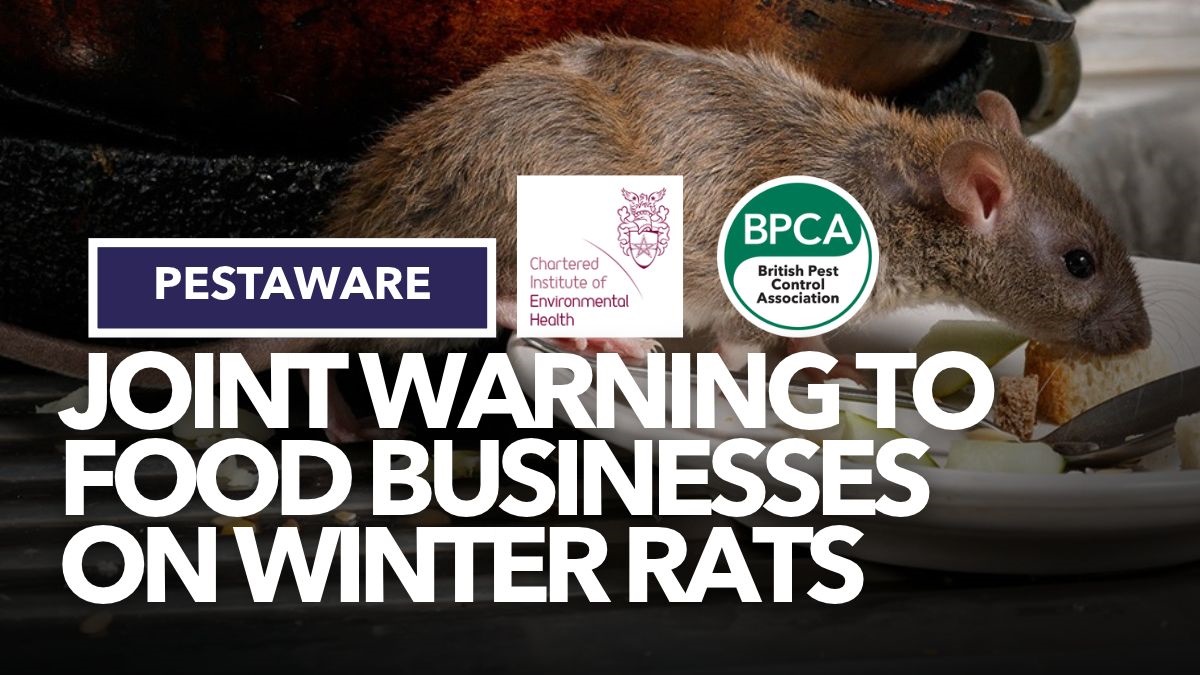
An estimated 20 per cent of the global food supply is damaged by rodents every year - at an annual cost of more than £11 billion.
National trade body British Pest Control Association (BPCA) and the Chartered Institute for Environmental Health (CIEH) have joined forces to raise awareness around the risks posed by rats and why they are more likely to be a problem in the winter.
In the past, harsh weather conditions would naturally deplete rat populations, but wetter and milder winters encourage the rodents to find food, water and shelter in human environments, including farms, food processing facilities, warehouses, transport hubs, shops, bakeries and eateries.
Owners of food businesses have obligations to keep premises pest free under the Food Safety Act 1990, while property owners are required under the Prevention of Damage by Pests Act 1949 to keep premises rodent free, or, if rodents pose a threat to health or property, to report infestations to the local authority.
Environmental Health Officers can issue enforcement notices to business owners who don’t have adequate pest management procedures in place.
Head of Environmental Health at CIEH, Ian Andrews, said: “Rats pose a recognised threat to food safety and public health, with the potential to contaminate food, spread disease and put consumers at risk. That's why we're joining forces with BPCA to urge food businesses to take preventative action now, before problems arise during the winter months.
“Prevention is always better than dealing with an established infestation. Food businesses have a responsibility to protect their customers, and effective pest management is a fundamental part of maintaining safe and hygienic premises.
“Environmental health professionals play a vital role in protecting the public by ensuring food businesses meet the required standards. However, we want to see businesses taking proactive steps to prevent infestations in the first place, rather than waiting until enforcement action becomes necessary.”
The independent No Small Matter report commissioned by BPCA found that less than 50 per cent of pest control work in the food services industry was preventative in 2025, with more than half of businesses choosing to tackle an active infestation rather than take action to deter pests in the first place.
The report also noted that 30 per cent of client jobs in food services had to be escalated due to lack of early intervention or delayed response.
In complex cases where there is a risk of material impact, professional pest control saved businesses £2,000 on average in 2025, while cases of early intervention could create a further saving of £700.
Natalie Bungay, Head of Technical and Membership at BPCA said: “We recommend consulting with a BPCA member and implementing any recommendations they provide around pest prevention and proofing, rather than waiting until rats have found their way inside and have become a problem.
“It's difficult to know how many rats there are in the UK, with estimates putting the number anywhere between 10.5 million and 120 million.
“As they are a social animal, if a rat is sighted, it’s likely there will be more nearby. They also have a rapid breeding cycle. If they find somewhere safe and warm with ready access to food and water, they can produce between six and twelve babies every four to six weeks.
“Rats represent a significant health risk as they may carry some nasty pathogens which can spread to humans through their urine or body coming into contact with food preparation areas.
“Adult rats can squeeze through gaps the size of a £1 coin, plus they are incredible climbers and can jump several feet so generally have no problem getting indoors and accessing food storage areas.
“To maintain their teeth, rats need to gnaw and have been known to chew through woodwork, cables and pipes, which can cause damage to a property and also means that food packaging such as plastic or cardboard is no obstacle.”
Rats tend to use the same routes repeatedly, resulting in smear marks on walls or skirting as they pass; in dusty areas may leave footprints or tail marks.
One of the most common signs of a rat problem is their droppings which are around 12-16mm long, tapered and tend to be clustered in certain areas.
Check for gnaw marks around cables, woodwork, pipes and foodstuffs and take note if you hear scratching, gnawing and scuttling noises.
BPCA member companies are endorsed by the UK Government via the TrustMark scheme and are trained and qualified technicians who carry the correct insurances, are assessed to the British Standard in pest management EN 16636 and follow BPCA’s Codes of Best Practice.
To find a BPCA member visit: bpca.org.uk/find.
Source: