PPC121 | OPINION
A hundred years ago, pest controllers managed rodents with poisons so toxic they could kill a person as easily as a rat. Imagine the horror of today’s professionals if they saw arsenic and strychnine being sprinkled freely in homes and fields, as was common back then.
Hindsight is a wonderful thing. If the industry had known then, what we know now, could history have taken a more sustainable path for rodent control?
With the latest changes to rodenticide use due to take effect in a few months’ time; PPC magazine talked to Dr Matthew Davies, Training and Certification Work Group Lead at the Campaign for Responsible Rodenticide Use (CRRU UK), about the changes that have impacted professional rodenticide use and what the future holds from 2026.
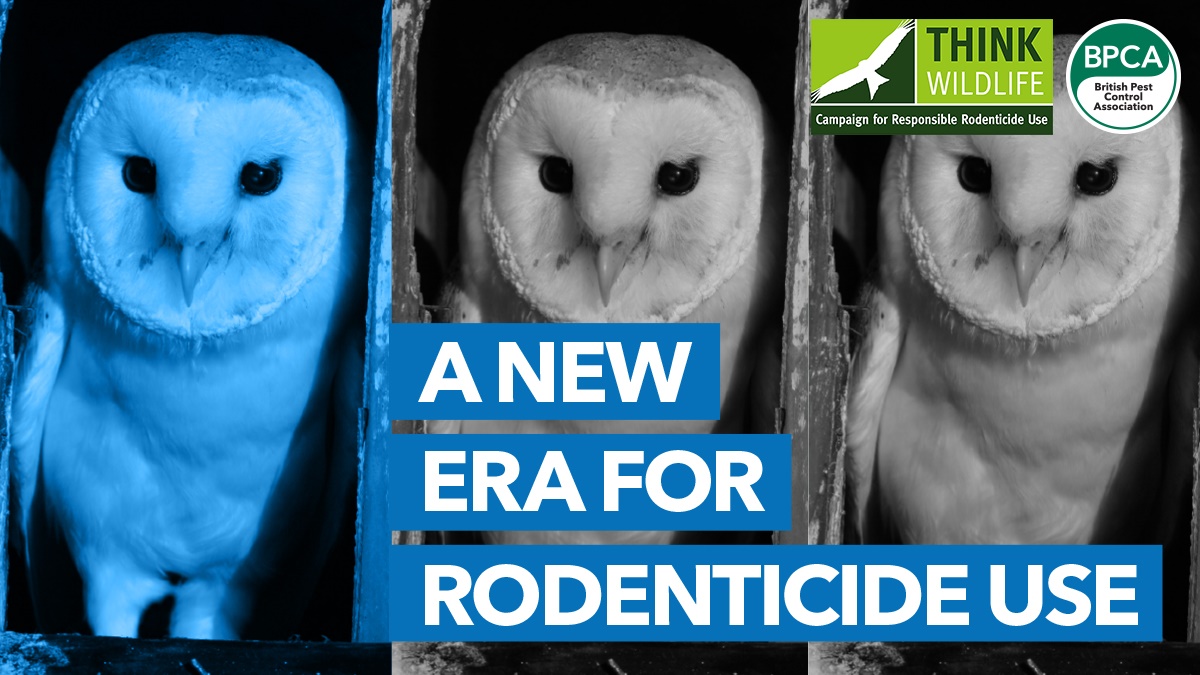
“Few areas of pest management have changed as dramatically as the tools we use to control rodents,” says Matthew.
“Over the last century, rodenticides have evolved from those highly toxic compounds, administered without formal training, to the sophisticated and highly regulated formulations bound by stewardship requirements that dominate the market today.”
He continued, “Along the way, the industry has faced recurring challenges - resistance, risk to non-targets, and growing scrutiny over environmental impact.
“Before stewardship framed the sector, it was chemistry and the discovery of the latest active substances that punctuated developments through the 20th century. With the power of hindsight, what were called significant rodent control triumphs at the time, would today be framed in very different terms.”
Matthew explains: “Warfarin is a good example. When it came into use in the 1940s it was to be the chemical revolution of the time. But in fact, this was also the beginning of a dangerous dependency.”
Within a decade, the promise of broad success with Warfarin, and new anticoagulants like Diphacinone, was thwarted as resistance began to take hold. And by the 1960s, it was clear that the sector needed new tools for control.
Matthew reflects, “Second-generation anticoagulants then arrived in the 1970s. For decades they were treated as the silver bullets, though in recent years resistant populations have developed to some SGARs.
“Looking back at the pre-stewardship era there’s a clear lesson: chemistry alone cannot outpace evolution. “Each new molecule provided temporary relief but at the cost of long-term sustainability.
“This reminds us that the story of rodent control isn’t just about science; it’s about restraint.
“Without stewardship, even the most brilliant discoveries may become less effective.”
After the millennium things started to change. CRRU UK was established in 2004, as an industry-led initiative to address the environmental and non-target risks associated with rodenticide use.
The sector started to face tighter regulations, restrictions on certain active ingredients, and calls for more rigorous professional standards.
One of the most visible early changes was drawing a clearer line between professional and public use.
That meant limiting pack sizes available to the general public, and reducing the strength of the rodenticides available to non-professional users. It was about making sure effective products were in the right hands, while still giving householders access to safe and appropriate solutions.
“It’s no longer just about controlling the pest; it’s also about controlling risk.”
Environmental pressure drives change
Environmental awareness was increasing alongside research into the potential impact of chemicals, including rodenticides.
“The industry recognised it couldn’t stand still - we had to take responsibility, and CRRU UK became the vehicle to deliver that,” says Matthew.
“Concern over the wider impact of rodenticides on wildlife and the environment was the spark that led to the first CRRU UK stewardship scheme. Looking back, it’s amazing how far we’ve come in the last 25 years!
Before stewardship, training requirements weren’t formalised and any checks at the point-of-sale were voluntary.
Since the introduction of the UK Rodenticide Stewardship Regime in 2016, we’ve seen a huge shift in rodent control.
It’s no longer just about controlling the pest; it’s also about controlling risk. That means minimising residues to protect wildlife, and ensuring that everyone using products is competent.
A key part of this is to utilise Integrated Pest Management and follow the risk hierarchy as laid out in the CRRU UK Code of Best Practice.
Designed to meet the ‘High Level Principles’ set by the Health and Safety Executive (HSE), the regime delivers three key benefits - governance of the supply chain, a competent workforce, and the monitoring of compliance.
Matthew continues: “A cornerstone of this shift was the requirement that for the first time, in April 2016, professional rodenticides could only be purchased by those who could demonstrate competence.
“This was a game-changer for the industry. Certification through CRRU UK-approved training and certification or alignment with farm assurance schemes (FAS) meant that tens of thousands of users - from pest control technicians to gamekeepers and farmers - had to meet a consistent standard of knowledge and practice.
“Proof of competence in the farming sector was one of the biggest obstacles we faced at the time. Regulating by far the largest sector for rodenticide use proved to be a huge challenge, as the farming sector deemed they had insufficient time for farmers to obtain the certification needed.”
Membership of a CRRU UK-approved FAS became a short-term way of ensuring a level of best practice in the farming sector. Alignment of the FAS standard with the CRRU UK Code of Best Practice followed in 2018.
“The days of no stewardship, little guidance or only informal training and certification are now firmly resigned to the history books.”
Stewardship begins to shape best practice
Changing attitudes among rodenticide users is the key to delivering better stewardship practices now and in the future - and the latest data shows clear progress.
Knowledge, Attitude, and Practice (KAP) surveys, commissioned by CRRU UK, showed marked improvement between 2020 and 2023.
Results highlighted a significant increase in awareness of CRRU UK, with 50% of respondents stating that they no longer automatically presume that they will apply a rodenticide when they approach a new rodent problem.
Progress in stewardship was especially evident with farmer rodenticide users who demonstrated advances in training, continuing professional development (CPD), environmental awareness, and product knowledge - evidence that the stewardship message was being absorbed and applied in practice.
Rodent control sector engages in voluntary action
At the end of 2023 CRRU UK announced several voluntary interventions which led to the withdrawal of ‘open area’ and ‘waste dump’ use of second generation anticoagulants (SGARs).
“Importantly these were the areas where exposure to wildlife was considered to be most likely,” Matthew highlights. “So when withdrawal of these areas of use was formally authorised in 2024, we revised the CRRU UK Code of Best Practice with new guidance, something that was especially important for the gamekeeping sector, who were one of the groups most impacted by this change.”
The future of sustainable rodent control
As we look to the future, the next milestone comes with the enhanced training requirements for all groups coming into effect from next year.
“The truth is, despite all the progress we’ve made, the levels of anticoagulant residues in wildlife have barely shifted,” Matthew reports.
“That’s why we’re strengthening the system even further. It’s not about making life harder for professionals; it’s about using rodenticides responsibly and protecting the environment we all depend on, while preserving access to anticoagulants as a critical tool of professional rodent control.”
New competence standards for 2026
For pest controllers there are two clear pathways to demonstrate the competence needed to purchase professional-grade rodenticides from 1 January 2026.
“If a qualification was gained before 2021, it won’t carry you past the 2026 deadline,” Matthew explains. This means you’ll need to either re-qualify or demonstrate ongoing competence through a CRRU UK-approved CPD scheme; and that includes earning at least three CRRU UK rodent control-specific points each year.
“Professionals need to take action now, to have enough time to take a course and pass the exam, or accrue the relevant number of CPD points this year, in readiness for 2026,” urges Matthew.
“For those with more recent certifications, the rules buy a little breathing space. Those who have qualified within the five years leading up to 2026, will still be covered until that certificate hits its five-year limit.”
“These changes are about raising the bar across the whole industry. The days of no stewardship, little guidance or only informal training and certification are now firmly resigned to the history books.
“The future looks very different, and much more responsible.”
“Eventually everyone using rodenticides will face the same choice: re-qualification or CPD. This is the way to make sure that every professional is equipped with the most up-to-date knowledge available, ensuring safer working practices and the best possible outcome for effective rodent control, wildlife and the environment.”
Looking ahead: the future of rodent control
Where do we go from here? A few likely trends stand out:
- Smarter monitoring - Remote sensors and digital bait stations are already entering the market, giving real-time data and reducing unnecessary visits.
- Biologicals and new modes of action - With pressure on anticoagulants, research into non-chemical or biological alternatives will intensify.
- Tighter regulation - Access to rodenticides will remain under scrutiny; ongoing stewardship will be essential to preserve tools.
- Integrated solutions - Pest controllers will increasingly blend technology and environmental management with traditional methods.
The future pest controller will likely be part-scientist, part-technician, part-data analyst. What won’t change is the core challenge: rodents will continue to adapt, and professionals will need to stay one step ahead. thinkwildlife.org/training-certification

Source: