STEWARDSHIP
Rodenticide stewardship has improved professional practice but has yet to deliver the expected reduction in wildlife residues, a government review has found.
SPEED READ
- A government review recommends continuing rodenticide stewardship, recognising improvements in professional practice despite wildlife residues not falling as expected
- Recommendations include wider environmental monitoring, clearer resistance information on labels and consideration of mandatory resistance reporting
- The findings will inform HSE’s product renewal assessments and could influence future rodenticide availability and conditions of use.
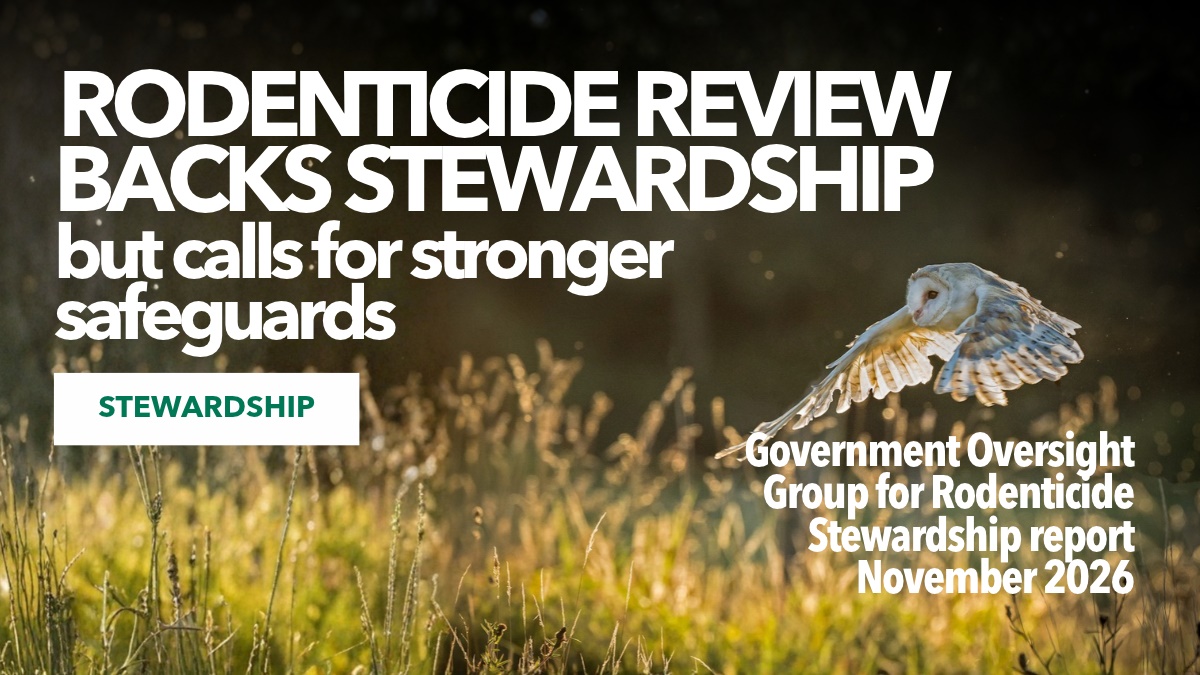
The Government Oversight Group (GOG) for Rodenticide Stewardship recommends continuing the Campaign for Responsible Rodenticide Use UK (CRRU UK) regime, with stronger environmental monitoring and better information for users.
Published by the Health and Safety Executive (HSE) on 3 November, its findings could help shape future product authorisations.
This review could influence which rodenticides remain available and how we’re allowed to use them. Demonstrating responsible use and reducing wildlife exposure will help make the case for keeping these tools available to pest professionals.
Progress with an unanswered question
The review finds that CRRU UK has delivered the supply controls, training arrangements and monitoring it committed to when stewardship began in 2016.
Surveys indicate improvements in users’ knowledge, attitudes and practices, including greater consideration of non-chemical approaches.
The total weight of second-generation anticoagulant rodenticide (SGAR) active substances sold in the UK also fell by almost half between 2016 and 2023.
However, monitoring has not shown a statistically significant reduction in total SGAR residues in barn owls against the pre-stewardship baseline.
Some measures of brodifacoum exposure have increased.
The reasons remain unclear. Avian influenza has also disrupted monitoring, leaving the review without updated predatory bird residue reports since 2022.
GOG does not interpret the missed environmental target as an overall failure of stewardship. It concludes that risks would probably be greater without the controls already introduced.
Niall Gallagher, BPCA Technical Compliance Manager, said:
Pest professionals have invested in training and improved how they approach rodent control, while stronger supply controls have helped raise standards. This review recognises that work and gives us something to build on.
Niall Gallagher, BPCA Technical Compliance Manager
“But we still need to ask why wildlife residues haven’t fallen as expected. Where is exposure happening, what part does resistance play, and which changes will make a measurable difference?
“We need to tackle those questions together, building on what CRRU has achieved and being willing to look closely at where the approach needs to improve.”
What could change
Richard Daniels, director of Chemicals Regulation Division at HSE, said:
“Anticoagulant rodenticides are powerful tools, which would not normally be approved. They are only authorised for use because they are essential to protect human health, animal health and the environment from the serious risks posed by rodent infestations. That is precisely why it’s so important that they are used responsibly.
“This independent review reports that stewardship is working in putting significant safeguards in place, ensuring these products reach only trained, competent users who understand how to use them safely and effectively.
HSE will now consider the Oversight Group’s report and recommendations in strengthening the scheme further, for example through better monitoring and support for those who use these products when it considers, alongside other information, whether rodenticides should continue to be authorised for use.
Richard Daniels, Chemicals Regulation Division director at HSE
The report makes eight recommendations. These include extending residue monitoring to buzzards, sparrowhawks, peregrine falcons, foxes, hedgehogs and otters, alongside work to understand how exposure occurs.
Currently, GOG only monitors residues in Red kites and Barn owls.
For technicians, proposals on resistance could have a more direct effect.
GOG recommends additional label information to help users identify potentially ineffective products and select suitable alternatives.
It also calls for better resistance monitoring, with mandatory reporting among the options to consider while minimising additional burdens on users. This is a recommendation for further work, rather than a new reporting requirement.
Other proposals include systematic sales data collection, stronger supply-chain auditing, and better information on rodenticide use on farms. Some implementation details and timelines still need agreement.
The implications for future access
HSE says it will take the findings into account during its current renewal assessments of anticoagulant rodenticide products. The report therefore has implications beyond the operation of stewardship itself.
The group also recognises that effective rodent control requires a range of chemical and non-chemical options.
Niall added:
“Access to rodenticides depends on balancing the risks from their use against the harm caused by uncontrolled rodents. This review reinforces why we need to explain our treatment decisions and keep improving our understanding of resistance.
“Better evidence should help us protect wildlife while retaining effective options for the situations pest professionals face.”
You can read the full report on the HSE website here.

Source: