PESTAWARE
With Tapinoma magnum ants hitting the headlines in the last few days, BPCA gave news outlets the lowdown on this invasive species.
The Sun, The MailOnline and The Times are all talking about the invasive ant species currently causing concern in mainland Europe, in places such as France and Germany.
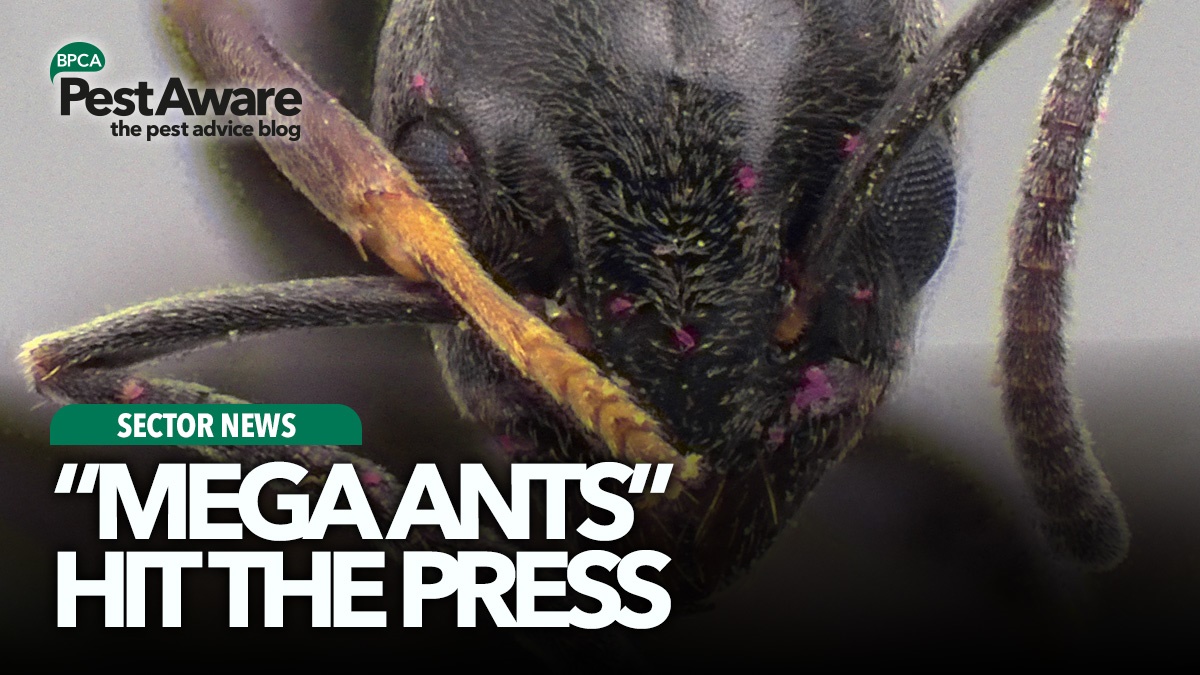
Image: Emmett Collins-Sussman, www.antweb.org
Here's what BPCA told reporters, when asked what impact they might have in the UK.
Who, what, where?
To get all science-y, Tapinoma is a genus of ants that belongs to the subfamily Dolichoderinae. The genus currently comprises 74 species distributed worldwide, mostly in tropical and temperate regions.
Tapinoma magnum (or T. magnum) is primarily spread through human activity, especially the movement of potted plants, trees, and landscaping materials from the Mediterranean region.
Garden centres, nurseries, and even botanical gardens have all been identified as common "beachheads" for new introductions in northern Europe.
However, climate change may also be playing a role in helping them survive and establish further north than previously possible.
Niall Gallagher, BPCA Technical Manager, commented:
"Research shows that T. magnum colonies are remarkably cold-tolerant for a Mediterranean species.
"In Germany, for example, they’ve survived two-week frost periods with average temperatures of -6.6°C and minimums down to -15°C without issue.
"This kind of hardiness, combined with warmer winters and longer summers in the UK, potentially makes colonisation more likely over time."
So, while horticultural trade is the main vector, a warming climate is making conditions more favourable for T. magnum and other heat-loving invasive ants to persist and possibly thrive further north.
How can I spot them?
Niall explained, "In truth, most people – and even professional pest controllers – would struggle to tell Tapinoma magnum apart from common species like the black garden ant (Lasius niger).
"Visually, the two ants are very similar, and the subtle anatomical differences require lab analysis to confirm. Unless you’re a specialist with experience in ant taxonomy, identifying T. magnum based on appearance alone is difficult.
"In the field, you’d probably rely on behavioural clues – particularly their distinctive procession behaviour. These ants often form long, busy trails across patios, pavements and walls, connecting different parts of their supercolony."
If you have any questions about T. magnum or any other pest species, get in touch and we'll find the answers.
[email protected]
Image credits
Hero image: Emmett Collins-Sussman, www.antweb.org
Icon image: Emmett Collins-Sussman, www.antweb.org
Source: Online