PESTAWARE
As summer approaches, and ‘sting season’ sets in, experts at a national trade body are urging gardeners to learn more about ‘things that go buzz’.
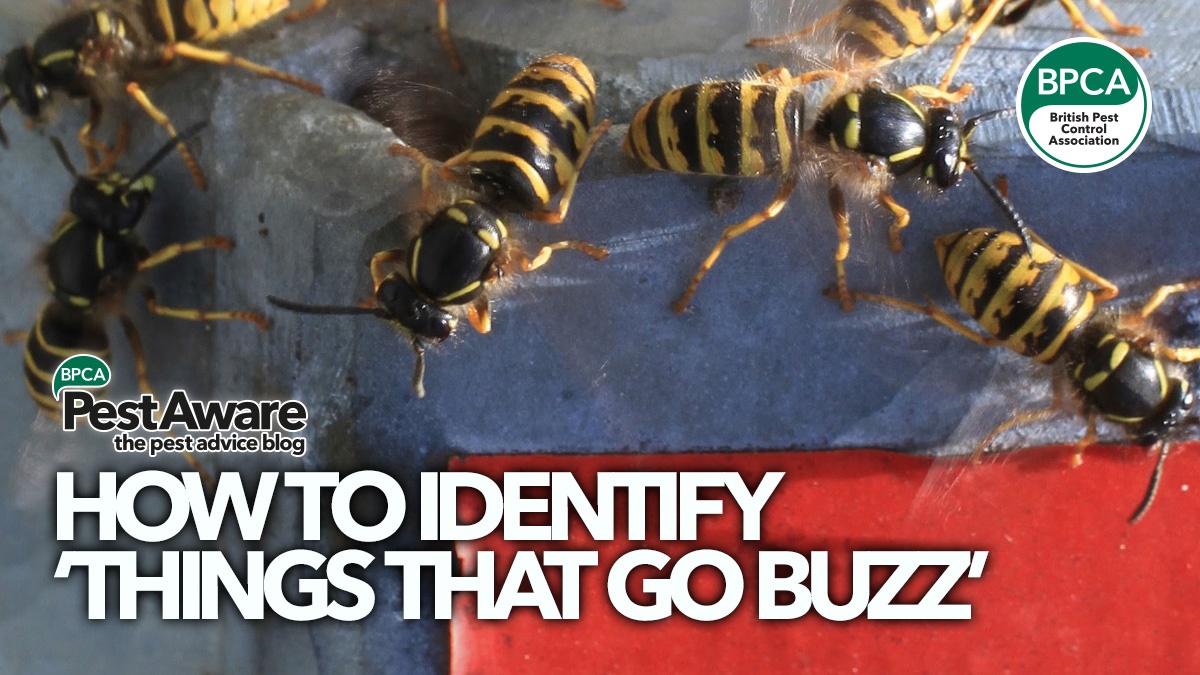
British Pest Control Association (BPCA) has produced a guide outlining the differences between wasps, bees, hornets and hoverflies.
Download this guide
The guide highlights which species are considered to be pests, the roles ‘things that go buzz’ have to play in the garden, and what to do if buzzing insects are becoming a problem.
Niall Gallagher is Technical Manager at BPCA. He said: “Our ‘Things that go buzz’ guide is a really useful tool for anyone who sees – or hears – an insect buzzing around their home or garden.
“There are many species of wasp, bee and hoverfly that are not classed as pests and are unlikely to pose a risk to health.
“And even species that are considered to be pests, such as common wasps, can still be safely left alone if they are not in a place where they are likely to come into conflict with people.
“However, a nest near a high-traffic area can cause a problem and we would recommend contacting a pest management professional such as a BPCA member for advice.
“Wasp, hornet and bee stings can cause anaphylaxis, which is a medical emergency and should be treated urgently.”
There are many species of wasp, bee and hoverfly that are not classed as pests and are unlikely to pose a risk to health.
Niall Gallagher, BPCA Technical Manager
The ‘Things that go buzz’ advice sheet is available at bpca.org.uk/buzz
Niall added: “It can be a worry if there is something buzzing around and you’re not sure what it is.
“Buzzing insects are generally more active during warm weather – which is when people tend to be outside more too.
“Our guide will help you identify if it is something that can be left to peacefully pollinate your petunias, or whether you may need to call on the services of a pest professional.”
BPCA members are trained, experienced professionals with access to a range of specialist products not available to the public.
They are trained, qualified and regularly assessed to the British Standard in Pest Management BS EN 16636.
To find a professional pest controller visit bpca.org.uk/find
MEDIA ENQUIRIES
If you have a question to ask BPCA or would like an interview with a member of our technical team, get in touch.
[email protected]
Source: Online