PESTAWARE
As families across the UK head to the seaside during the school Easter holidays, a national trade body is urging people to be wary of gulls as their egg-laying season gets underway.
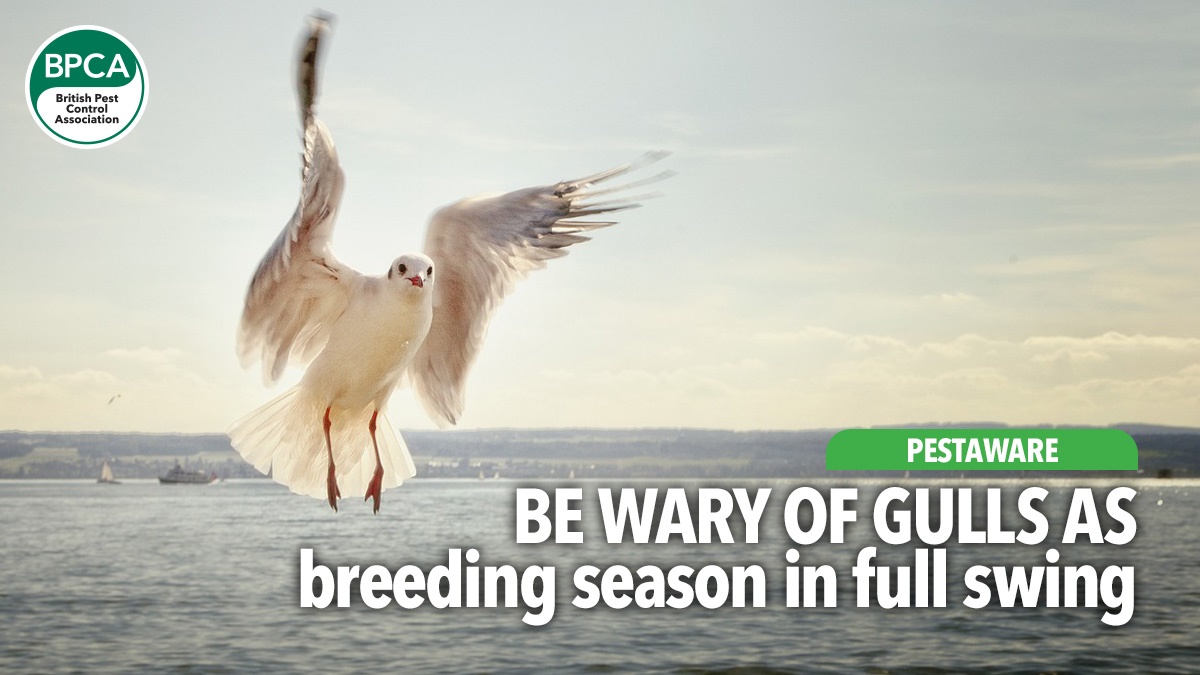
During the breeding season, gulls have been known to launch attacks on people, British Pest Control Association (BPCA) said.
After mating and nest-building in February and March, many gulls will be protecting nests and eggs towards the end of April and into May.
However, BPCA is also reminding people that avoiding gulls where possible is the best course of action as interfering with wild birds, their eggs or nests could lead to prosecution.
The Wildlife and Countryside Act 1981 states that all wild birds and their eggs are protected, but people with appropriate licences, such as BPCA members, can take steps if the birds are causing a public health and safety concern.
John Horsley, Technical Officer at BPCA said: “We love British birds. All wild birds and their eggs are rightfully protected by law in the UK, so it is absolutely vital that holiday-makers, householders or business owners don’t interfere with them.
“However, gulls can pose a serious safety concern. They have been known to attack people unexpectedly, which can be a frightening experience, especially if they draw blood, which can occasionally happen.
“We often think of gulls as a coastal problem – which they can be, in seaside towns where people have fed them regularly.”
Gulls can live for 25 to 30 years and many weigh around 1kg, with wingspans of around one metre.
Seaside visitors can try to avoid attracting gulls by ensuring picnic foods or chippy take-aways are kept covered in opaque containers or eaten out of sight of gulls where possible.
Nesting gulls can cause problems for homes and businesses both on the coast and inland, as well as at supermarkets and hospitals, as these buildings can offer ideal nesting sites which are difficult to access and proof.
Nests can clog gutters or chimneys, which may cause water overflows, or potential issues with carbon monoxide, as well as bringing a risk of secondary infestation from bird mites, ticks, fleas and beetles.
And as one nesting pair can quickly become a thriving colony, properties can become at risk from bird droppings which are acidic and can corrode metals, stonework and brick.
John added: “Gulls are also protected by the law, so it really is important to seek professional help.
“BPCA members are trained in bird control and will be able to offer a management plan that will alleviate the issue.
“There are a variety of bird-proofing measures available, all of which will deter birds without causing them harm, and as gulls are large and heavy, any proofing measures need to be suitable for the job, very heavy duty and correctly installed by a professional.
“Bird prevention, proofing and control is a highly specialised area requiring specific equipment and techniques. Pest professionals are required to try all reasonably practicable non-lethal bird control methods before they consider lethal control.
“Always consult a professional before considering any form of bird management. You could be prosecuted if you illegally interfere with a bird, its nest or eggs.”
Licences are issued by Natural England, Natural Resources Wales, NatureScot or the Department of Agriculture, Environment and Rural Affairs (DAERA, Northern Ireland) and allow certain bird species to be controlled by particular methods for specific reasons.
General licences and individual licences may also be granted to allow bird control measures to be taken which would otherwise be illegal under the legislation, but the law only allow competent people such as pest management professionals to deal with certain species.
BPCA members are trained, experienced professionals with access to a range of specialist products not available to the public as well as being regularly assessed to the British Standard in Pest Management BS EN 16636.
To find a professional pest controller visit bpca.org.uk/find
Source: Online