PESTAWARE
Experts at national trade body, British Pest Control Association (BPCA) are continuing to keep a watching brief on the expansion of raccoons across Europe after lone raccoon was spotted roaming gardens in Gwennap, Cornwall.
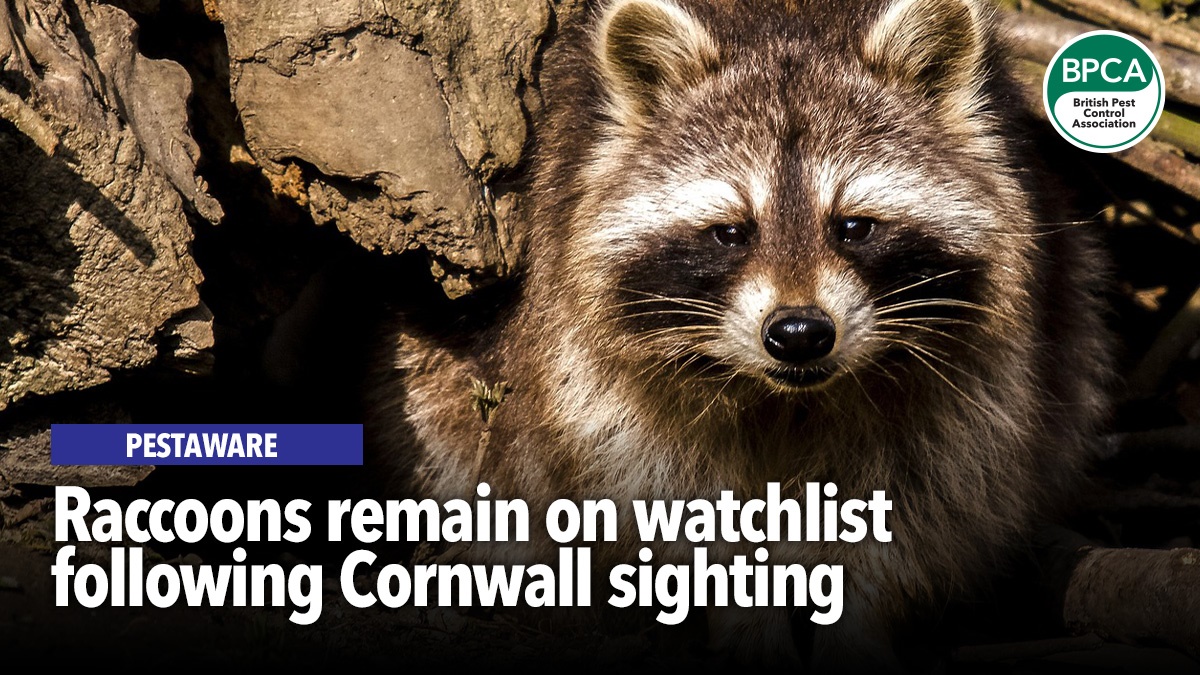
The ‘rotund raccoon’ was three times heavier than it should be, indicating that it could be an escaped pet, and was taken in by RSPCA West Hatch Wildlife Centre in Somerset.
A ‘chronic pest’ in its native Northern and Central America, the raccoon is among the top 20 species most likely to become invasive in the UK over the next 10 years listed in a recent horizon-scanning exercise by Non-Native Species Secretariat (NNSS) conducted in March.
Raccoons were also listed in the top 20 of an earlier study in 2019.
While there is not believed to be a breeding population of raccoons in the UK, escaped pets or runaways from private collections can thrive for around four years in the wild – and they are considered an ‘alert’ species by NNS, so sightings – however rare – should be reported.
Niall Gallagher, Technical Manager at BPCA said: “Raccoons were imported into Germany from North America during the 1930s and rapidly became established across central Europe.
“What we’ve learned from this is that once established, raccoons can thrive in our natural environments. They are omnivorous, and will eat small mammals, eggs, chicks and adult birds and can have a significant negative impact as a predator of seabirds and waterfowl.
“They also eat field and garden crops and can cause nuisance and damage to homes and properties as our rubbish is an easy food source, while lofts and attics are ideal resting places for them.”
Raccoons don’t have any natural predators in the UK and if established, it is likely they would spread quickly.
Records show just 34 raccoons were observed out of captivity between 1977 and 2006, with more than 20 sightings in England and Scotland recorded with NNSS between 2014 and 2024.
Niall added: “Raccoons are a serious public health pest. Aside from the damage they can cause to our native ecosystems, food supplies and properties, they can transmit diseases and parasites to humans and are carriers of rabies, canine distemper, roundworm and mange.
“We always advocate a ‘prevention is better than cure’ approach to pests, and in the case of raccoons, our members are briefed that any sightings should be reported to NNSS, and we continue to monitor the latest research about the potential for raccoons to become an invasive species within the UK.”
BPCA member businesses are endorsed by the Government via the TrustMark quality scheme as they must carry the correct insurances and are trained and qualified technicians who are assessed to the British Standard in pest management EN 16636 and follow BPCA’s Codes of Best Practice.
To find a BPCA member visit: bpca.org.uk/find
Source: Online