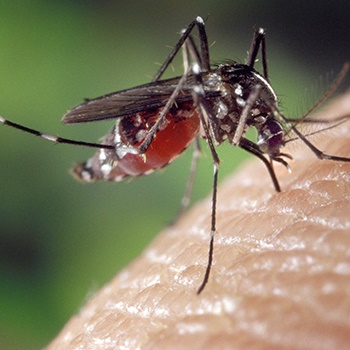
Public Health England (PHE) has reported that a monitoring project in Kent discovered Asian tiger mosquito (Aedes albopictus) larvae.
 Public Health England has been running 30 detection points at numerous British ports and airports. Since invasive mosquitoes became more widespread in France, surveillance has been conducted by PHE at motorway service stations in south east England on the main routes from the south coast ferry ports and Eurotunnel.
BPCA Chief Exec, Simon Forrester said:
“Professional pest control will be the line of defence in protecting the general public, both in identifying the spread of the invasive species and controlling the potentially deadly insect if it gains a toe-hold in the UK.”
Dr Jenny Harries, Deputy Medical Director at Public Health England, said:
“As a precaution, we advised the local authority on measures to eradicate the mosquito and remove any suitable habitats in the area. We will continue to monitor the situation closely through our surveillance system. There is no immediate risk to public health in the UK.”
Invasive insect
The Asian tiger mosquito is a small black-and-white day-time biting insect. It is native to the Far East but was accidentally introduced to Europe back in the 1970s. It has now spread through much of southern Europe and has been gradually pushing northwards.
These mosquitoes are primarily urban and actively bite during the daytime. As well as being a significant nuisance they can also carry human diseases, and they have been responsible for outbreaks of Chikungunya disease in France and Italy - resulting in several human deaths.
While we recognise that there’s no immediate danger to the public, as an industry we need to prepare to deal with this and any other invasive specifies that threatens public health. BPCA members are well placed to fight this invasive species, and we welcome the opportunity to work with Public Health England and other key stakeholders to keep our population safe.
Dee Ward-Thompson, BPCA Technical Manager
If you would like more health and safety information and you're a BPCA member, you can head to BusinessShield for useful safety documents. If you have a specific question, you can contact our technical team.
 Dee Ward-Thompson
Technical Manager
4 August 2017 | BPCA Bulletin
Source: