TECHNICAL | PPC109 October 2022
Our clients are often confronted with horrible odours from dead rodents. PPC asked Bill Vaughan from Earth Care to talk us through the approaches available to deal with those nasty smells.
“...if demolition is required to remove the carcass, such as in a wall void, then the cost and time on site increase significantly, not to mention possible issues with the quality of the repair work.”
Rodent deaths happen naturally or because of a rodenticide treatment. If you’re lucky, you’ll find and remove the carcass before any smells get too bad. However, if the carcass is removed, the area should be treated to avoid lingering foul odours from the body fluids of the carcass.
Failing to treat the smell means you could be losing money when you’re called back later.
But what if you can’t find the rodent? You may suspect the carcass is in an attic in the insulation, a crawl space, a wall void, or some other inaccessible place.
Demolition is an option to find and remove the carcasses in a wall void or crawl space. However, demolition would not be viable if it’s in or behind a masonry wall.
Earth Care: We produce the Earth Care Odor Remover Bag. EarthCare Bags use a blend of natural minerals put through a proprietary process that enables it to be very effective in ridding dead rodent odours. The EarthCare bag requires no registration, is safe to use around children and pets, is clean to use, and lasts approximately three months.
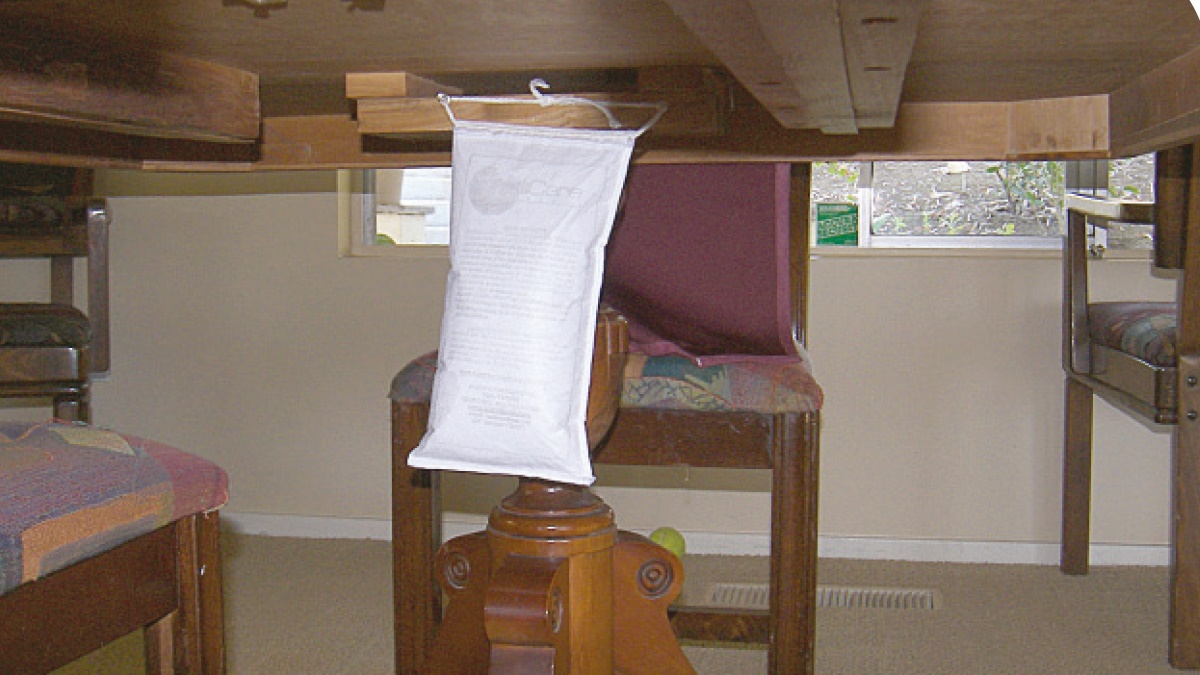
Odour remover bag
Dealing with odours: your options
Do nothing
After hunting and not finding the carcass, the technician can tell the customer the odour will most likely disappear in a couple of weeks and just spray some room fragrance to cover up the smell.
However, most clients will not be happy with this solution.
Masking agents
Masking agents work well in covering up an unpleasant smell with a more desirable fragrance. They also work right away.
Sometimes the fragrance of the masking agent may be offensive to the customer, and some people are allergic to certain scents. In either case, you end up with a blend of a pleasant fragrance and dead rodent odour!
When the fragrance wears off, the customer is left with a foul odour again, which can result in a callback. The foul odour will persist until the carcass has dehydrated, which could take two weeks or longer.
Ozone generators
Ozone generators cannot run in a room where humans or animals are present because ozone attacks the mucous membranes in the lungs and destroys fabrics. The machine must run for at least one hour, then the room must be aired out, and the machine retrieved.
If the carcass is not found and removed, the odour will return when the machine is no longer running.
This method is typically more costly since the technician would need to be on-site two times, once to install and close up the structure and a second time to ensure the machine is off, open up the structure to air it out and remove the machine.
Ozone generators are an unpopular solution due to the health hazard, the cost of the machine, the time on site required and the likelihood of the odour reappearing, creating a callback. In addition, there is a potential liability issue.
Ozone generators are often sold online falsely as air purifiers, and I’d personally avoid them.
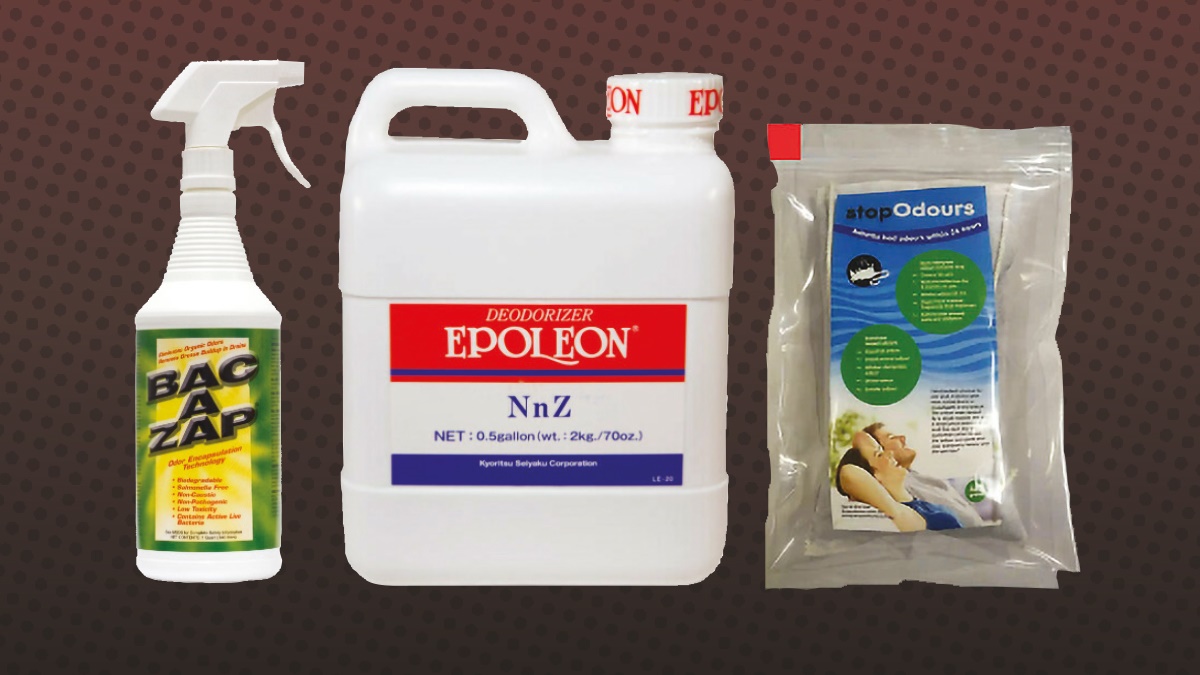
Enzyme sprays
Enzyme sprays are usually very effective in eliminating airborne odours quickly. Enzyme sprays must come into contact with the odour producer; therefore, the carcass must be found.
If the dead carcass is found in an attic on insulation, remove the carcass and the insulation the animal was lying on.
If the carcass is on a structural member, then it should be treated with the enzyme. If not, a return visit may be requested due to the residual odour.
In addition, if demolition is required to remove the carcass, such as in a wall void, then the cost and time on site increase significantly, not to mention possible issues with the quality of the repair work.
Anions
Anions are particles with a negative charge that attract ions (positive charge), just like opposite poles of a magnet.
Most odour molecules, such as from dead rodents, urine, mildew etc, are ions. Ions cling to the surface of anions, and once this happens, an ion exchange typically takes place, giving up one atom of oxygen or nitrogen in the process, changing the makeup of the ion, and removing its odour.
Anions constantly adsorb the odour from a dead carcass even if it is not removed. If there is a dead rodent in an attic or wall void, hang a bag in every room you smell the odour.
If the carcass is in an attic or crawl space, hang an additional bag in that area, but always hang at least one bag in the room where people are. It is best to hang one pouch for every ten square metres. The odour should be gone in 24 hours.
Activated carbon (AC) can be used as an anion to adsorb odours, but there are several drawbacks besides the messy black dust. AC pores clog, reducing its effective life, not ideal when it is expected to last until the dead carcass dehydrates.
AC absorbs oxygen as well, so care should be taken when used in confined spaces without sufficient ventilation to replenish the oxygen. AC is highly flammable, and the dust is explosive when exposed to the heat of a flame. The presence of water assists ignition, as do contaminants such as oil.
Providing options to treat rodent odours will improve customer satisfaction and avoid callbacks. Choose your odour treatment carefully, and remember that not all options will be viable in every situation.
Further reading
Hazardous Ozone-Generating Air Purifiers, California Air Resources Board
arb.ca.gov/our-work/programs/air-cleaners-ozone-products/hazardous-ozone-generating-air-purifiers
Activated charcoal hazard
cameochemicals.noaa.gov/chemical/10765
OSHA Hazard Information Bulletins, Fire Hazard from Carbon Adsorption Deodorising Systems, 17 August 1992
osha.gov/publications/hib19970730
Source: PPC109