PRESS RELEASE
The Campaign for Responsible Rodenticide Use (CRRU) has released its latest Code of Best Practice (CoBP), reflecting forthcoming legal requirements on professional rodenticide application and supporting the safe and effective rodent pest management delivered by gamekeepers, farmers and pest control technicians.
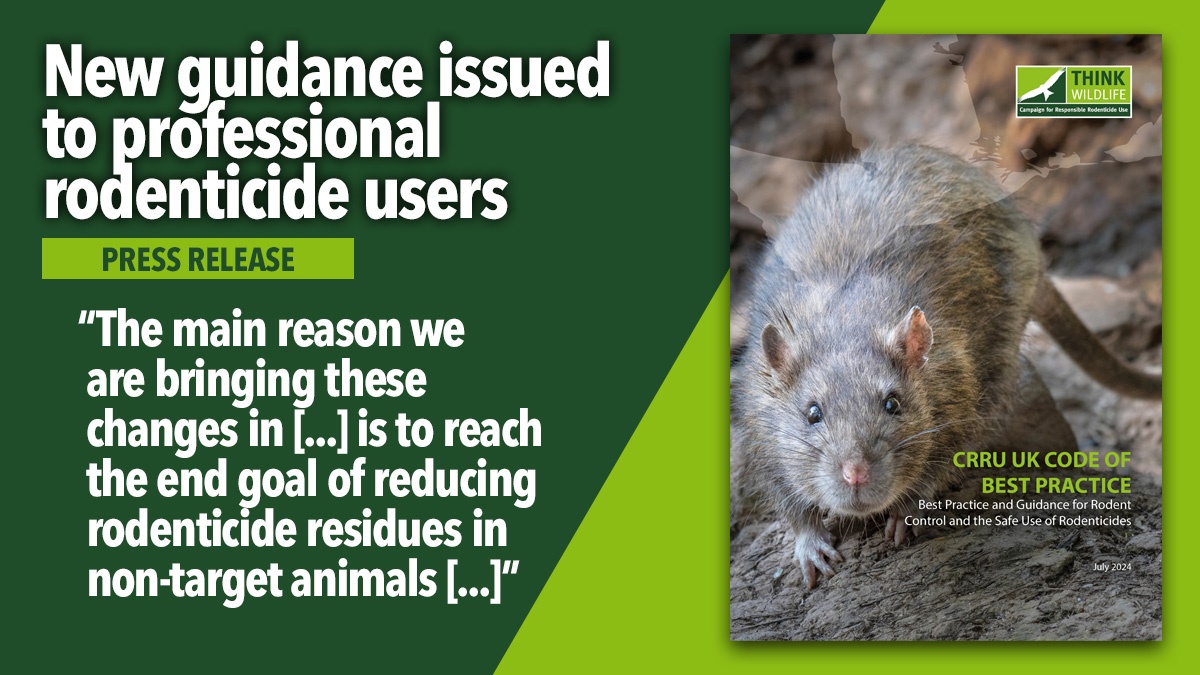
Download the Code
Key revisions to the fourth edition of the document, which exists as an essential source of information for rodenticide practitioners, account for the withdrawal of the ‘open area’ pattern of use for second-generation anti-coagulant rodenticides (SGARs).
From 1 January 2025, it will be illegal to use SGARs in outdoor locations unless connected to a building. The updated CoBP delivers greater clarity on rodenticide use terminology and updated references to bait availability.
Nic Blaszkowicz, Best Practice Working Group leader for CRRU, said that the industry-led partnership is constantly considering and updating guidelines, stating:
“The main reason we are bringing these changes in, tightening up the patterns of use, is to reach the end goal of reducing rodenticide residues in non-target animals, such as barn owls.
“There have been great strides with stewardship to date, and people are now much more educated, qualified and knowledgeable about responsible rodent control. That said, we are urging our user communities to come together and work harder, and familiarising yourself with strategies and methods presented in the latest CoBP is a valuable first step.”
The CRRU CoBP offers a range of effective methods for successful rodent management, including eliminating harbourage, food, and water, trapping, shooting, and dogs.
When rodenticide application is however required, the handbook stresses the need for trained professionals to read the product label text and strictly adhere to the instructions presented.
If residues carry on going up the food chain into the wildlife, the Government may regulate to the effect that SGARs can no longer be used for infestation management, other than inside closed buildings.
Dr Alison Warrington, Senior Plant Health Adviser at the National Farmers Union (NFU) said:
“The application of rodenticides remains an important tactic for rodent management on many farms, and reducing the risk of accidental exposure of humans and non-target animals remains a priority. We are therefore pleased to see clarifications in the revised Code that clearly define upcoming changes to the use of SGAR products.
“To safeguard our access to rodenticides, it is imperative that users continue to adhere to the best practice guidelines and product instructions, and where necessary, engage in Continuing Professional Development (CPD), ensuring maximum knowledge and results from practical application.”
Glynn Evans, the gamekeeping sector representative with CRRU, added:
“Gamekeepers are also really skilled at a number of methods of pest management, and the hierarchy risk controls for rodents means you wouldn’t reach for rodenticides as the first option. In certain circumstances however, rodenticides are essential, and as a sector we need them. Therefore, as a community, we must continue to embrace stewardship, training and the CoBP."
About CRRU UK
The Campaign for Responsible Rodenticide Use (CRRU) UK was established to promote the responsible and sustainable use of rodenticides among all user groups, including professional pest controllers, farmers, and gamekeepers. Under the "Think Wildlife" initiative, CRRU establishes best practice standards for responsible rodent control across environmental, food production, and public health sectors. The CRRU Code of Best Practice provides stewardship and training information to allow qualified professionals to apply rodenticides responsibly. CRRU is dedicated to monitoring rodenticide residues in wildlife and collaborates closely with government agencies to maintain safety and regulatory standards.
For more information, visit CRRU UK - Think Wildlife. thinkwildlife.org
Got questions about the new Code of Best Practice?
Send us your questions regarding the new version of the Code of Best Practice, and we'll send them to CRRU on your behalf. Send your thoughts to [email protected]

Source: