PRESS RELEASE
MothNet, a partnership between two companies, has secured funding from Innovate UK to develop a fully automated codling moth monitoring system for apple growers.
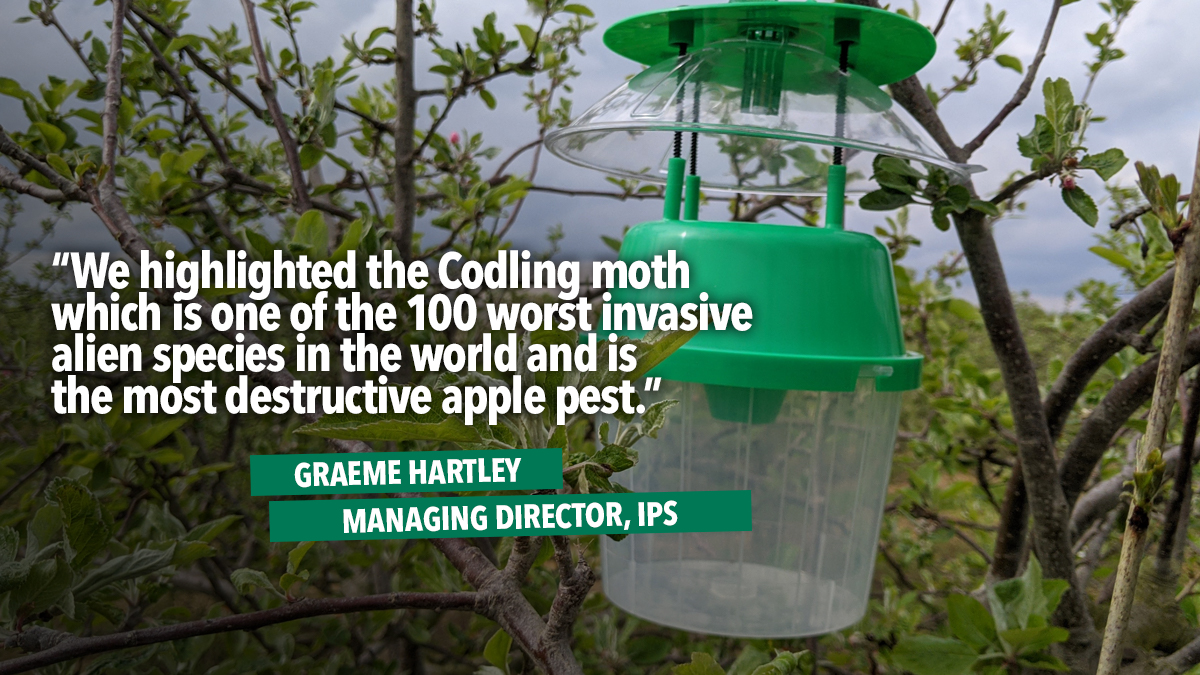
The codling moth is a major pest of fruit such as apples and pears.
The eggs are laid on leaves or the surface of fruit and larvae hatch after 7 to 10 days. They bore into the core causing the fruit to be unsellable due to unsightly damage.
Infestations of codling moth (Cydia pomonella) can reduce the apple harvests by up to 50% and account for 70% of the chemicals used by growers in their orchards.
Key to controlling infestations is using integrated pest management which includes both monitoring and control strategies, including mating disruption dispensers, and then using chemicals as a last resort.
A reliable, automated pest monitoring system is a lower-cost alternative to time-consuming manual checks. The new system called MothNet will be able to pinpoint local outbreaks which can then be treated appropriately. Farmers will be able to reduce yield losses and reduce unnecessary pesticide use, which means greater profit and environmental sustainability.
The MothNet project is led by Agsenze in collaboration with International Pheromone Systems (IPS) - developers and manufacturers of trap and pheromone products.
“The economic losses caused by codling moths are immeasurable."
Graeme Hartley, IPS
Graeme Hartley, Managing Director of IPS, said: “The agricultural industry is rapidly moving towards a digital platform to deal with the growing demands of the world-wide population.
"With the industry focusing more on Integrated Pest Management, funding was available from Innovate UK for a digital project around identifying and real-time control of prominent pests to agriculture. We highlighted the Codling moth which is one of the 100 worst invasive alien species in the world and is the most destructive apple pest.
“The economic losses caused by codling moths are immeasurable. We are delighted to be working with AgSenze and together there is a high motivation to bring this project to commercial reality. We are both very grateful for the funding and excited about MothNet.”
MORE INFO
Read about the project in more detail on the IPS website.
internationalpheromones.com/news
Source: IPS press release