RESEARCH
Researchers at the Animal and Plant Health Agency (APHA) are looking to increase their network of UK pest controllers who carry out fox control in urban areas.
Dr Alex Kent is leading the National Reference Laboratory for Trichinella and Echinococcus at APHA. They commented:
"We are involved in carrying out the UK's annual Echinococcus multilocularis surveillance, by assessing its prevalence within the red fox population.
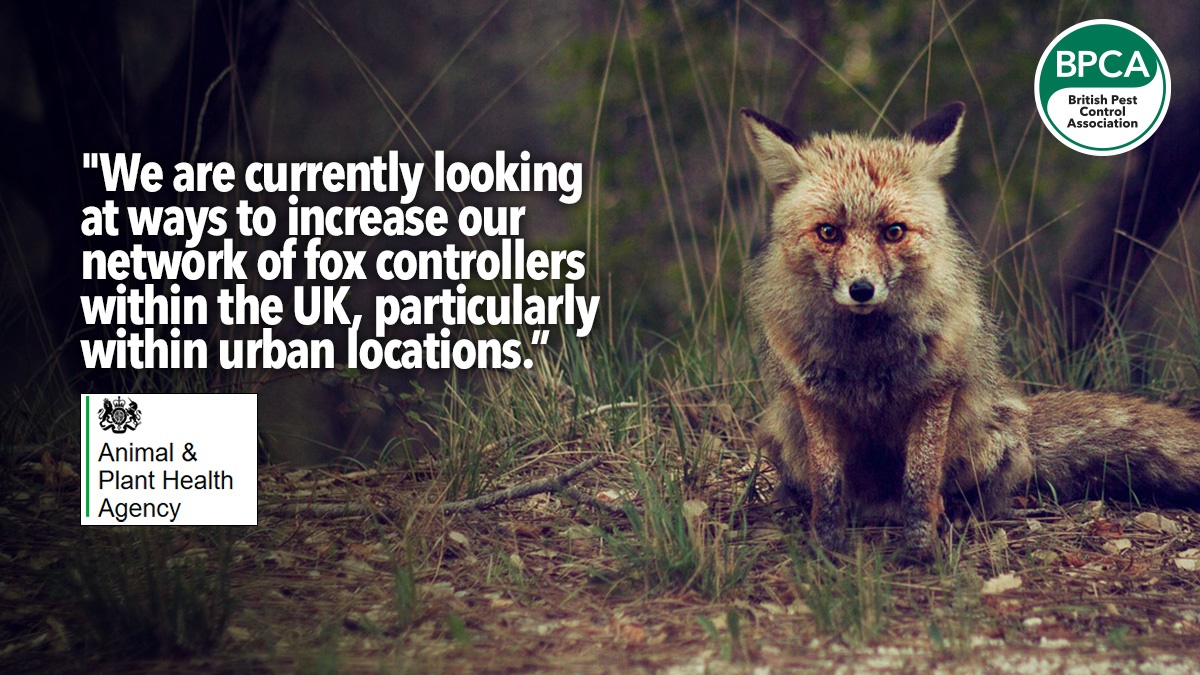
"We are currently looking at ways to increase our network of fox controllers within the UK, particularly looking at foxes controlled within urban locations.
"We're particularly interested in foxes found in areas such as London, Bristol, Bournemouth and Brighton. There is no charge involved for our collections, and all carcasses are used for a variety of ongoing research projects in the UK."
What is Echinococcus multilocularis and where does it occur?
Echinococcus multilocularis is a tapeworm found in wildlife (especially canids and rodents) of most European countries and can cause a disease called echinococcosis.
Humans can acquire infection through the ingestion of parasite eggs in contaminated food, water or soil, or after direct contact with animal hosts. To date, there have been no reports of Echinococcus multilocularis in the UK.
If Echinococcus multilocularis is not in the UK, why look for it?
The UK currently enforces tapeworm treatment for dogs entering the country to prevent the introduction of Echinococcus multilocularis.
However, testing of the wildlife population, which could harbour Echinococcus multilocularis is required for the UK to retain its parasite-free status.
As foxes are carnivorous, readily found across the UK and at the top of the food chain, they are a suitable species for assessing the UK’s wildlife disease status.
If you are involved in the control of foxes in the UK and can help, please contact a member of APHA fox survey team on any of the numbers/email addresses below:
Paul Cropper (northern England)
Tel: 07496822408
Email: paul.cropper@apha.gov.uk
Tim Glover (southern England)
Tel: 07713145682
Email: tim.glover@apha.gov.uk
For scientific queries please contact APHA Parasitology Lead
Alex Kent
Tel: 07909646246
Email: alex.kent@apha.gov.uk
Source: APHA PR