PRESS RELEASE
Birds can cause a range of issues during nesting season, but interfering with wild birds, their eggs or nests could lead to prosecution, a national trade body has warned the public.
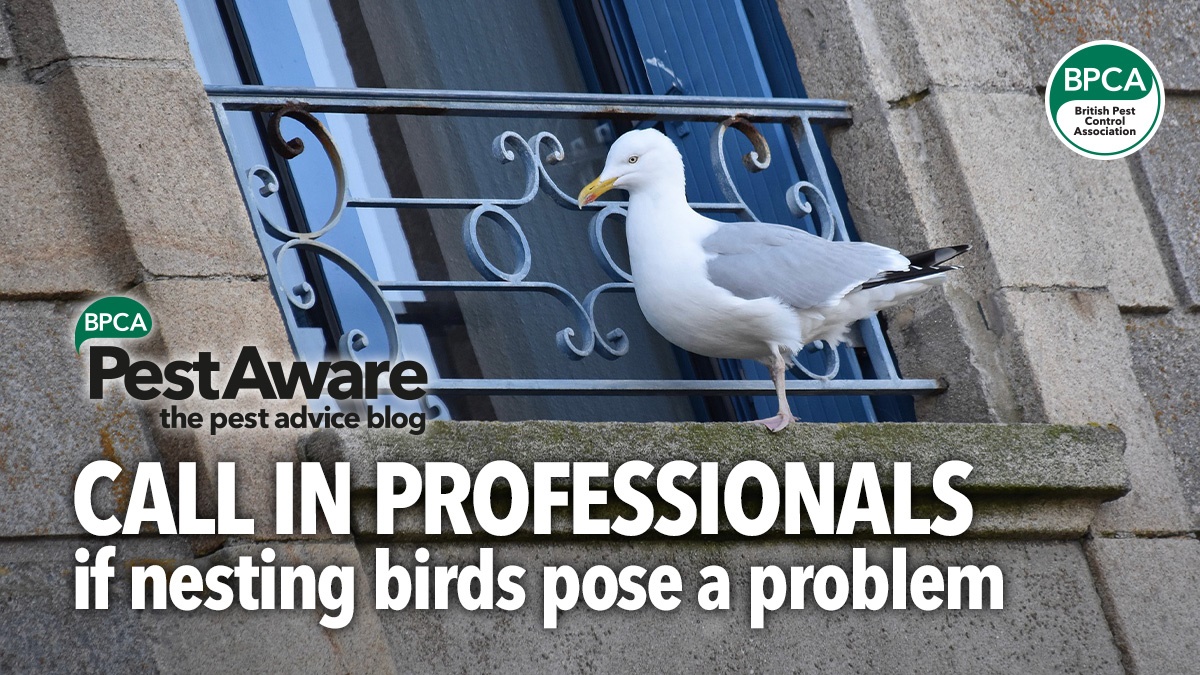
British Pest Control Association (BPCA) is urging householders and businesses to seek professional advice if birds are becoming a problem.
The Wildlife and Countryside Act 1981 states that all wild birds and their eggs are protected, but people with appropriate licences, such as BPCA members, can take steps if the birds are causing a public health and safety concern.
Dee Ward-Thompson is Head of Technical at BPCA. She said: “We love British birds. All wild birds and their eggs are rightfully protected by law in the UK, so it is absolutely vital that householders or business owners don’t interfere with them.
“But a few bird species can cause real problems when they take roost in or around homes and businesses – and if one or two find a sheltered site with a ready food source, they can rapidly become a thriving colony.
“Diseases can be transmitted to people from birds and their droppings, while nesting materials can block chimneys and flues, which can lead to potential issues with carbon monoxide.
“Nests can also clog up guttering, causing damage to buildings, while bird droppings can corrode metals, stonework and brickwork.
“And where birds go, so do the parasites that live on them including mites, ticks, fleas and beetles, which can all cause secondary infestations.”
Only certain species of birds in specific situations are considered pests and even those that are typically considered to be pests – such as feral pigeons - are protected by law.
Pigeons reportedly carry around 110 pathogens and up to 49% of feral pigeons could be infected with Chlamydia psittaci, or ‘ornithosis,’ with symptoms including chills, fever, sweating, severe weakness, headache, blurred vision, pneumonia and possibly death.
Pigeon droppings, when dry, may become small airborne particles that can lead to respiratory complaints, known as bird fancier’s lung.
In the right conditions, pigeons can have up to seven broods in their breeding season (March-July) and will live for up to four years.
Dee added: “Even feral pigeons are protected by the law, so it really is important to seek professional help.
“BPCA members are trained in bird control and will be able to offer a management plan that will alleviate the issue.
“A pest management professional may also recommend bird proofing to stop the problem recurring.
“There are a variety of bird-proofing measures available, all of which will deter birds without causing them harm.
“Bird prevention, proofing and control is a highly specialised area requiring specific equipment and techniques. Pest management professionals are required to try all reasonably practicable non-lethal bird control methods before they consider lethal control.
“Always consult a professional before considering any form of bird control. You could be prosecuted if you illegally interfere with a bird, its nest or eggs without a wildlife licence.”
A wildlife licence issued by Natural England, Natural Resources Wales, NatureScot or the Department of Agriculture, Environment and Rural Affairs (DAERA, Northern Ireland) allows certain bird species to be controlled by particular methods for specific reasons.
General licences and individual licences may also be granted to allow bird control measures to be taken which would otherwise be illegal under the legislation, but the law only allows competent people such as pest management professionals to deal with certain species.
BPCA members are trained, experienced professionals with access to a range of specialist products not available to the public.
They are trained, qualified and regularly assessed to the British Standard in Pest Management BS EN 16636.
To find a professional pest controller visit bpca.org.uk/find
Source: Online