We're still deep into winter, which doesn't end in the UK until March. Pest control is a mobile business and so it's worth looking at how you can stay safe on the roads, whether on the job or otherwise.
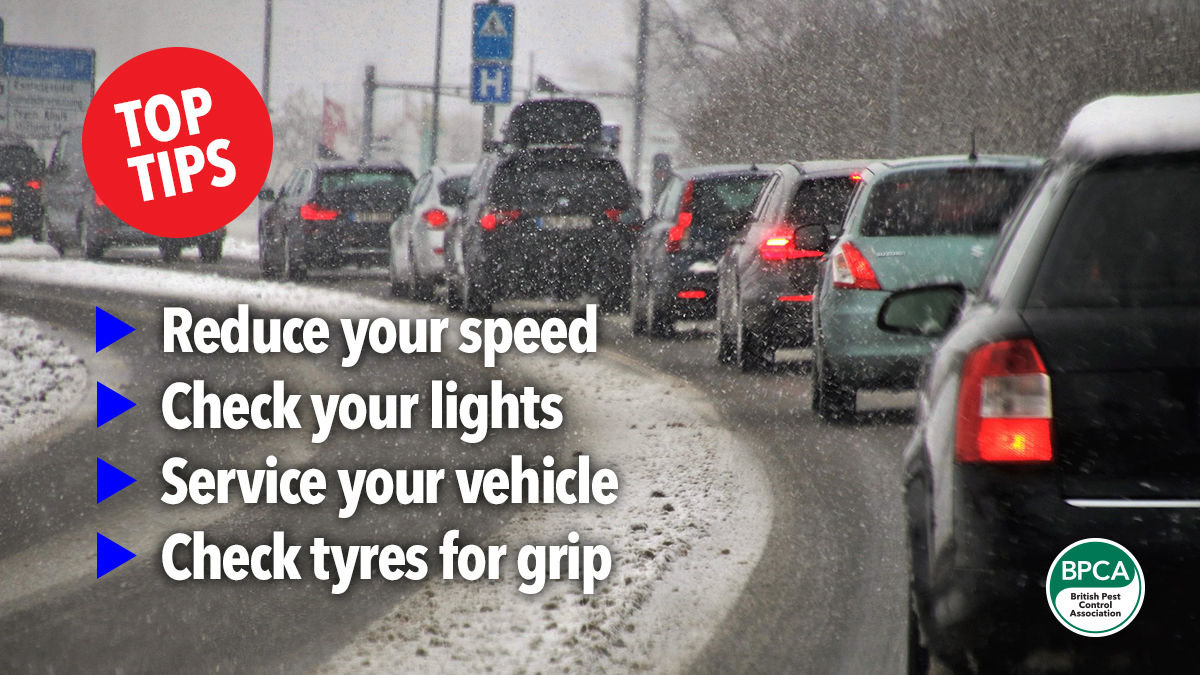
There are a range of dangerous driving conditions in winter months, which can often catch drivers unaware.
Different areas of the UK may experience different extremes of weather, such as snow in the highlands of Scotland or windy conditions along coastal areas.
Anyone in those areas may need to make more robust preparations in case of unexpected weather conditions.
Ice is one of the most challenging and dangerous of all, but one you may not be aware of is freezing fog.
What is Freezing Fog?
Freezing fog forms the same way as normal fog.
However, when fog forms in sub zero temperatures, the water droplets in the air become supercooled.
Supercooling is when a liquid is below freezing point but remains as a liquid.
When the droplets come into contact with a surface, they form into feathery ice crystals. This is known as rime ice.
You can easily see this on vertical surfaces, which are exposed to the prevailing wind, and also on trees and plants.
These ice crystals can also form on other surfaces, including roads and paths.
As a driver you need to be aware that freezing fog can cause black ice to form – ice you can’t see.
How to stay safe
Staying safe is mainly about common sense.
You won’t know where black ice is and exposed areas such as bridges and open roads can ice up quickly. Also pay particular attention to more sheltered areas such as under trees, which can take longer to thaw if subject to ice. Rural areas can get very icy, and are often the last roads to get treated with grit.
A lot of modern cars automatically switch dipped lights on at night or in poor visibility. However not all cars are that smart and in fog, they don’t always come on – this can leave to driving in bad visibility with no lights on. If you’re unsure, manually switch your lights on before you start or when you are in fog.
And remember: don't use your high beam lights in the fog! It's tempting to use them, but high beam lights will make your vision worse in fog, as the light will hit the water droplets/moisture in the air and reflect back at you.
It's hard to judge speed that well in fog/freezing fog and decreased visibility means longer braking times. Exercise caution and be prepared for mishaps, such as vehicles pulling out in front of you at junctions. It’s likely they have failed to judge your distance properly.
Also be aware of drivers tailgating in fog. Some people feel a need to be closer to other drivers where vision is limited, often using lights from other cars as a guide. Chances are they are not being aggressive – just totally unaware of the risks and what they are doing.
The sooner you begin to slowly break during poor weather conditions, the better. It gives other drivers ample warning that you are slowing down and you are less likely to skid on ice.
- Take care of your vehicle
Make sure it’s well serviced, that the lights work, and that the wipers and tyres are all in good condition. You should also keep extra blankets and warm clothes in your car, in case you get stuck for long periods of time.
Do a POWDER check often:
- Petrol – Make sure you have enough fuel for your journey and more
- Oil – Check your oil and top up if needed
- Water – Check coolant/antifreeze and also washer fluid
- Damage – If you have any vehicle damage will it be a risk to you or other road users?
- Electrics – Are your electrics working? Lights, and indicators for example
- Rubber – Check your tyres for grip, and cuts and bulges to the tyres.
These simple checks and precautions can make all the difference.
If you're an employer, make sure you get your staff together to discuss winter driving. Toolbox talks are great for this.
Got any health and safety tips?
If you have an idea for an article or have a health and safety story you want to share, let us know.
hello@bpca.org.uk
Source: Online