PRESS RELEASE
Rathlin Island, one of the UK and Ireland’s most important seabird breeding sites, is a step closer to ecological recovery thanks to the critical support of PelGar International.
The island’s globally significant colonies, including the largest breeding population of Guillemots in the UK and Ireland and the second-largest population of Razorbills in the UK, have been under severe threat from invasive Brown Rats and Ferrets.
Here, Pelgar International's Jonathan Waugh explains the ecological significance of Rathlin and what Pelgar did to help.
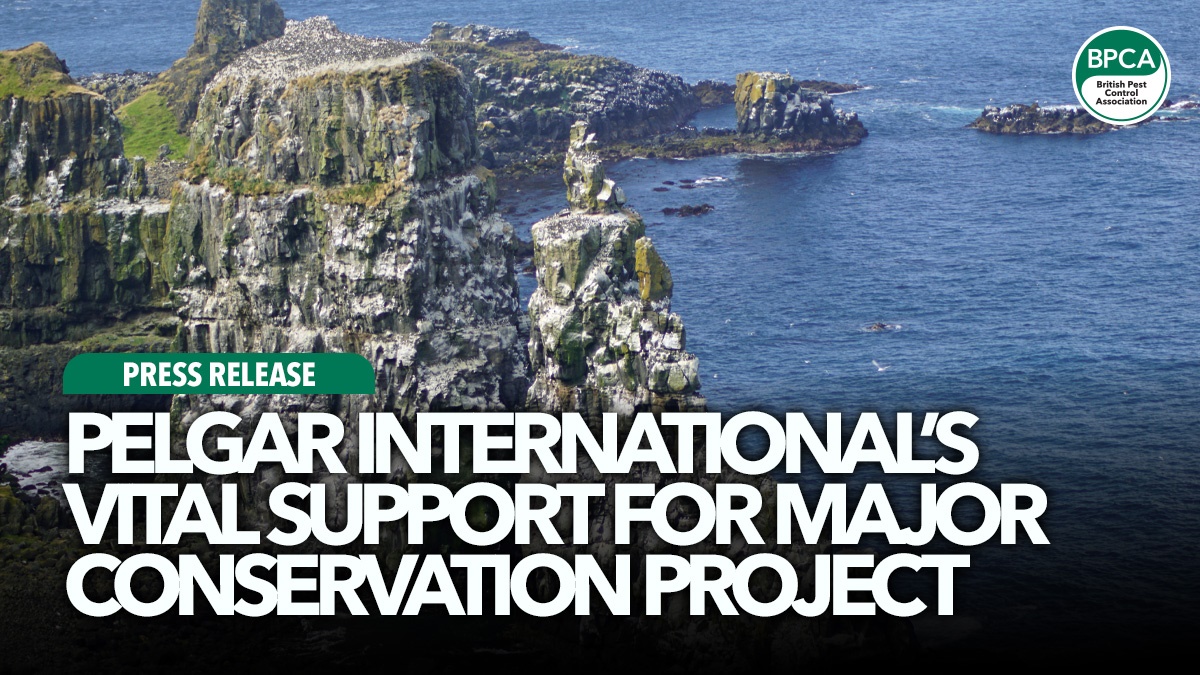
Rathlin Island sits just off the coast of Northern Ireland, a short ferry journey from Ballycastle Harbour.
Step off the boat and you find yourself in a place that feels far removed from the mainland: a windswept, rugged island that shelters some of the UK’s most remarkable wildlife.
In summer, the distinctive “crex-crex” of the endangered corncrake rises from dense nettle beds, while elusive golden hares scan the moorland with their striking blue eyes.
The island’s dramatic cliffs and nutrient-rich waters make it one of the most important seabird breeding sites in Ireland and the UK.
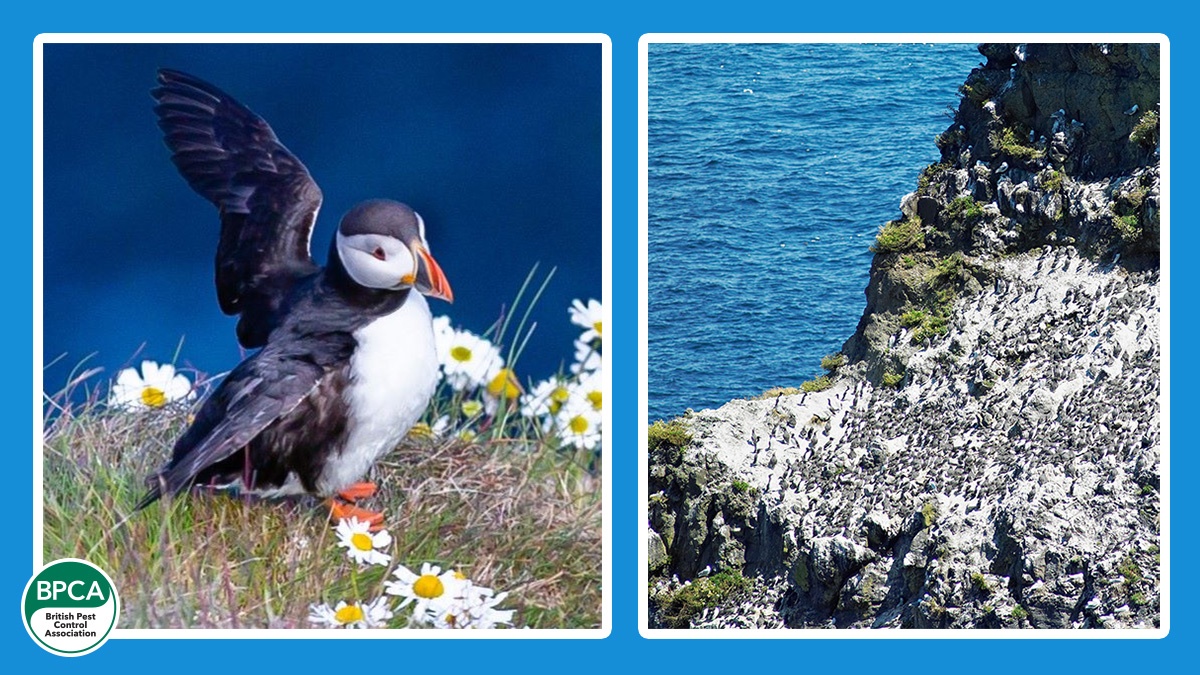
Hundreds of Fulmars and Kittiwakes occupy narrow ledges along the basalt cliffs. Rathlin hosts the largest colony of breeding guillemots anywhere in the UK and Ireland, and it supports the second-largest population of razorbills in the UK.
But this haven for wildlife is under mounting pressure. Puffin productivity has fallen so sharply that in 2023 only one chick in three survived to fledge. Manx shearwaters, once plentiful, have almost entirely vanished.
The reason is simple and deeply concerning: predators that were never part of Rathlin’s natural ecosystem.
Unwanted visitors
Brown rats likely arrived by boat in the 1800s, while ferrets were introduced in the 1980s. With no natural predators of their own, both species quickly spread across the island.
Their impact has been devastating. Ferrets learned to hunt eggs, chicks, and even adult seabirds; puffins, guillemots, razorbills, and likely corncrakes among them.
These invasive predators have also caused daily difficulties for the human community; damaging buildings, raiding hen houses, and threatening the island’s nature-based tourism economy.
Rathlin’s residents, like its wildlife, have felt the consequences.
A collaborative restoration project
In 2021, a landmark £4.5 million restoration initiative was launched to address this crisis.
Led by RSPB NI with Rathlin Development & Community Association, Causeway Coast and Glens Borough Council, and the Causeway Coast and Glens Heritage Trust, and funded by EU LIFE, The National Lottery Heritage Fund, Garfield Weston Foundation, and DAERA, the project aims to restore Rathlin’s biosecurity and revive its fragile seabird populations.
October 2023 marked a global first: the world’s inaugural eradication programme targeting ferrets.
However, this ambitious work has been conducted against the backdrop of rapidly rising costs in the post-COVID period.
Budget pressures intensified just as preparations for full rat eradication began, and it was at this critical moment that PelGar International stepped forward.
PelGar’s generous donation of rodenticide came not simply as a contribution, but as a genuine lifeline.
It ensured that winter field operations could proceed at the scale and pace required, protecting thousands of hours of planning, training, and community engagement.
PelGar’s generous donation of rodenticide came not simply as a contribution, but as a genuine lifeline.
Winter operations: a season of progress and determination
The winter rat-eradication phase represented both a major operational milestone and a season of extraordinary effort.
Despite severe weather, difficult terrain, and the logistics of working on an offshore island, the LIFE Raft team maintained strong momentum.
By September 2024, following months of preparatory work - including staff training, volunteer mobilisation, community briefings, and the delivery of 7,000 metres of pipe for bait stations - the operational rollout began.
By mid-October, around 6,550 bait stations were active across five zones, spaced on a 50 x 50 metre grid to ensure full island coverage.
Some of the most challenging work took place along the island’s remote coastline.
Rope-access specialists, small-craft deployment, and innovative solutions such as suspended “flying” bait stations on tensioned wire were required to reach key areas.
Protecting non-target species remained central throughout.
Harbourage removal remained another priority. With strong support from volunteers, 23 skips of material containing nearly 1,000 tyres, 40 washing machines, and a wide assortment of waste were cleared, improving both operational conditions and community safety.
The project’s detection dog, Woody, has proven enormously effective throughout the season, playing a vital role in monitoring.
Looking ahead
The LIFE Raft partnership remains confident of achieving full eradication, with monitoring continuing into 2026.
The project team extends its sincere gratitude to PelGar International.
Your generous support has made a tangible, lasting difference to this globally significant restoration effort.
Thanks to you, Rathlin’s seabirds and the community that cherishes them have a far brighter future.
GOT A STORY?
Send us your news and we might publish it on our website and in PPC magazine.
hello@bpca.org.uk
Source: Online