PPC124 | OPINION
Clara Guisan of Pest Solutions shares her experiences with field research projects, the insights they’ve provided, and why on-the-ground data collection is essential for improving pest control methods across the UK.
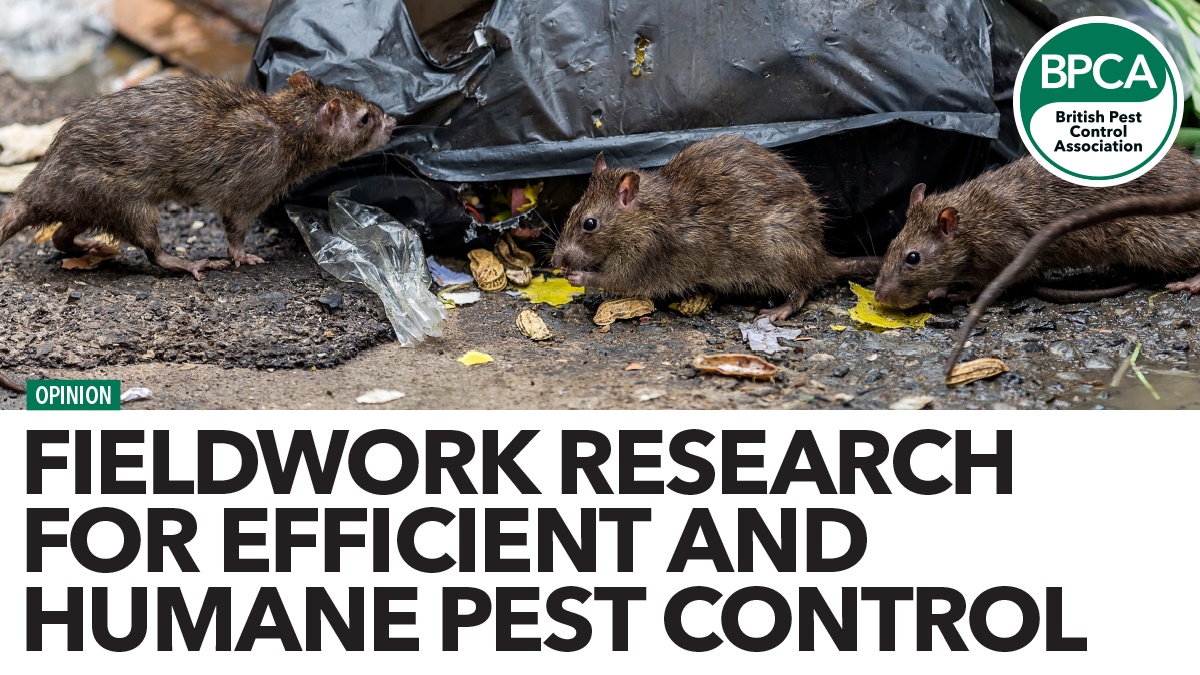
When you’re dealing with rodents that won’t touch bait, traps they seem to tiptoe around, or infestations that pop up in the same spot time and time again, you start to ask yourself questions. Why is this happening? How can I prove what’s going on? And, more importantly, how can I fix it without wasting time, money or effort?
That’s where fieldwork research comes in. For my colleagues and me, getting out there, running trials, and testing our ideas on real jobs has been the key to finding answers. It’s not just curiosity - it’s survival in an industry where the rules are changing, products are disappearing from the market, and we’re expected to deliver effective, humane treatments.
Behavioural resistance: when rodents wise up
Behavioural resistance is, frankly, the bane of my existence. We’ve seen it most clearly with snap traps. In Edinburgh, my colleague Iain Pendreich set up trail cameras to see exactly how house mice behaved around traps. He found they’d happily nibble bait up to a certain point - and then stop dead, just before reaching the trap.
Iain McKinnon had a similar problem at a tricky site where mice were ignoring every trap. He switched to multi-catch boxes with ramps and, even without bait, started catching mice. Over a few weeks, catches dropped significantly, droppings became harder to find, and sightings stopped. It was a clear win, backed up by data.
We’ve also experimented with bait presentation. In Glasgow, colleagues found mice ate more when bait was placed on paper towels instead of in plastic trays.
We tested further in Edinburgh and found that flat presentation, whether on paper or plastic, worked better than bait in shaped containers. It might be about smell, shape, or just ease of access, but it’s a clue we can use.
As for bait types, trials in Edinburgh and Glasgow showed grain bait still comes out on top. Interestingly, an older grain formulation performed better than newer ones. That’s the kind of insight we need to keep hold of when regulations threaten to remove products.
Genetic resistance and knowing your enemy
We’ve contributed to the SASA-led anticoagulant resistance project, which maps resistance in rats and mice across the UK. The process is simple: technicians collect tail samples, pop them in pre-prepared kits and send them off. The results tell us if our local populations are resistant to specific rodenticides, which is vital for compliance and treatment success. Sometimes the findings are unexpected.
In Edinburgh, hybrid resistance in rats was recorded, showing that the genetic picture isn’t always straightforward.
Other collaborations, like Paul Westgate’s study on field mouse (Apodemus sylvaticus) distribution, have shown these species are more widespread, including in urban areas, than we thought. That matters because treatment strategies for field mice differ from those for house mice.
We’ve also looked at pathogen spread by collecting rodent stool samples for lab analysis. Understanding which pathogens are present helps us explain the public health value of pest control to local authorities and customers.
“Write it down, take the photo, keep the figures. We need more science in our day-to-day work.”
Learning from outside the UK
A study in Chicago mapped rat complaints against factors like vacant land, rental housing density, and waste management. The result was a predictive heat map of where rat problems were most likely. Imagine applying that here - using our own activity data to predict hotspots, justify preventive contracts, and work with public health teams before infestations get out of hand.
Beyond rodents: insect trials
While rodents dominate the conversation on behavioural resistance, we’ve also trialled different insecticidal dusts for wasp work, tested bed bug monitors with various lures, and compared cockroach baits. These trials provide us with the hard evidence we need to defend effective products and adapt to changing regulations.
The BPCA Academic Relations Working Group is a great example of linking industry and academia. By working with students on real pest control research, we’re building a bank of evidence that benefits everyone.
Why field research matters
Without field research, we’re flying blind. When a regulation change looms, data from trials can help us argue for keeping effective products. When behavioural resistance makes a job harder, recorded evidence can guide us to alternative, more humane methods. And when we share that data, we help the whole industry adapt and improve.
Too often, technicians see something interesting on a job but don’t record it. My message is: write it down, take the photo, keep the figures. We need more science in our day-to-day work, not less. That way, we can highlight our value, explain our challenges, and keep delivering high-quality pest control - no matter what’s thrown at us.
YOUR STORY HERE
Passionate about a part of your day job? Share your experiences here. Contact the editorial team today. [email protected]

Source: