STAFF BLOG
Rosina Robson, BPCA Chief Executive, reflects on a day at Labour’s conference, the conversations taking place around government and what they mean for BPCA members.
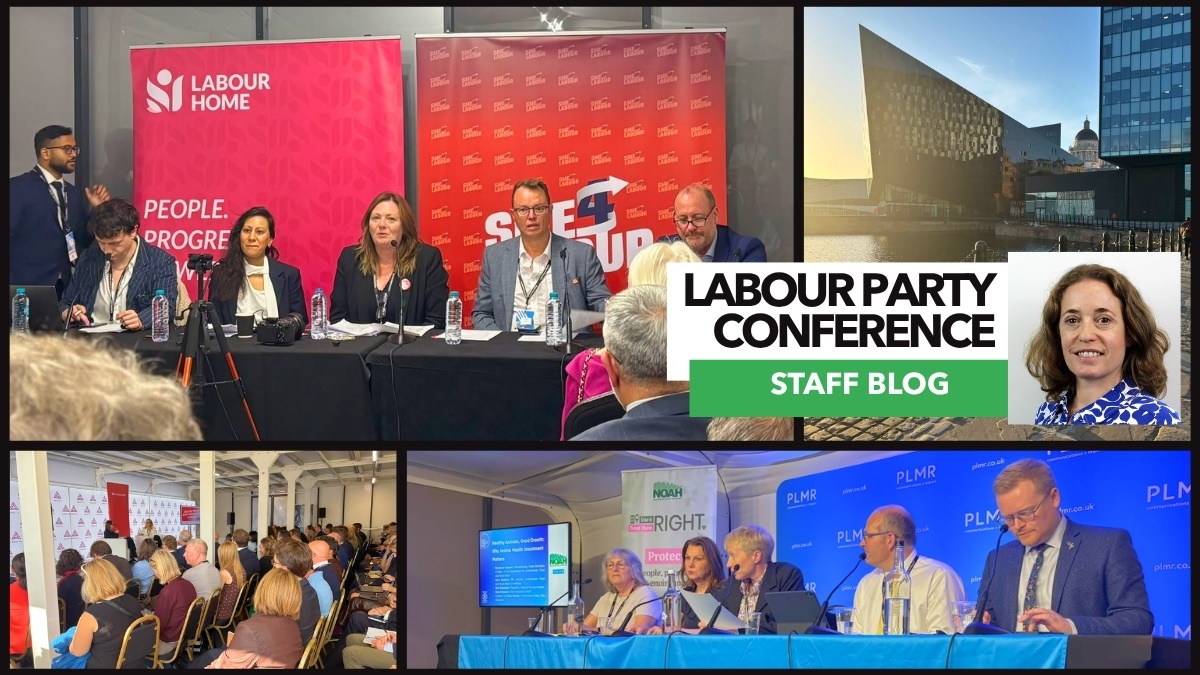
I attended business day at Labour’s conference on Monday and found ministers and MPs really accessible this time. They were visible and moving around freely, with some staying for entire fringe meetings to answer tricky questions from the media and stakeholders. Housing, small businesses, food security and rural communities were all on the fringe agenda, with plenty of overlap with the work our members do.
For BPCA, these events give us a chance to hear directly from ministers, understand what MPs care about, and meet organisations we might otherwise struggle to get in the same room with. They also help us work out where pest management belongs in discussions that don’t necessarily mention us by name.
The programme was too big for one person to cover. Ciaran (your Policy Officer) attended separately too on the Tuesday to cover more ground, asking questions about how Awaab’s Law and other housing reforms might benefit different groups on the ground.
Understanding the businesses behind growth
An SME4Labour session on the industrial strategy brought together MPs and businesses to discuss where growth will come from and who gets the opportunity to contribute.
Alison Taylor MP hosted the session, bringing her business background to the discussion. Sonia Kumar MP spoke about investing in a wider range of businesses, including those led by women, and referenced the Rose review of female entrepreneurship.
A strong theme was growth reaching different parts of the UK. Perran Moon MP spoke about reopening tin mines in Cornwall to meet demand for critical minerals, showing how national ambitions connect with local industries.
One frustration running through the discussion was whether Whitehall really understands business. The discussion paid particular attention to the contribution of medium-sized businesses.
For BPCA, that raises a question about how we ensure our members' experiences reach the people developing business policy. Pest management companies employ and train people, serve local communities and support other businesses. Their experience needs to be part of that conversation.
A separate session with Blair McDougall covered late payment, access to finance and how smaller businesses can use artificial intelligence. These subjects directly affect running a company, alongside the technical and regulatory issues we more often discuss as a sector.
Housing beyond the building targets
At a housing fringe meeting, Matthew Pennycook, Housing Minister, joined the National Housing Federation and housing providers MTVH and Torus to discuss building social housing.
The discussion covered the government’s ambition to build 1.5 million homes, the need for more social rented housing and getting children out of temporary accommodation. Planning reform, brownfield development and rebuilding the capacity to deliver homes were all part of it.
Housing associations were described as organisations that can attract investment and help deliver the infrastructure communities need.
Listening to this, I was thinking about where our members’ experience fits. Many work with housing providers and see the practical challenges of maintaining homes and responding to pest problems.
Those experiences give us something specific to contribute when we speak to housing organisations. Understanding their priorities helps us make that connection and identify the people we need to keep talking to.
Discussion on housing continued the following day with Ciaran in attendance, hearing from Pennycook’s boss and Secretary of State for Housing, Angela Rayner, who repeating desires for more housing.
But the Prime Minister, Andy Burnham, announced plans for existing homes, with landlords' homes to be seized by local authorities if they put tenants at risk by failing to repair and maintain their properties. Burnham suggested that giving councils such powers might require a change in the law.
Rural conversations and new contacts
The British Association for Shooting and Conservation’s (BASC) rural reception brought together politicians and organisations interested in the countryside.
Joe Morris MP hosted, and Jenny Riddell-Carpenter spoke about rural Britain, employment and access to services and support. We discussed rural decline and the challenges facing communities outside our towns and cities.
I met representatives from the Rural Services Network and the Woodland Trust. These contacts broaden the range of organisations we can speak to about issues affecting members working in rural areas.
Copies of the Value of Shooting report were on the tables. It caught my attention as an example of another sector setting out its contribution in terms that policymakers can engage with.
I’ve also contacted the Labour Rural Research Group. Next, I'll look at where its interests overlap with ours and how we might contribute.
Food security and a conversation with the minister
At the National Office for Animal Health’s fringe meeting, the discussion brought together animal health, food security and economic growth.
Defra Minister Baroness Hayman spoke about biosecurity as a foundation for growth. The session also covered animal welfare, innovation, and access to veterinary medicines through the proposed UK–EU Sanitary and Phytosanitary agreement (SPS).
On Tuesday, when Ciaran attended, the government hinted further at its plans for relations with Europe, with a UK-EU summit due later in the year. Prime Minister Andy Burnham used his big speech to announce he would use the summit to lay out ‘options’ for our relationship with Europe and to ‘secure gains for our industries most harmed by Brexit’. With biocides also on the table for the SPS agreement, perhaps chemicals may be one of those industries.
The connection between pest management, food security, and biosecurity is familiar. Hearing how ministers discuss those subjects helps us understand where to bring our members’ knowledge and experience into the debate.
Afterwards, a Bayer contact and I asked the minister about progress on the UK/EU SPS agreement. She spoke about the timetable being pursued and the work on transition arrangements.
That conversation gave us an opportunity to ask questions directly. We still need to follow through on the details and timing as negotiations progress.
BPCA’s name was also recognised after we invited PestEx. It was a small moment, but it meant we weren’t starting the conversation entirely from scratch.
Bringing the conversations back to BPCA
I also attended an interview with Lucy Rigby. Much of the session involved people trying to find out what might be in the Autumn Budget without her giving anything away. There was plenty of fishing, but I left with no Budget secrets.
Throughout the day, I met people from Shelter and Humane World for Animals, the NFU President, the National Housing Federation’s Chief Executive, and the Guardian’s environment editor, alongside rural contacts.
For members, the value of attending comes through what we do with those conversations. We have people to follow up with, a clearer understanding of ministerial priorities, and more information about individual MPs' interests.
The team and I will work through the next steps together. That means identifying where we can contribute evidence, which relationships to develop and what needs further investigation.
The day covered a lot of ground. Now our job is to connect it back to the issues affecting members and use those contacts to ensure professional pest management is heard.
CONNECTING PEST MANAGEMENT TO THE BIGGER PICTURE
Decisions about housing, food security, rural communities and business growth all affect professional pest management. BPCA’s lobbying work links members’ experience to wider political discussions, helping MPs and ministers understand where the sector contributes and what it needs to do its job.
Learn more about BPCA’s lobbying work at
bpca.org.uk/policy

Source: