BIRD MANAGEMENT
The 2026 bird general licences are now live (from 1 January 2026), and there are a few changes pest controllers need to clock, especially if you work across borders.
The two headline points in England are:
- Natural England now issues the licences (not Defra).
- Artificial light is back in scope for feral pigeon control (more on that below).
As ever, you should read the actual licence text before you act. This update is a “what to look for, not a substitute for the documents.
Quick comparison table
|
Nation
|
Link
|
Issuing body
|
Main licences
|
Validity
|
What to watch in 2026
|
|
England
|
Link
|
Natural England
|
GL40, GL41, GL42
|
1 year (calendar year)
|
Artificial light reinstated for feral pigeons (GL41 only); updated wording/structure; new disturbance considerations linked Artificial light reinstated for feral pigeons (GL41 only); updated wording/structure; new disturbance considerations linked to avian influenza and protected sites.
|
|
Scotland
|
Link
|
NatureScot
|
GL01, GL02, GL03
|
Calendar year
|
NatureScot will conduct a General Licence review and consultation in 2026. This review will evaluate each General Licence in detail, including the purposes and species involved. Any changes which result from that review will be incorporated into the General Licences in 2027.
|
|
Wales
|
Link
|
Natural Resources Wales
|
Expanded GL suite (GL001, GL002, GL004, etc.)
|
Calendar year
|
Big expansion of licences published; some condition wording changes across the suite. Variations of approved traps for GL002 have been made.
|
|
Northern Ireland
|
Link
|
DAERA / NIEA
|
TPG1, TPG2, TPG3
|
As specified by DAERA
|
Framework broadly steady; check validity periods and protected site conditions.
|
England: the main changes for 2026
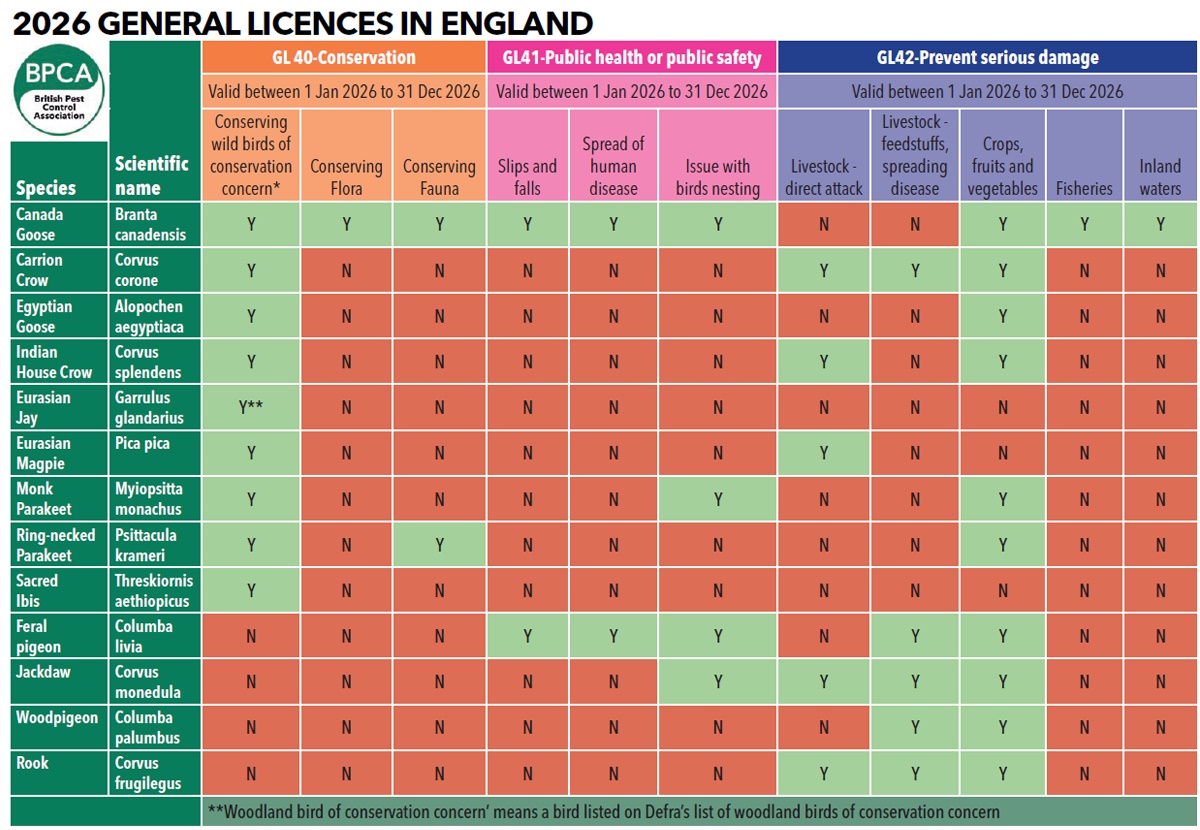
- Licences now come from Natural England, and only last one year
- Historically, Defra issued the English general licences, and the most recent set ran for two years. For 2026, Natural England is the issuing authority, and the licences run 1 January–31 December 2026
BPCA’s advice is to expect more frequent updates year to year, so don’t assume “last year’s approach” will stay valid.
Feral pigeons: artificial light is reinstated (England)
For feral pigeons only, the licence text again allows shooting with a device that illuminates a target (the wording is explicit).
If you’ve previously had to avoid illuminated devices for pigeon work in England, you’ll want to revisit your method statements, RAMS, and client expectations.
Licence wording and conservation framing have been updated
Natural England also refreshed the structure and wording of the licences, and GL40 now references a more defined set of “birds of conservation concern” rather than just pointing to red/amber lists.
Extra care around protected sites and disturbance
There’s a clear direction across the 2026 licence messaging to avoid unnecessary disturbance around sensitive sites, with avian influenza risk and protected bird assemblages sitting behind it.
Trapping note: decoy birds and registration
Natural England’s 2026 bulletin also flags an added note tied to trapping conditions (GL33) around decoy bird registration (poultry register).
Scotland: one key method change, focused on feral pigeons at night
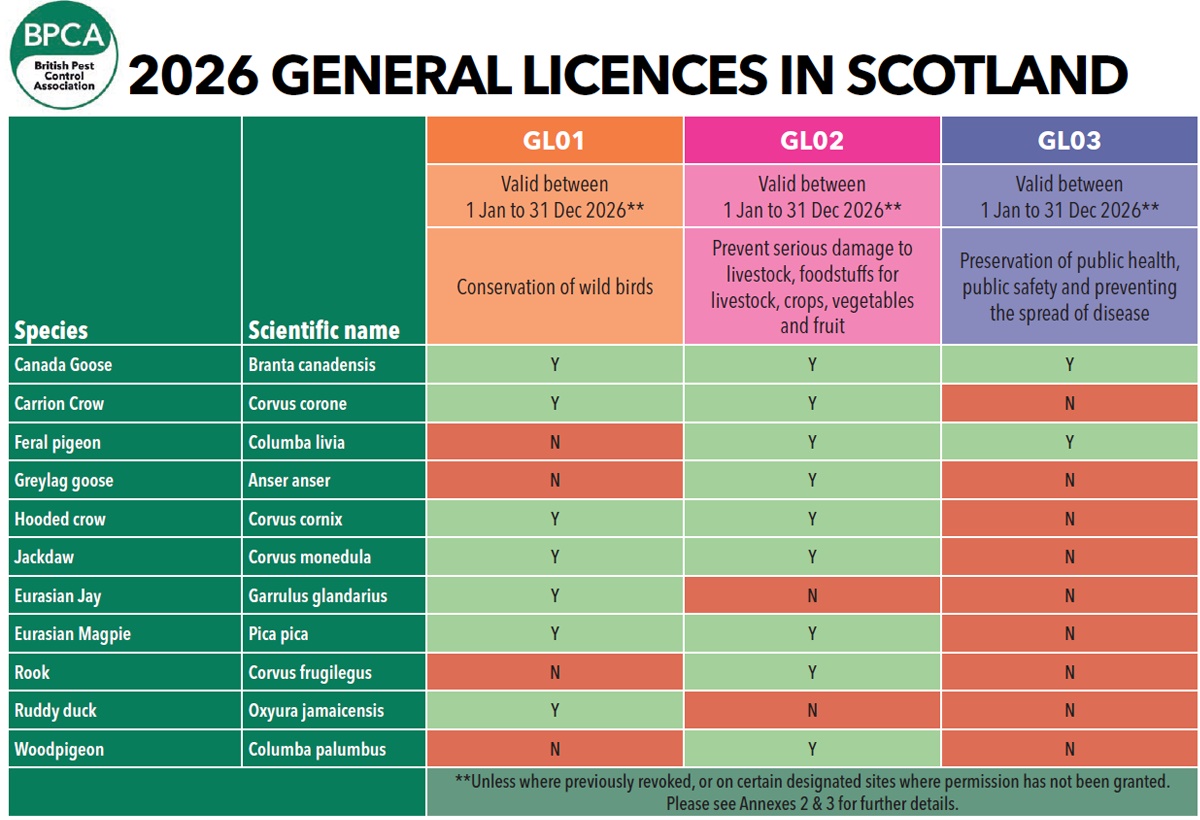
NatureScot states there’s one change from 2025 to 2026, and it’s specific to feral pigeons when shooting at night under GL02 and GL03.
The licence documents themselves spell out the method as shooting with the aid of an illuminating device/night shooting device for feral pigeons.
Scotland is being very explicit about the method. If you operate in both England and Scotland, don’t assume the same phrasing or conditions apply in both places. Read the Scotland licence text and the standing conditions for SPAs/SACs.
Wales: more licences published, and condition wording tweaks
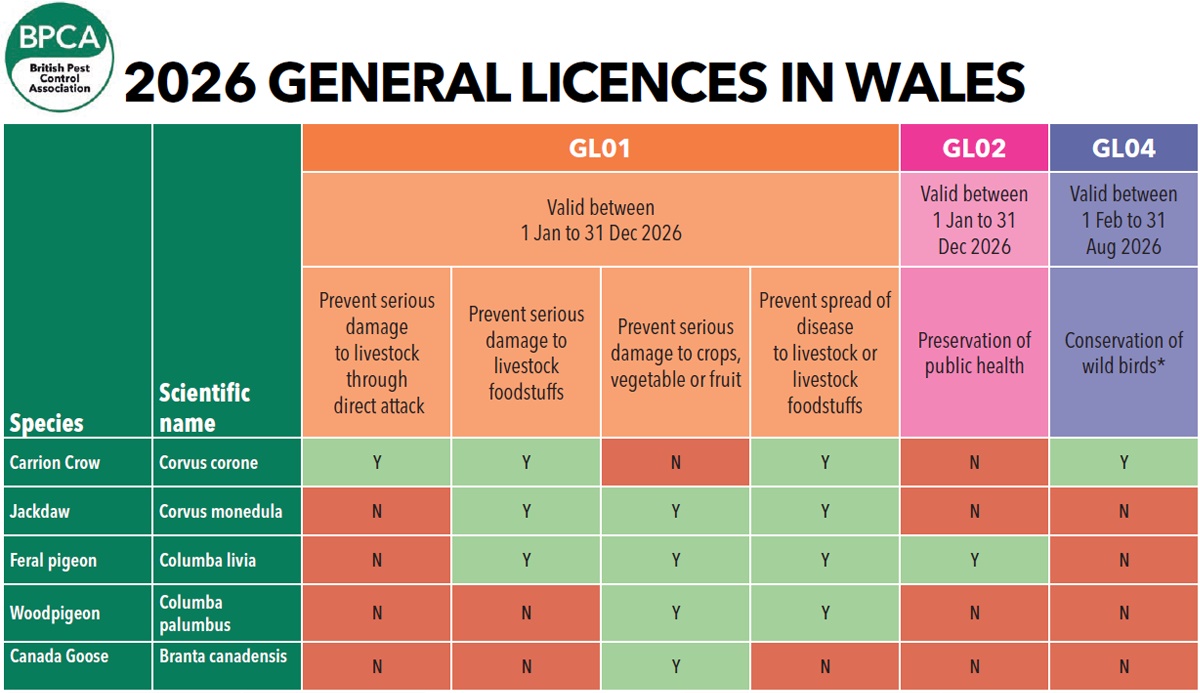
Natural Resources Wales has published a much larger suite of general licences for 2026, including GL001 and GL002 alongside a range of additional licences.
Even if some of the new licences won’t affect day-to-day pest work, the practical point is: don’t rely on last year’s “small list”. If you do any bird work in Wales, go straight to the 2026 index page and work from there.
Northern Ireland: check the dates and protected site conditions
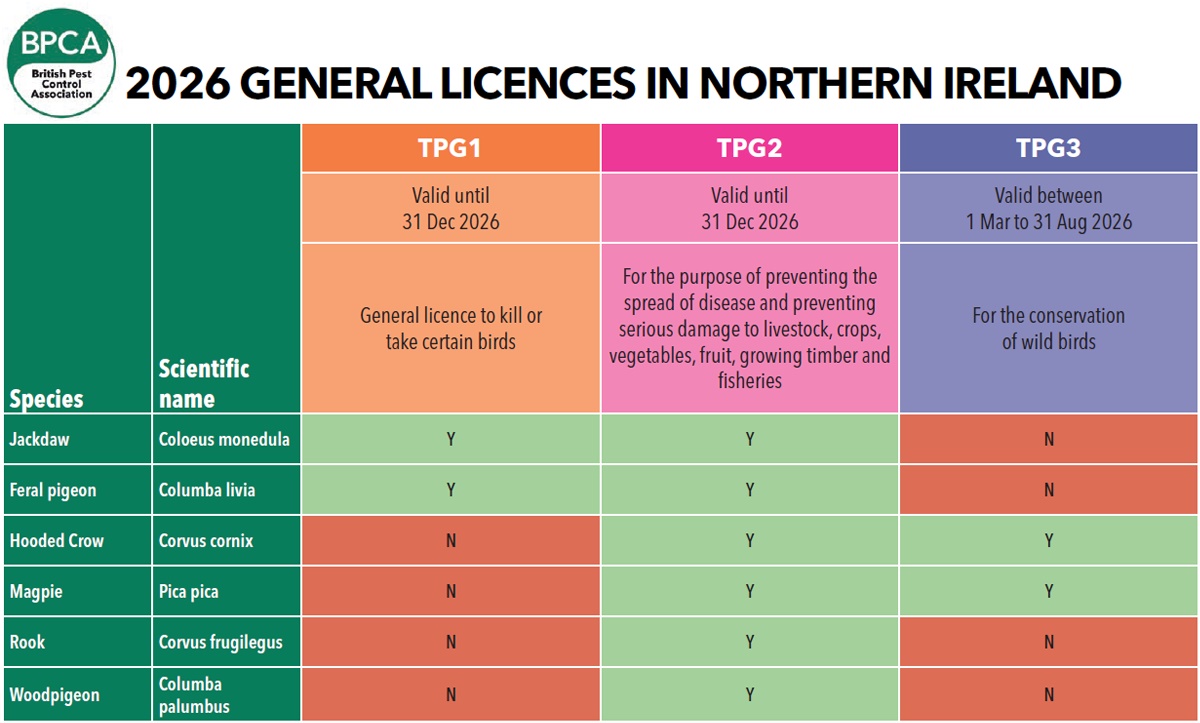
Northern Ireland continues to use the TPG1, TPG2, and TPG3 licences under DAERA, and the overall structure is broadly familiar. The key is to confirm validity periods and any updated advisory material or protected site conditions before use.
Key takeaways for technicians this week
- Print or save the 2026 licence(s) you actually work under, for the nation you’re in.
- Re-check your pigeon job packs if you use illuminated devices, because England and Scotland now spell this out in their current texts.
- Review site designations (SPA/SAC/other protected sites) early in the survey, and build disturbance controls into your plan.
- Make sure your records are tight! You want to be able to evidence why lethal action was necessary and what alternatives were considered, if you’re ever challenged.
You can download the licence tables at bpca.org.uk/library (log in required).

Source: