PPC124 | PESTS IN POLITICS
Since the last issue of Pests in Politics, we’ve been busy welcoming a new Prime Minister, working hard to protect the toolkit and supporting BPCA members in engaging with their local MPs.
New Government in Westminster
BPCA wrote to key members of the new government, including Prime Minister Andy Burnham MP and were pleased to get a response. We also wrote to the Secretary of State for Housing, Communities and Local Government, the Secretary of State for Environment, Food & Rural Affairs and the new Chancellor of the Exchequer.
Our letter reinforced many of the recommendations we made earlier this year to the Labour Party’s National Policy forum, with protections for people in temporary accommodation; ensuring support is available for low-income homeowners to pay for treatments; and measures to tackle the cost of insuring young people on work vehicles. We also made calls for more effective regulation and reduced reporting burdens for the chemicals sector.
Showcasing you
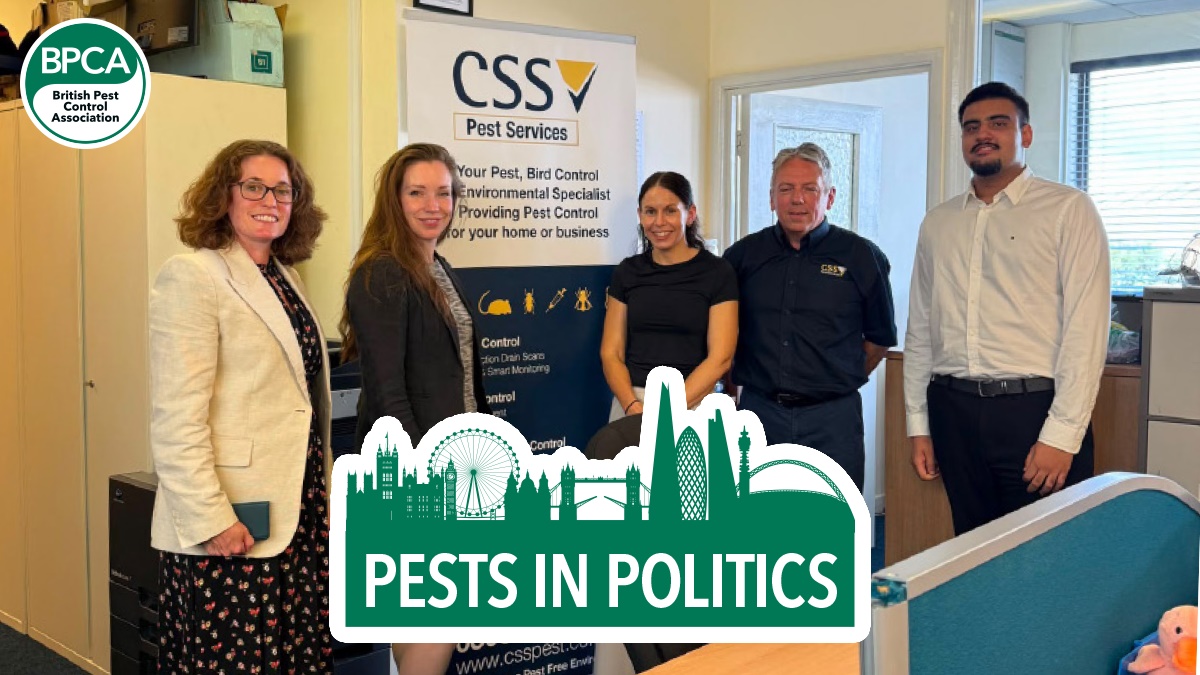
We’ve been pleased to actively support more members with visits from their local representatives. BPCA CEO, Rosina Robson, and CSS Pest Services recently hosted Derby North MP Catherine Atkinson.
Housing conditions were a significant part of the conversation, especially with the upcoming expansion of Awaab’s Law.
Rosina also helped to celebrate Bounty Pest Control’s 30th anniversary with Ashford MP and member of the House of Commons Environmental Audit Committee, Sojan Joseph.
Awaab’s Law
In July the Ministry of Housing, Communities and Local Government released new guidance and announced that the second stage of Awaab’s Law would enter into force 30 November. The second stage will extend the scope of protection to pest hazards considered to be significant.
Glue traps
Scotland’s ban on the use, sale, and possession of glue traps entered into force on the 1 July. Breaking the law could result in up to five years' imprisonment, and/or a fine of up to £40,000.
BPCA are preparing a paper for Defra to make our case for a ban on general sale in England clear. In September Defra responded to recommendations made by the Animal Sentience Committee back in March to ban their sale. Defra agreed that there was value in a ban but would not bring new legislation to introduce one.
They explained that they wanted to see how effective the ban in Scotland is first and believe a ban in England would be ineffective unless Wales, and possibly Northern Ireland too, were also on board.
While the government refused to legislate on the issue, Dame Rebecca Harris MP introduced the Sale and Supply of Glue Traps (Prohibition) Bill to Parliament. As a private member's bill, it is unlikely to progress.
BPCA and the Chartered Institute of Environmental Health have jointly written to Dame Harris to highlight our own concerns about the public’s continued access to glue traps, as well as issues with the licensing system.
Working dogs
Our Policy team has been working hard to make the case for working dogs in Northern Ireland. The Northern Ireland Assembly’s Committee for Agriculture, Environment and Rural Affairs made a call for evidence on draft legislation that would affect the use of working dogs in pest management.
BPCA gave evidence in Stormont on 15 October. Our response to the committee was that BPCA did not reject the bill, but requested amendments to ensure that it did not unintentionally affect the work of members and ensure that it would be consistent with the rest of the UK.
Chemicals
BPCA responded to a European Chemicals Agency consultation for potential substitutes to alphachloralose, reinforcing the rodenticide’s value to professionals in Northern Ireland who still operate under European regulations.
Alongside other members of the Alliance of Chemical Associations, we met with officials at the Health and Safety Executive for discussions to help shape the UK/EU SPS Agreement and its effects on the biocidal product regulations.
Also…
- NatureScot sought views as part of their general license review. BPCA responded and reinforced the value of general licenses for the flexibility they provide pest technicians, and recommended that wood pigeons be added to GL03 to tackle issues experienced by food production sites
- His Majesty’s Inspectorate of Constabulary and Fire and Rescue services released a report into the state of the firearms licensing system in England and Wales, describing it as a “postcode lottery in the level of scrutiny, service and processing times experienced by applicants and certificate holders”.

Source: