PESTAWARE
Cleaners are best placed to spot possible flea infestations and to take action quickly, say experts at national trade body, British Pest Control Association (BPCA).
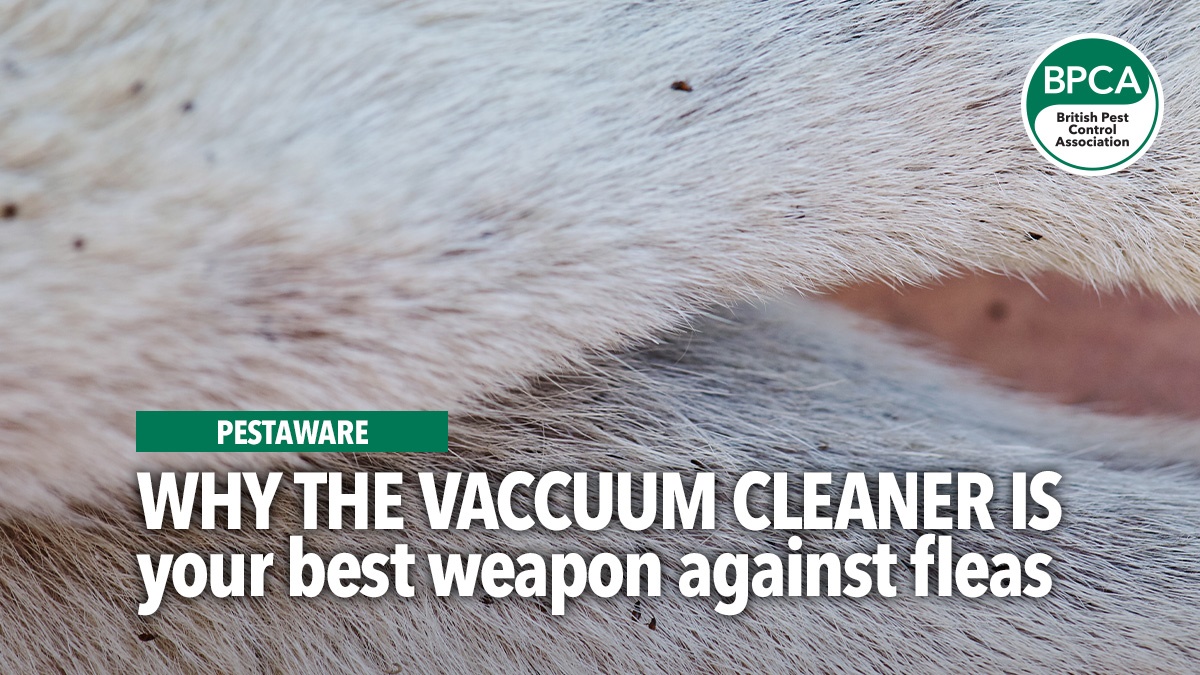
BPCA’s Technical Manager, Natalie Bungay, says cleaners working in businesses, and major buildings such as hospitals, schools and office blocks, are in prime position to spot a possible infestation – and take the first steps to tackle it.
Spot the signs
It’s a common misconception that fleas are associated with dirty environments. They could be transported into any property and, like most insects, will thrive in warmer weather.
- In residential settings, the most common first sign of fleas is usually a pet scratching, licking or biting itself repeatedly
- Fleas or flea droppings may be visible in the coat of a pet – comb the pet over a sheet of paper. If any black specks that fall out turn red when a drop of water is added, the pet is likely to have fleas
- Fleas can be brought into any environment, including homes or businesses without pets. The most obvious sign of an infestation is seeing fleas jumping about on soft furnishings
- Bites – particularly around the ankles – can indicate that fleas are present.
The most common species of flea in the UK is the cat flea, which despite its name, will also feed on dogs. Birds and their nests can also be the source of a flea infestation.
Female fleas can lay 1,000 eggs over the course of their lifespan, which is usually around two years. The eggs hatch into larvae, which then go through a pupal stage before emerging as adult fleas in anything from two weeks to eight months, depending on environmental factors.
A fully formed flea can remain in its cocoon until it detects the vibration and movement from a potential host.
This means that while you might be able to see fleas jumping around on soft furnishings, the eggs, larvae or pupae could also be lurking somewhere nearby.
Vacuum vigorously
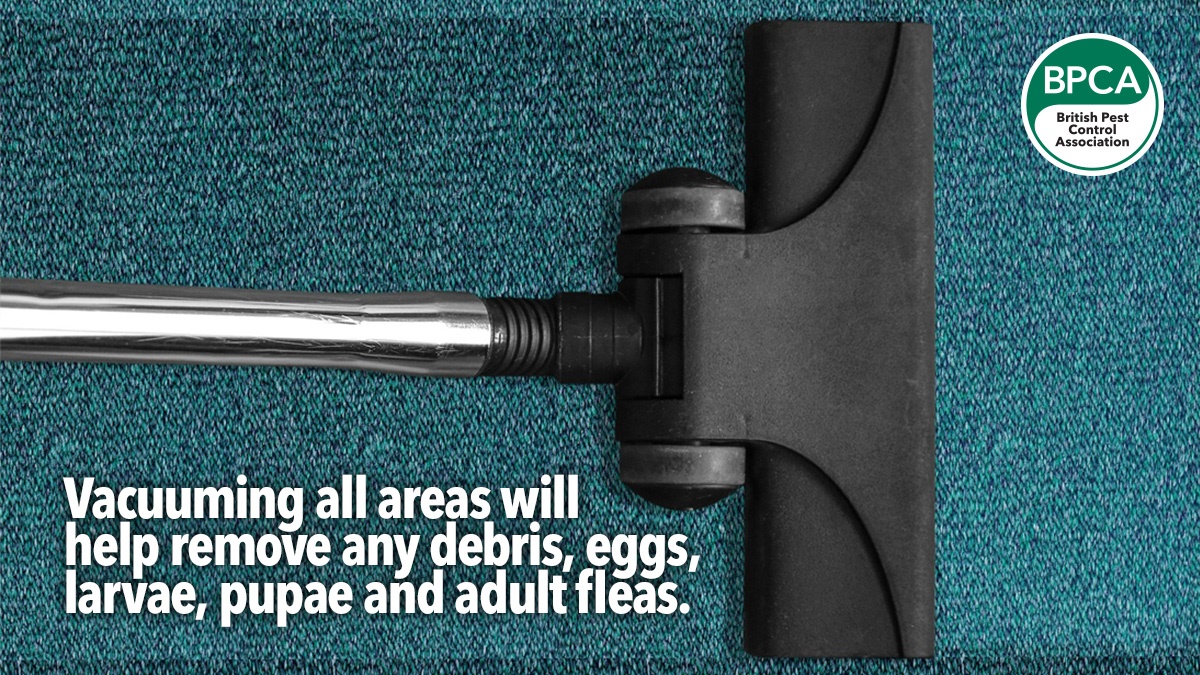
It is difficult to effectively prevent fleas entering a property, but regular vacuuming, particularly of carpets and soft furnishings, does help.
The vacuum cleaner is also the first port of call if signs of a flea infestation are spotted within a property.
Vacuuming all areas will help remove any debris, eggs, larvae, pupae and adult fleas, but it is important to empty the vacuum (or put the vacuum bag) into an outside bin.
This will reduce the chances of re-infestation and prepare the area for treatment with an insecticide.
The vibration of the vacuum cleaner also stimulates adults to hatch from the cocoon stage, making them more vulnerable to insecticide treatments, as well as allowing treatments to penetrate down to the base of carpet fibres where fleas are likely to live.
Sofa cushions, blankets, bedding, clothing, pet bedding and other soft furnishings that may have been affected should be washed at the highest temperature possible, preferably at 60° or higher.
When to call in the professionals
A pest professional, such as a BPCA member, will be trained in flea control and have access to a range of professional-use insecticides and tools which are not available to the public.
A standard treatment is likely to involve the use of a residual insecticide and may also include an Insect Growth Regulator, which prevents proper completion of the flea life cycle.
For more information about how and why we control fleas, visit BPCA’s online guide: Pest advice for controlling Fleas
Amateur-use insecticides are available, but BPCA strongly warns anyone using them to always follow the instructions on the label and ensure all necessary precautions are taken to avoid collateral damage or personal injury.
BPCA members are experienced professionals with access to a range of specialist products not available to the public.
They are trained, qualified and regularly assessed to the British Standard in Pest Management BS EN 16636.
NEED TO CALL IN A PROFESSIONAL?
To find a professional pest controller local to you, use our online tool.
bpca.org.uk/find

Source: Online