Tetramethrin, the active ingredient in some insecticidal products, has been classified as a category 2 carcinogen.
This will impact formulated products in which the level of tetramethrin is equal to or greater than 1%.
Such products will also be classified as a carcinogen category 2 and be required to carry a tactile warning of danger (TWD).
Commission Regulation (EU) 2018/1480 was published on 4 October 2018 amending Regulation (EC) No 1272/2008 (13 ATP to the regulation) (‘ATP’).
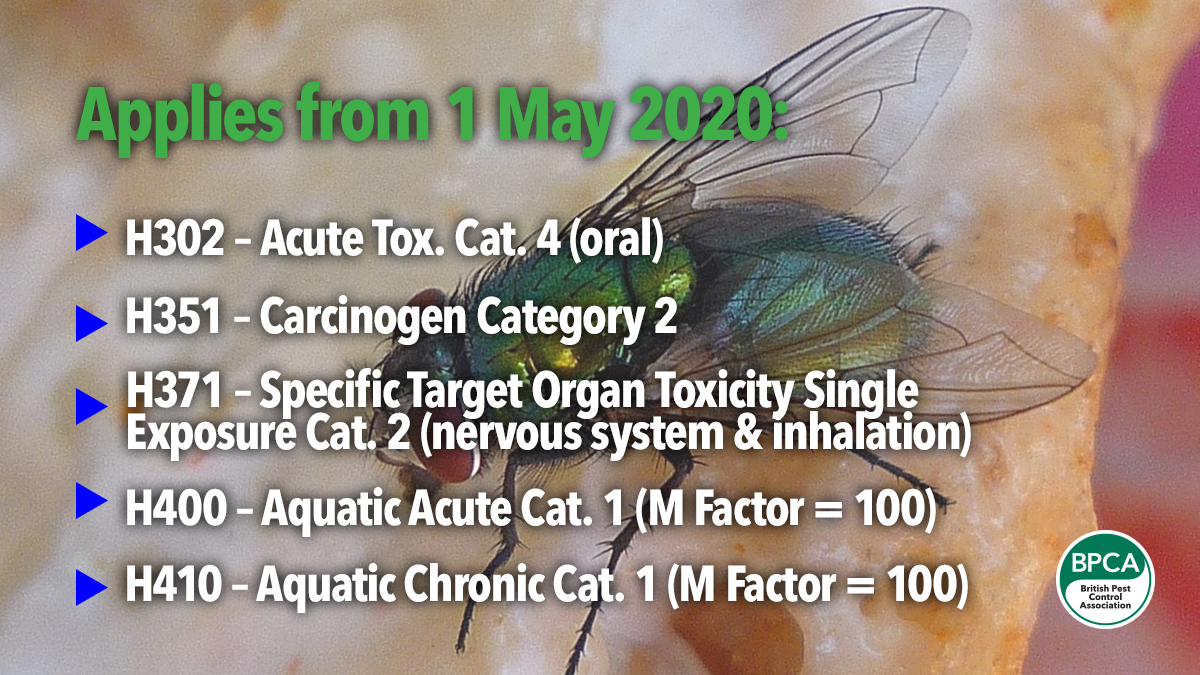
The following harmonised classification and labelling for Tetramethrin will apply from 1 May 2020:
- H302 – Acute Tox. Cat. 4 (oral)
- H351 – Carcinogen Category 2
- H371 – Specific Target Organ Toxicity Single Exposure Cat. 2 (nervous system & inhalation)
- H400 – Aquatic Acute Cat. 1 (M Factor = 100)
- H410 – Aquatic Chronic Cat. 1 (M Factor = 100).
This change in hazard classification will require changes to the formulated product Material Safety Data Sheets (MSDSs) and, in some cases, product labels.
Therefore, you'll want to check your clients' site folders and your COSHH assessments are up to date.
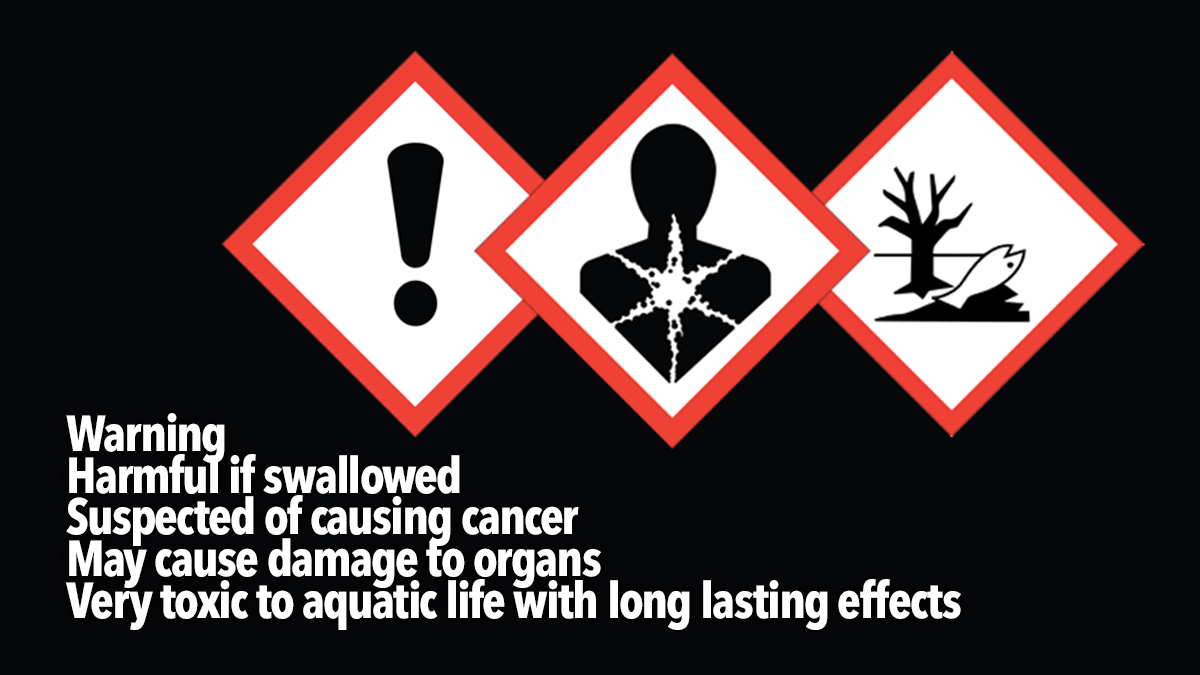
An example of how the new classification will appear on-label is provided below (products containing ≥1% tetramethrin only):
If you're in doubt about whether you need to change your MSDS, or if you have further questions about specific products, please contact your supplier or the product manufacturer.
What is a category 2 carcinogen?
According to the classification and labelling Regulation 1272/2008, the European Union classifies carcinogens into two categories:
● Category 1A: Substances known to be carcinogenic to humans (eg benzene)
● Category 1B: Substances known to be carcinogenic to 2 species of experimental animal
● Category 2: Substances known to be carcinogenic to 1 species of experimental animal (eg tetramethrin).
How should you protect yourself?
When handling any insecticide, you should always be wearing the correct PPE as stated on the label and your COSHH assessment.
Make sure your COSHH assessment is up-to-date and follow all manufacturer's directions on the label at all times.
Always read the label of an insecticide before use.

Source: Online