Health and Safety Executive (HSE) has issued a warning about the inadequate levels of protection provided by a substantial number of face masks, claiming to be of KN95 standards.
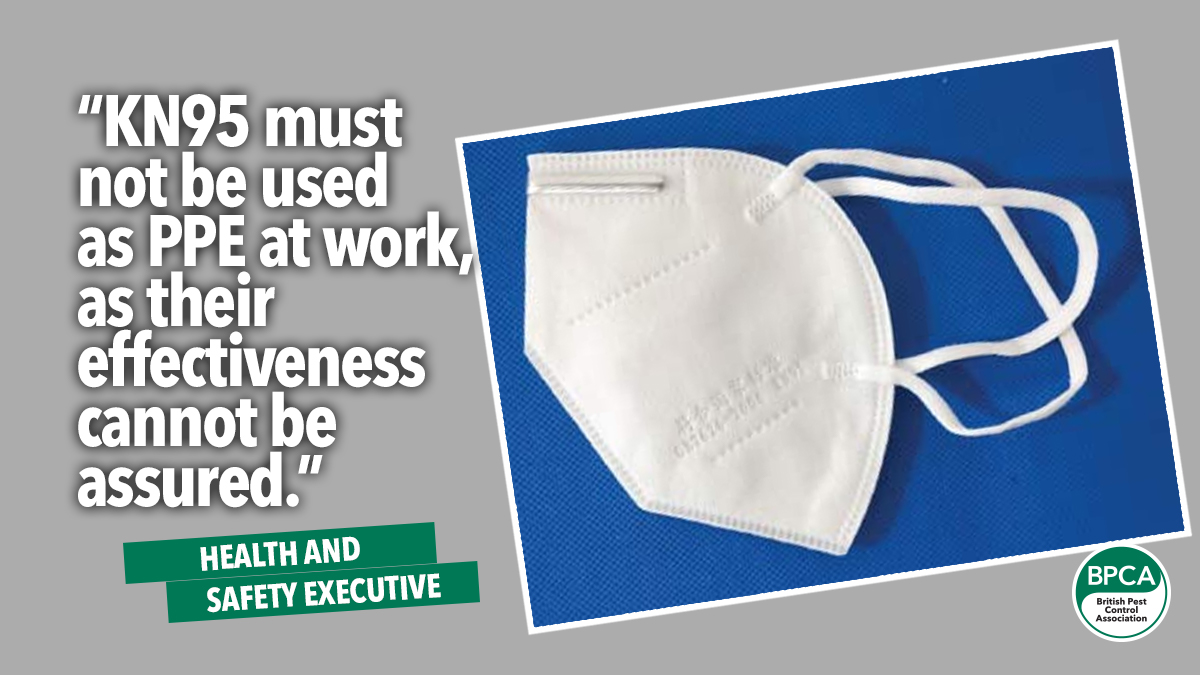
According to HSE these masks, sometimes referred to as filtering facepiece respirators, are likely to be poor quality products accompanied by fake or fraudulent paperwork.
Personal protective equipment (PPE) cannot be sold or supplied as PPE unless it is CE marked.
CE marking is a certification mark that indicates conformity with health, safety, and environmental protection standards for products sold within the European Economic Area.
The only exception is for PPE that is organised by the UK Government for use by NHS or other healthcare workers where assessments have been undertaken by HSE as the Market Surveillance Authority.
About KN95
KN95 is a performance rating under the Chinese standard GB2626:2006, the requirements of which are broadly the same as the European standard BSEN149:2001+A1:2009 for FFP2 facemasks.
However, there is no independent certification or assurance of their quality and products manufactured to KN95 rating are declared as compliant by the manufacturer.
Masks that are not CE marked and cannot be shown to be compliant must be removed from supply immediately.
If you are carrying out pest control and require a face mask as part of your PPE, KN95 must not be used as their effectiveness cannot be assured.
Masks that are not CE marked and cannot be shown to be compliant must be removed from supply immediately.
If these masks have not been through the necessary safety assessments, their effectiveness in controlling risks to health cannot be assured for anyone buying or using them.
They are unlikely to provide the protection expected or required.
If any are CE marked, suppliers must be able to demonstrate how they know the documentation and CE marking is genuine, supported by Notified Body documentation showing compliance with the essential health and safety requirements as required by the Personal Protective Equipment Regulations (EU) 2016/425.
MORE INFORMATION
If you want to know more about PPE standards, visit the HSE website.
hse.gov.uk/toolbox/ppe

Source: HSE press release