Pest control | PPC95 May 2019
BPCA Consultant member John Lloyd of Independent Pest Management and Insect Consultancy is back in PPC, giving us advice on how to spot and treat for these rare pests.
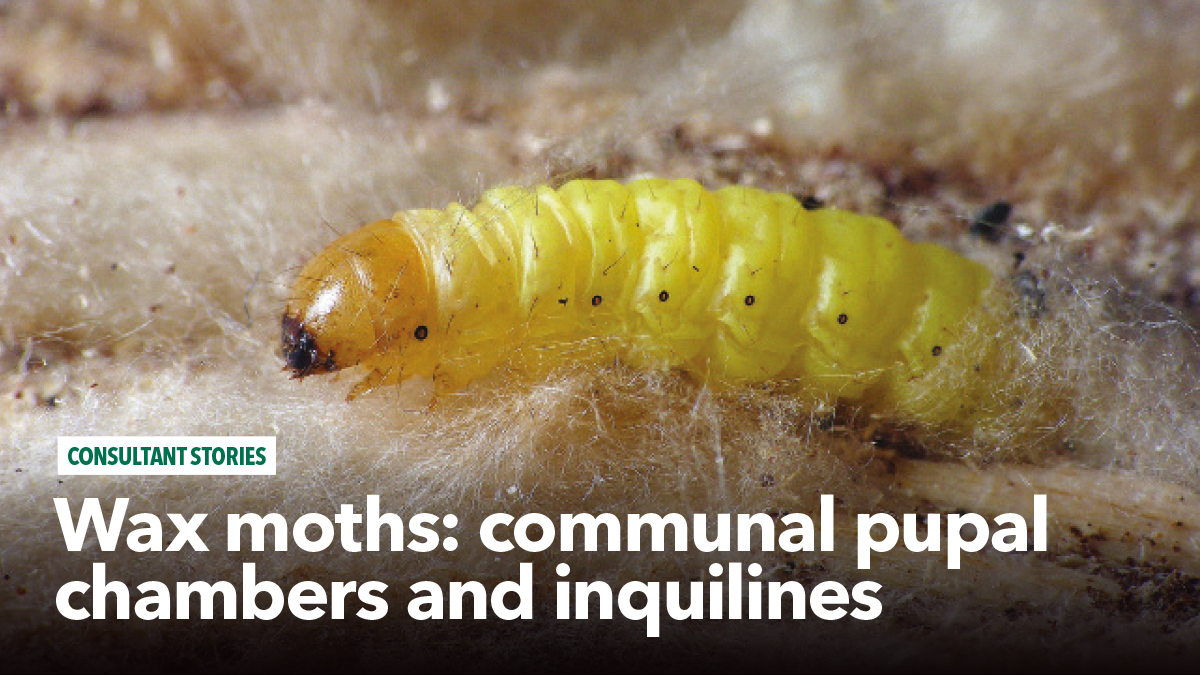
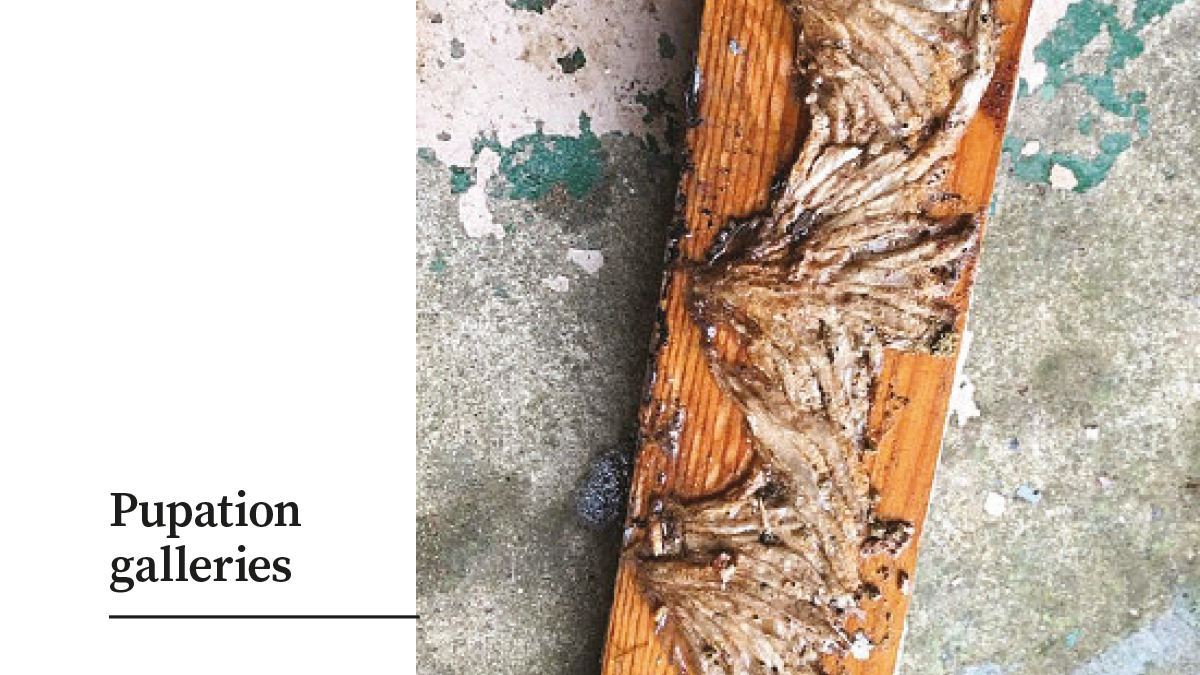
Signs of Aphomia sociella (wax moth) activity recently caused concern during recent refurbishment work when galleries of webbing were found below a wooden window sill.
With their distinctive shape and the segmentation of Wax moth pupal chambers, pupation galleries are a characteristic sign of Aphomia sociella activity.
The communal galleries are formed when mature larvae migrate to a suitably safe and dry location to develop in a communal pupation site. Pupation galleries can be found in soft substrate; either in or under soft wooden structures (such as window sills), or inside the structure of old beehives.
A number of wax moth species occur, but Aphomia sociella usually prefers to develop in bumblebee nests, as well as developing in honey bee hives or even Vespula wasp nests.
Aphomia sociella are inquilines (that is they will lodge inside their hosts nest and live commensally). Eggs are usually laid in the burrows of bumblebee nests and the larvae then feed upon wax, pollen, nectar, honey, dead bumblebees or even live bee larvae.
When fully developed, mature larvae leave the nest to pupate in a sheltered area nearby.
Communal cocoon sites can have hundreds of pupae present and the pupae/webbing is usually firmly attached to the substrate so they are difficult to shake loose.
Larvae may cause localised damage by gnawing the substrate to create the communal pupation site. Consequently, localised damage to woodwork may sometimes occur.
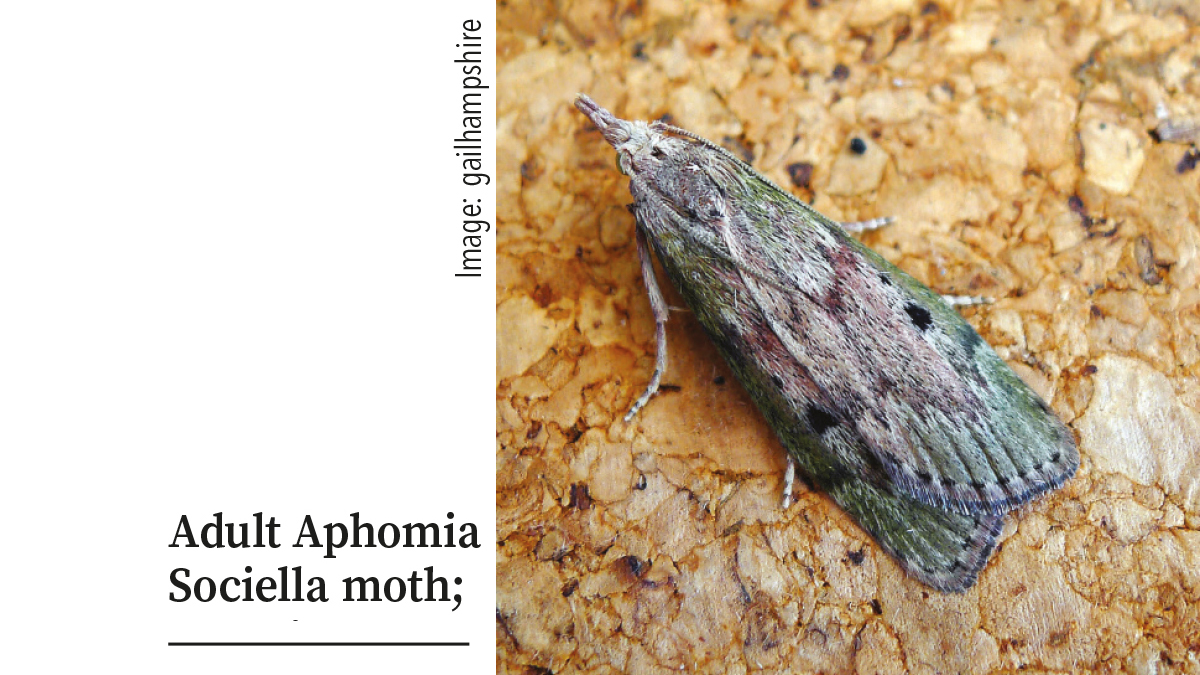
When they emerge, the adult moths are generally brown in appearance but they are very variable in form. The species is sexually dimorphic.
Adult moths are not pests inside houses but do present a risk to apiarists and owners of commercial beehives.
HAD AN UNUSUAL JOB?
Tell us about it so we can share it in PPC magazine!
[email protected]

Source: PPC95