The BPCA Code of best practice for Pesticide waste has been updated and re-released as a condensed two-page document.
The document is now available to all pest management professionals and end-users on the BPCA website.
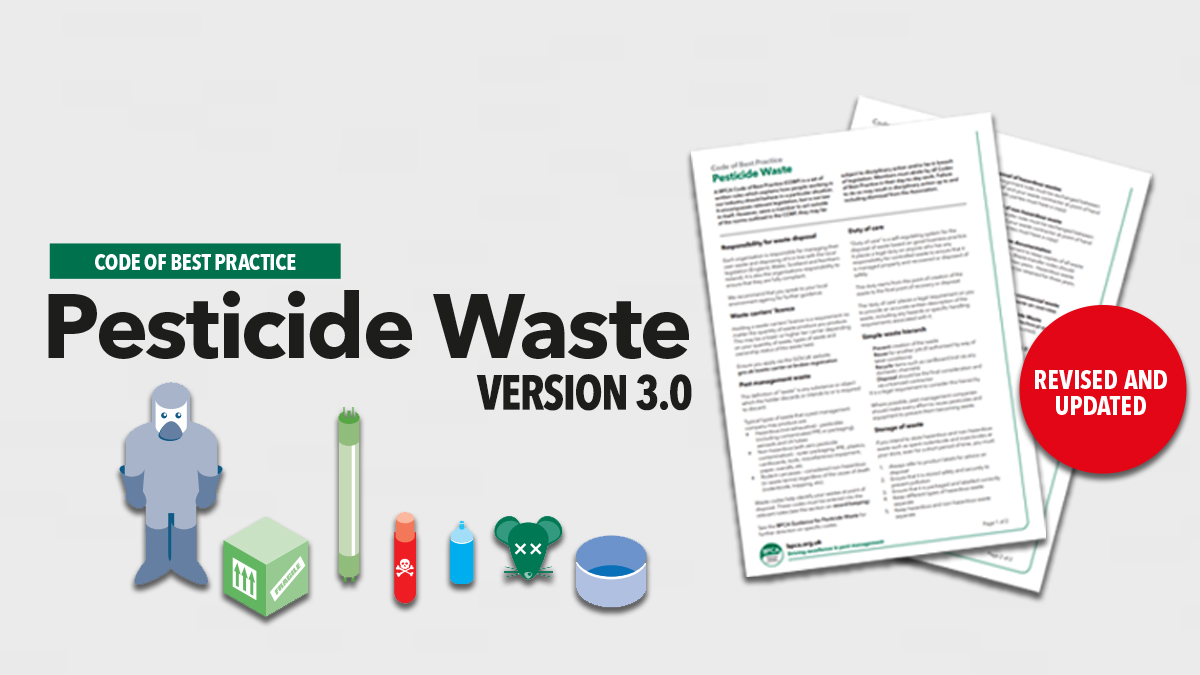
Read it now
The previous, 12-page document has been rebranded as a guidance document and is available to all members in the member documents section of the website.
If you’re working in a BPCA Servicing company you must follow the Code as it’s part of our membership criteria.
The document is freely available to anyone, so even if you’re not a BPCA member, you’re encouraged to read the Code and make sure you’re working towards the industry best practice.
Natalie Bungay, BPCA Field Officer, who worked on the document said:
“The previous Code of Best Practice is a great document that went into a lot of detail about how pest management companies should be dealing with their waste.
“However, it was a long document and not particularly useful for a referencing quickly.
“We’ve scooped out all the essential information from the old document, and popped it into a handy two-pager.
“The old version (all 12 pages of it) is still available for BPCA members who want more support in the form of a guidance document.”
What is a Code of Best Practice?
BPCA Codes of Best Practice (COBP) are written rules which explain how people working in the pest management industry should behave in a particular situation.
The Code of Best Practice is freely available to everyone through the BPCA website, meaning it’s available in full to non-members and the general public.
GET CODING!
If you know of an issue or situation that you feel needs a Code or guidance document producing, please contact us, and the Servicing Committee will then discuss it.
[email protected]

Source: Online