RODENTICIDE STEWARDSHIP
The latest surveillance in barn owls, together with recent intelligence from the government-run Wildlife Incident Investigation Scheme, ring alarm bells for professional-grade rodenticide users, according to the Campaign for Responsible Rodenticide Use.
Chairman Dr Alan Buckle emphasises that this alert is being issued to pest control technicians in parallel with farmers and gamekeepers on a “no blame” basis.
“Clearly, everyone using rodenticides in rural locations shares responsibility to prevent access by non-target wildlife, for which barn owls are the government-designated benchmark,” he says.
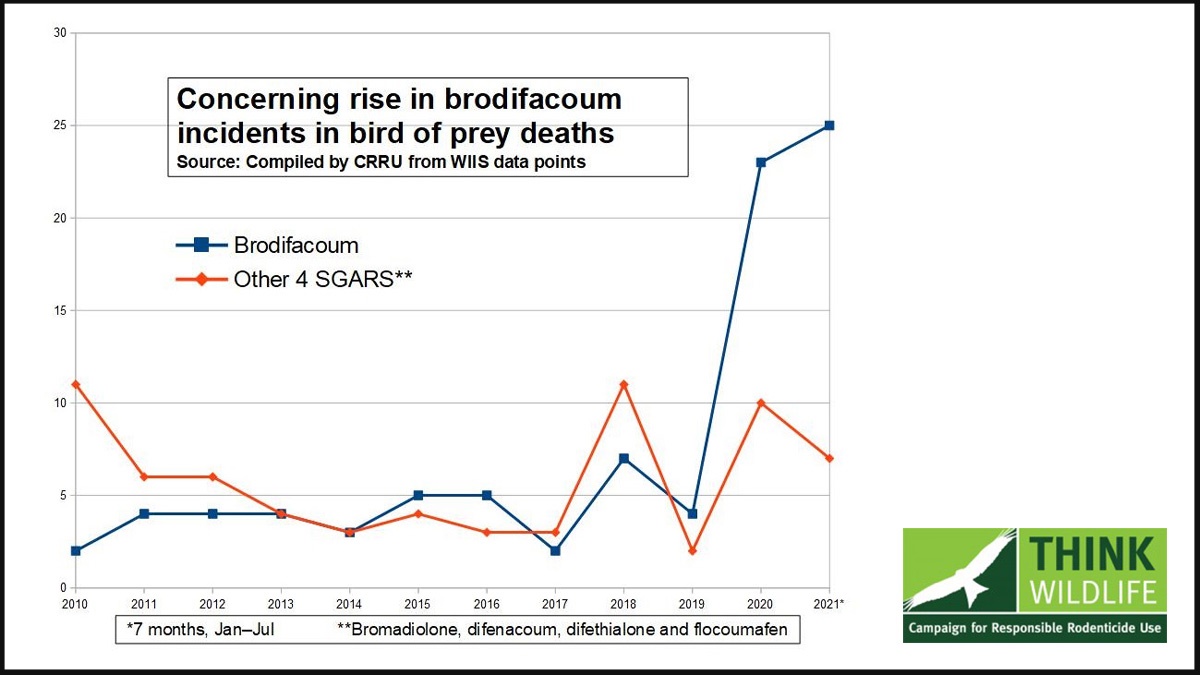
Of particular concern in the CRRU surveillance is that two-thirds of the latest sample of barn owls had residues from products containing brodifacoum, an active ingredient in many brands, though in none was it confirmed as the cause of death.
“Yet no such products are licensed for use in ‘open areas’ where the main food sources for barn owls, field mice and voles, are often found,” says Dr Buckle.
“So it’s highly likely that brodifacoum-contaminated field mice and voles eaten by owls have acquired residues from rodenticide products placed illegally in open areas.
“Equally concerning is a sudden and marked increase in the numbers of wildlife incidents involving brodifacoum. At least some of these involve either negligent misuse or intentional abuse to harm wildlife.”
On all rodenticide product labels, manufacturers have to include specific instructions required by the government regulator, the Health and Safety Executive (HSE). Failing to follow these, whether deliberate or unintended, is illegal and risks prosecution.
CRRU is reminding gamekeepers and farmers as well as pest control technicians of the legally binding ‘Directions For Use’ printed on every rodenticide product label.
They cover allowed outdoor uses, either around buildings, in open countryside or in rodent burrows. In all cases, product label instructions about protecting bait placements from non-target species must be followed.
- ‘Outdoors – around buildings’: allows bait to be deployed outside a building ONLY to treat or prevent an infestation inside it. The label may state elsewhere that use ‘Indoors’ is also allowed.
- ‘In and around buildings’: allows bait use outdoors to control an infestation of a building as well as inside.
- ‘Open areas’: covers treating an infestation of rats (but never mice) that is NOT DEMONSTRABLY associated with a building. Products containing brodifacoum, difethialone and flocoumafen MUST NEVER be used in ‘open areas’ away from buildings. Moreover, not all of those containing difenacoum and bromadiolone are authorised for use in ‘open areas’.
- ‘Burrow baiting’: permitted on some product labels and means that baits can be applied directly into rodent burrows, generally outdoors. This is allowed away from buildings ONLY IF the product label says that BOTH burrow baiting AND open area uses are allowed.
CRRU’s core message to pest control technicians, farmers and gamekeepers alike remains: Always read labels carefully before using rodenticide products and employ all relevant instructions.
MORE INFORMATION
Find out more about the rodenticide stewardship scheme at thinkwildlife.org

Source: CRRU press release