LOCAL GOVERNMENT
On 16 December 2024, the Ministry of Housing, Communities and Local Government (DHLUC) produced a white paper detailing their plans to restructure English councils.
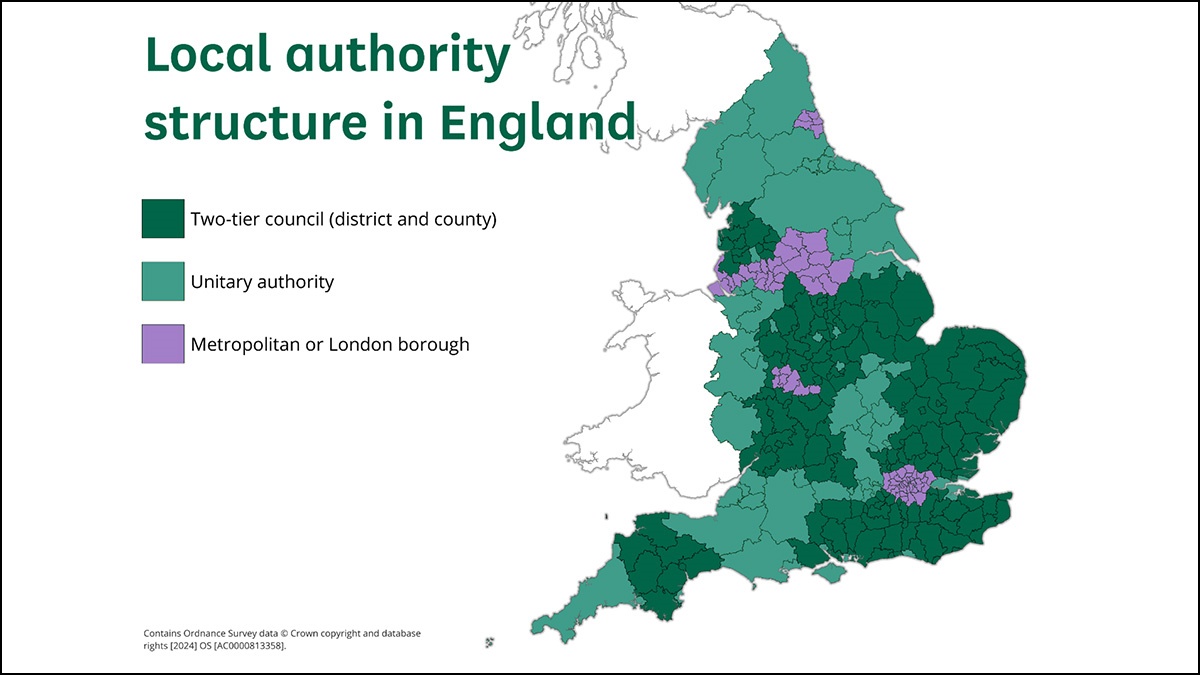
There are currently 3 types of councils in England:
- Unitary authorities
- Two tier authorities
- District councils (lower tier)
- County councils (upper tier).
Each district council is overseen by a large county council. The white paper outlines the plan to replace the two-tier system with unitary authorities.
Several agreements for devolution have been announced, with the restructure still being worked out in many areas (see map below article).
Potential impacts on the pest control industry
Pest control services are not a statutory requirement for any type of council. Services are provided by some unitary, district and county councils.
However, some unitary, district, and county councils currently do offer pest control, either as an in-house service or through contracted providers.
What happens if unitary authorities don’t offer pest control services?
There is concern amongst councils in the two-tier system who offer pest services, that in the making of unitary councils, pest services will be left behind.
If pest control services are not prioritised in the restructuring process, they may be cut due to budget constraints or reallocation of resources.
This could leave gaps in publicly funded pest management, particularly for vulnerable residents who rely on affordable or subsidised council services.
The private sector could see a surge in demand as residents and businesses seek alternatives to fill the gap left by the absence of council-provided pest management.
This scenario would likely benefit private pest control companies, especially those that offer competitive pricing and specialised services.
And what if larger unitary authorities do provide pest control services?
Larger unitary authorities may choose to integrate and expand pest control services as part of their environmental health provision.
A more centralised approach within unitary councils could lead to improved coordination, standardisation of services, and potentially greater efficiency in tackling pest issues across broader geographical areas.
Increased competition from subsidised council services might reduce demand for private pest control providers, especially among cost-sensitive households. However, councils may also opt to subcontract these services, creating new opportunities for private firms to secure contracts.
Changes incoming
The devolution of councils into unitary authorities represents a pivotal moment for the pest management industry in England.
The restructuring could lead to significant changes, regardless of whether councils choose to provide pest control services.
Ultimately, the future of pest management will depend on how both public and private sectors adapt to these changes, ensuring that effective pest control remains accessible to all communities.
BPCA members will be impacted by these changes, which are in the early stages, in some form. We'll keep you up-to-date as devolution progresses, but we'd be interested to hear what you think of the proposals.
GOT QUESTIONS?
If you have any concerns or questions, get in touch and we'll try to find the answers.
hello@bpca.org.uk
Devolution map
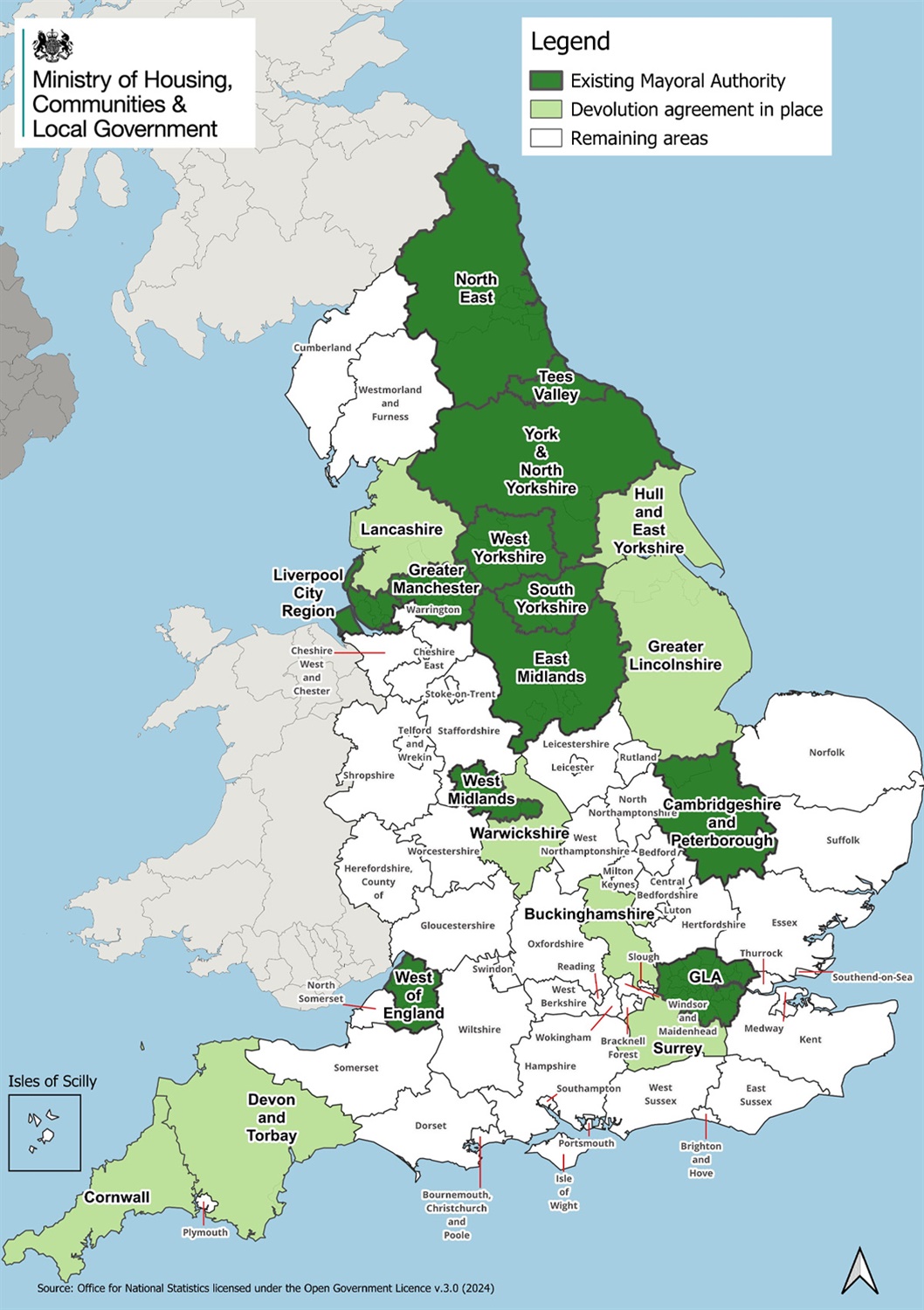

Source: Online