PPC114 | Technical
For trained professionals, it’s time to think outside of the bait box and where authorised on-label, try covered and protected.
Here, Laurence Barnard from BASF explains how.
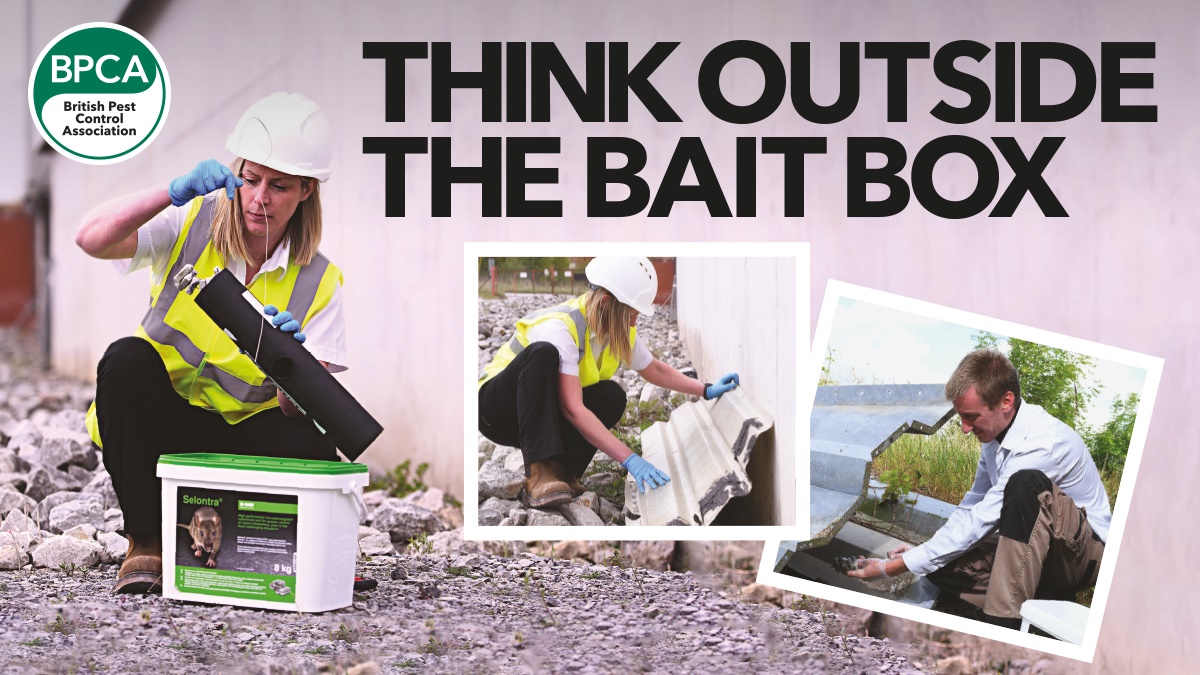
Most pest professionals have seen first-hand the damage that a rat or mouse infestation can cause, from contaminating food supplies and damaging buildings to chewing through wires and spreading disease.
Of course, the best way to prevent an infestation in the first place is to ensure you have an integrated pest management programme in place to reduce the likelihood of rodents moving in, including environmental management and non-chemical control methods.
If you have exhausted all of these options, it may be time to use a rodenticide.
Traditionally, most chemical pest control methods call for a tamper resistant bait box, but increasingly many pest controllers are reporting that both rats and mice simply won’t enter these boxes, let alone eat the bait inside.
So, what do you do if you are faced with a colony of rodents that is avoiding bait boxes?
Identify areas of activity
The first step to a successful covered and protected baiting programme is much like a traditional approach – identify and select strategic sites where rodents are known to forage along rat runs.
This will allow for a more targeted approach, ensuring a higher likelihood of uptake while minimising exposure to non-target species and saving time, money and resources.
Find sturdy materials
Next, scout the site to identify sturdy materials that you can use to form your bait stations. It could be anything from palettes, timber, tyres, pipes or guttering – the key is that it must be sturdy so that it cannot be easily moved or accessed by non-targets.
If possible, find a few different objects to protect the bait – for example, you might want to place it within a pipe, then cover that with a palette. You could even use part of a building or site infrastructure itself!
“... find a few different objects to protect the bait ... You could even use part of a building or site infrastructure itself!”
Secure your bait
When you have gathered your objects, take the appropriate quantity of bait as per the label (for example, seven blocks of Selontra if targeting rats) and attach the bait onto or inside an object, like a pipe or tray, using garden wire (or an alternative secure material).
This will reduce the risk of any passing humans or non-target species accessing the bait.
Cover and protect your station
Once the bait station is in place, and you have ensured it is located in an area of high rodent activity but as far out of reach of non-targets as possible, cover it up using a large or heavy item.
Again, this could be anything from an old door, a large rock, corrugated steel, wire sheet or a tyre. Make good use of the materials in the surrounding area and at your disposal.
Label and record
Finally, it’s vital to ensure the bait point is clearly labelled, as per the CRRU guidelines, to ensure that other people on site know the bait’s whereabouts.
Remember to record exactly where your bait stations are located, both for auditing and to make checking and refilling stations easier.
Check bait points
Once the bait has been laid, revisit stations at intervals as shown on the product label. For example, Selontra would be two days after first placement and then at least weekly to check on uptake and to replenish eaten bait.
This approach to baiting is considered to be much more effective than traditional bait boxes, as it doesn’t disturb rodents’ natural behaviour and using familiar items prevents neophobia from affecting uptake, making control much faster, and saving time, resources and money.

Source: