LEGISLATION
The government has published its Animal Welfare Strategy for England, setting out a series of commitments that could have significant implications for wildlife control and pest management activity.
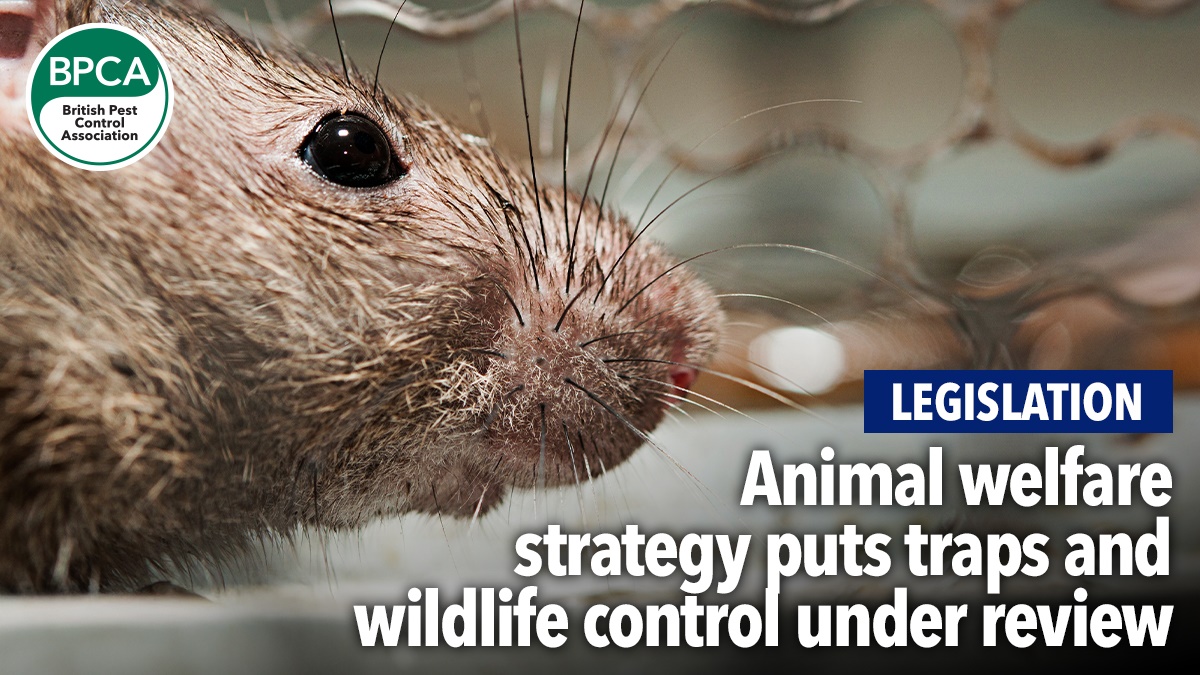
As expected, the strategy reaffirms Labour's manifesto commitment to ban the use of snare traps in England. Ministers cite long-standing welfare concerns and strong public opposition, including polling that shows more than seven in ten adults support a ban.
The use of snares is already banned in Wales and Scotland. Northern Ireland would remain the only place in the UK where they are legal to use.
More notably for pest professionals, the strategy also commits Defra to reviewing other traps used outdoors where welfare concerns have been raised.
These include older spring traps, mole traps, and live-capture traps used to catch corvids. Traditional baited snap traps used in households for rats and mice are explicitly excluded from this review.
BPCA met with Defra at the end of 2025 to discuss the strategy and will be following up with more detail and member feedback.
The government says it will work with experts to develop evidence on the welfare impacts of these traps before considering whether further action is needed. That evidence base will be critical in shaping any future policy decisions.
What this means for pest management
BPCA Chief Executive, Rosina Robson, said:
“Reviews like this can have far-reaching consequences if they do not fully account for how traps are used by trained professionals as part of responsible, regulated pest management.
“There is a clear difference between indiscriminate or inappropriate use and the work carried out by competent technicians to protect public health, property and wildlife.”
BPCA has already reached out to like-minded organisations to explore how best to support the pest management sector and ensure policymakers hear a balanced, evidence-based view.
YOUR SUPPORT
Will these proposals affect your business, your services or the tools you rely on? We need to hear from you.
If you use traps that may fall within the scope of this review, or if further restrictions would have practical consequences for your work, get in touch with BPCA.
Your real-world experience will help us build the evidence needed to engage effectively with Defra and lobby for outcomes that protect animal welfare without undermining professional pest management.
[email protected]

Source: Online