PRESS RELEASE
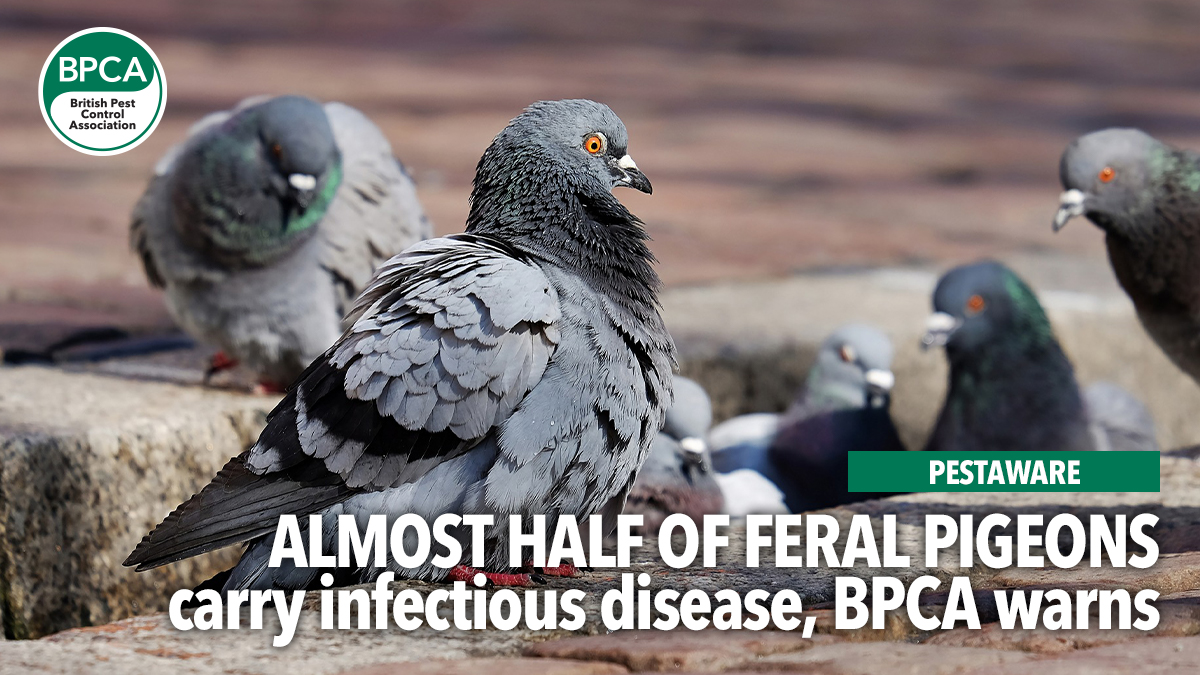
Up to 49 per cent of feral pigeons could carry an infectious disease that can be passed to humans, a trade body has warned.
British Pest Control Association (BPCA), has issued an online guide to tackling problems with pigeons, gulls and other potential pest bird species.
The guide – with accompanying video – outlines safety concerns posed by birds and examines the legal issues surrounding bird control as well as exploring the life cycles and habits of pest species.
Dee Ward-Thompson, BPCA Technical Manager, said: “We love British birds. All wild birds and their eggs in the UK are rightfully protected by law under the Wildlife and Countryside Act 1981.
“Unfortunately, a few species of birds come into direct conflict with humans when they take roost in or around our homes or businesses. These birds can cause real problems, including excessive nuisance and public health concerns.
“Research suggests that up to 49 per cent of feral pigeons could be infected with Chlamydia psittaci. Human infection is called ornithoses and symptoms include chills, fever, sweating, severe weakness, headache, blurred vision, pneumonia, possibly death.
“When dry, pigeon droppings can become airborne in small particles which can lead to respiratory complaints.
“Bird droppings can also be slippery and can cause a serious risk on pavements, particularly under roosting birds. They also make businesses appear unclean and imply a state of disrepair.”
BPCA’s guide to birds also highlights the risk of secondary insect infections, as well as the issue of unprovoked attacks from gulls during breeding season. The advice features seven signs birds are becoming a problem at your home or business.
Dee added: “All urban birds require is a nesting or roosting site such as a balcony, window ledge or roof area as well as a reliable food source.
“Removing bird food sources or blocking off sites where they perch or roost is the best way to prevent them causing a problem.
“The number of birds attracted to an area will depend on what food is available. Therefore, if birds are being fed, more will be attracted to that area, so food sources must be kept to a minimum. Keep bin lids closed and cover compost bins.
“Bird prevention, proofing and control are highly specialised skills, requiring specialist equipment and tools. Birds are only killed as a last resort, and we are all required to try reasonably practicable non-lethal bird control methods before we look at culling.
“All wild birds, their eggs and their nests are protected by law, so we strongly recommend that you don’t try to control or manage birds yourself.
“BPCA members employ trained technicians who are trained in bird control and will have access to a range of professional use products and tools which are not available to the public.”
For more advice about proofing your home or business against pest birds, the new online guide and video are available at bpca.org.uk/birds
To find a BPCA member near you visit: bpca.org.uk/find.

Source: Online