PPC110 | Technical
Peter Bowers-Davis is the Director and co-owner of Integrum Services, based in Sutton near London. With a lifelong passion for wildlife management, Peter is a specialist in aviation and airport pest management, including bird management, control and proofing.
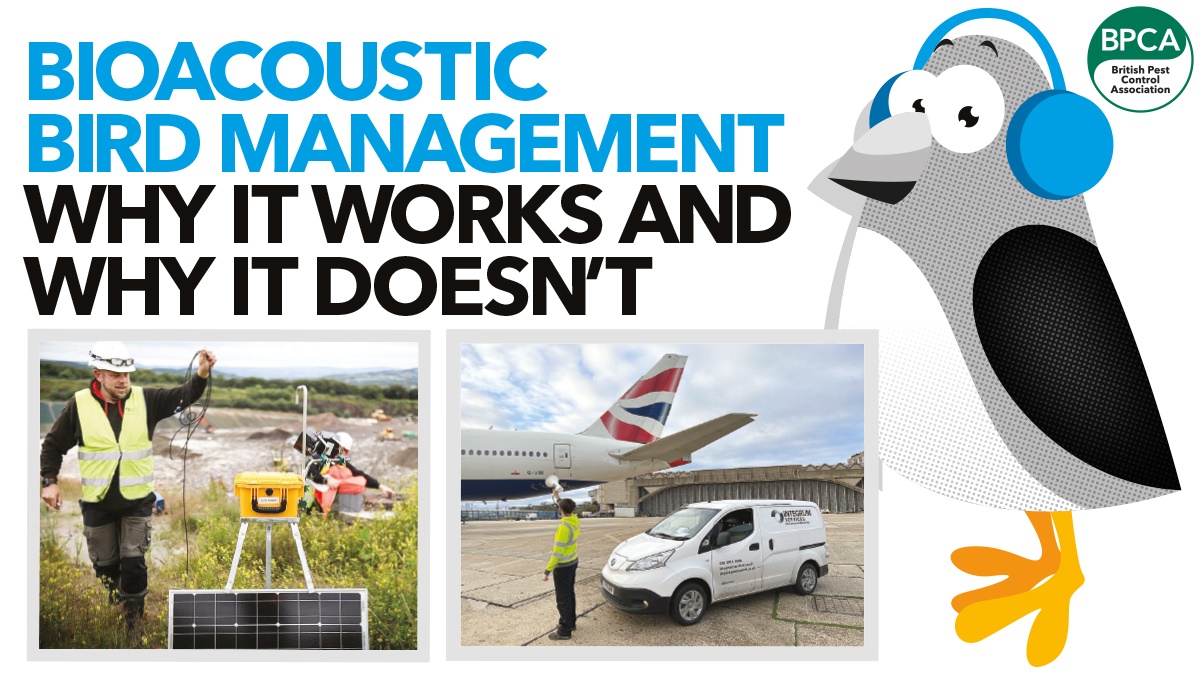
First off: what are bioacoustics? Bioacoustics is a fancy word and it basically means ‘the use of sounds produced by or affecting living organisms’.
Sounds have been used for years by humans to affect living things. One of the most notable is as an interrogation technique during wars, where the sounds of babies crying and screaming were used to affect the behaviour of enemy soldiers, causing distress and sleep deprivation.
Wildlife management
Bioacoustics in bird management is the use of high quality digital distress, alarm and predator calls to disperse problem birds from a variety of sites, harnessing the natural reaction of the birds to the calls.
Sounds affect birds in a similar way to humans, causing a heightened state of alert and panic to the point where they leave the area to be able to relax.
Manually operated, vehicle-mounted bioacoustics are used at almost every commercial airport in the world, with great success. Paired with wildlife management professionals who can identify the species of bird and understand the behaviour of the birds, it allows them to disperse birds from critical areas.
Will it work for the pest management professional? Yes and no
Using sounds to move problem birds does work for pest management professionals but sometimes fails, predominantly due to one of three human errors...
Being used on the wrong species of bird
You need to think about flocking birds and then add in birds which use calls to communicate over longer distances – gulls, geese, starlings and corvids are great examples. If the problem bird is one of these, you’re onto a winner!
It’s the wrong solution
If you’re after 100% exclusion, then use a proofing method like bird netting, which prevents pest birds accessing an area. That will be 100% effective at preventing birds from entering an area.
That said, lots of sites won’t allow for proofing measures like this, or they are just not cost effective. In this case, and if the birds fit the criteria in point 1, bioacoustics is an option.
The ‘I know best’ factor
This is probably the main reason bioacoustics fail. We open our shiny new bioacoustics system quickly, and discard the instruction manual without further investigation, as we think we know best!
We power up our new system, crank the volume to 11, pick a call at random, then aim and fire at the target birds and get little or no reaction. We then tinker with the system based on zero information, with continued failure until we declare the system broken!
There’s more at PPC Live 2023
During our presentation and demonstration we will explore the types of bioacoustics systems available, from timer systems and manually operated systems through to fully automated systems which can detect a bird’s presence.
We will look at how to operate each system effectively and correctly.
We’ll also look at what species of bird’s bioacoustic system work and how each species behaves when exposed to bioacoustics.
Some birds will leave the area immediately, others will come towards the sounds initially to investigate before leaving, so we’ll show you how to operate the systems for each situation.
Want to learn more?
Come see Peter’s talk in Harrogate this March, at PPC Live 2023.
REGISTER NOW

Source: PPC110