Natural England has issued an update ahead of issuing individual bird control licences this month, with suggestions that the number of applications exceeds the level of lethal control allowed while still maintaining conservation of these species.
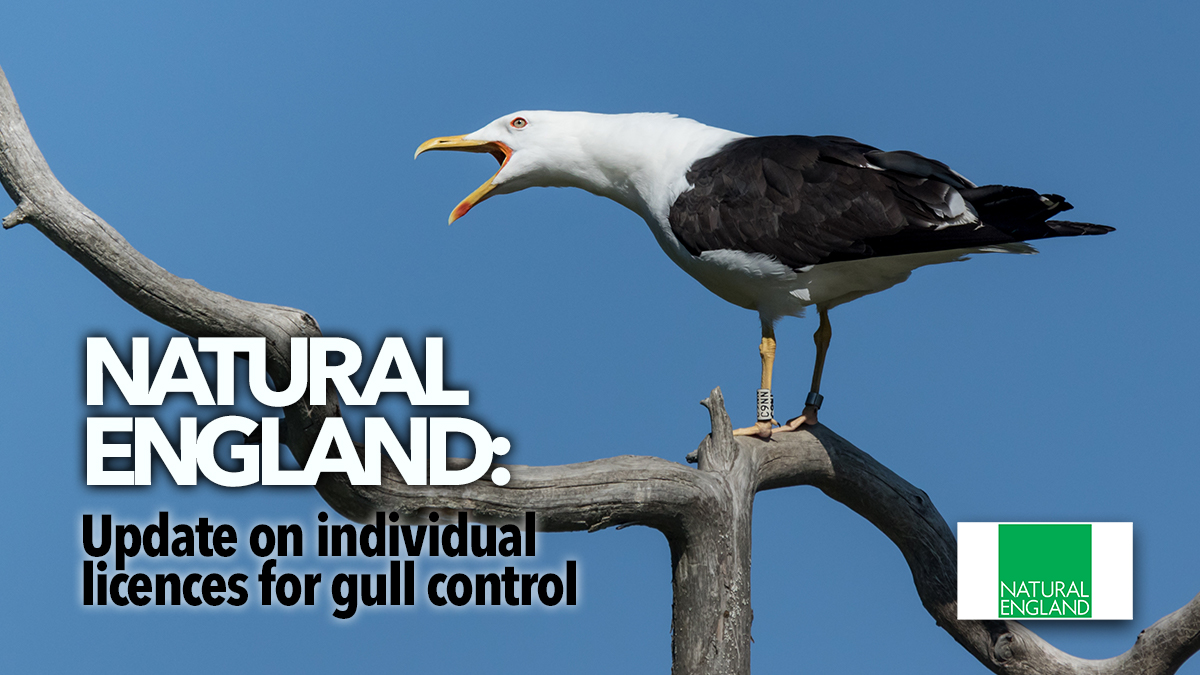
On 30 January, NE announced changes to licensing for lethal control of herring gull and lesser black backed gulls, introducing individual licences for this purpose and a new application process for obtaining a licence.
The licences will allow for the control of lesser black-backed and herring gulls, which were not covered by the General Licences issued by Defra.
These species were not included on the General Licences, as Natural England research indicated that the breeding population of herring gull, a red listed species, had fallen by 60 per cent since the 1980s, with amber listed lesser black-backed gulls declining by an estimated 48 per cent.
Since opening the new application process, NE says they have received very high numbers of applications for control of the two gull species and for control of wild birds on protected sites.
According to Natural England, "the scale of lethal control of these gulls that has been applied for is considerably greater than the levels of lethal control which Natural England have concluded are ecologically acceptable for these species.
"We understand that some applicants will be disappointed if they do not receive licences.
"However, NE must ensure that the licences it issues will not be detrimental for the conservation status of protected species.
"NE must also ensure that the licences it issues do not adversely affect the conservation objectives of statutory protected sites. These are legal requirements with which Natural England must comply."
Natural England has also said that many of the applications received were after the given deadline of 15 March and did not include all the required information, which has taken additional time to go back to applicants to ask for this necessary information.
For the herring and lesser black-backed gulls, an assessment of cumulative impacts on conservation status had to be carried out by NE before they issue these licences, similarly for applications relating to protected sites, such as Special Protection Areas (SPAs).
Further updates will be available on the Natural England website.
Further information on gull licences can be found here.

Source: Online